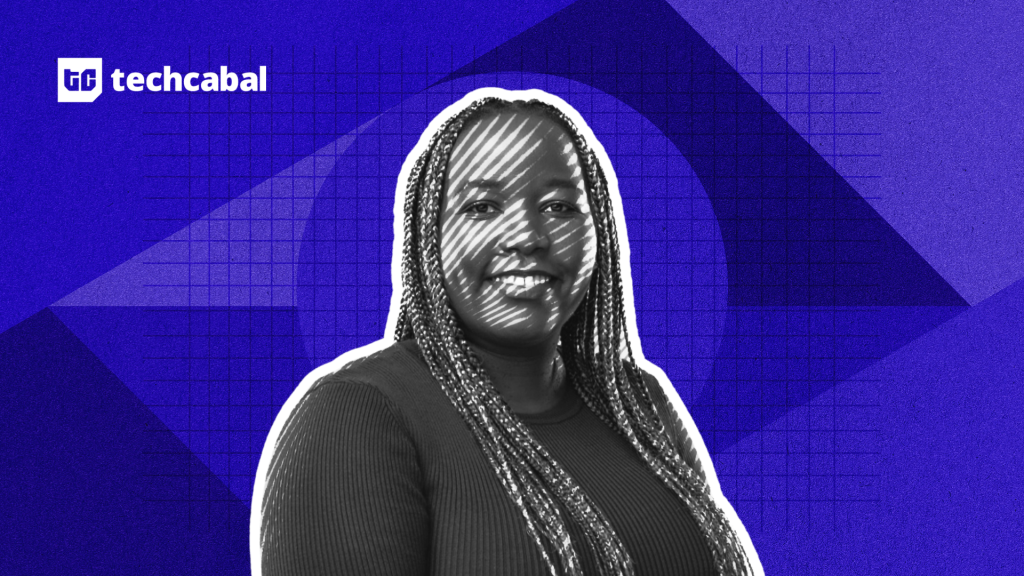
Irene Mwendwa hails from Machakos, a small village nestled in the Eastern part of Kenya, about 63 kilometres southeast of Nairobi, the country’s capital. The name means flowers. She carries this with her: the bloom, the light, the beauty that flowers bring into spaces. She describes herself as a farmer, a firstborn, a young African woman trying to survive in Nairobi.
She is also a tech lawyer who has spent years documenting how the internet punishes women leaders.
In 2024 and 2025, the world witnessed a super election cycle. Over 70 national and local elections happened across 60 countries. It was the most elections the world had seen in over a decade. Technology, people said, would be the great equaliser. Digital platforms would amplify voices. Women would finally have the tools to compete.
Despite the promise of digital tools as a great equaliser, the data reveals a stark regression in global leadership. According to the United Nations (UN) Women, the share of women in cabinet-level positions slipped from 23.3% in 2024 to 22.9% in 2025, leaving just 27 countries globally with a woman at the helm.
Mwendwa was not surprised. She has been studying this for years. She knows why.
The standard does not represent us
Mwendwa’s work starts with a simple observation: the data does not represent us. It does not look like us. It does not speak like us.
“African women, we are colourful. We are excitable. We excite people. We have vigour,” she says. “If you look at how data is presented and used to build technologies and innovation, this always falls out. And it’s not because it cannot be done. It’s because the standard is a white male standard.”
According to Mwendwa, the internet was built in English. The algorithms that decide what content gets seen, what behaviour gets rewarded, and what voices get amplified all reflect that origin. And when diversity, equity, and inclusion programs began to be rolled back at major tech companies, the problem worsened.
“If there were 10 women, African women or black women or women of colour in these companies, the numbers have dwindled significantly,” Mwendwa says. “You’ll be going online and feeling like there’s just something off. And that’s because the people who were hired and who were fighting for us in some of these companies are no longer there.”
This lack of representation is a structural failure with tangible consequences for the continent’s digital infrastructure. When fewer African women build technology, the resulting products often fail to account for the unique contexts and realities of half the population.
This gap creates systems that, at best, ignore women’s needs, such as the significant gender gap in mobile internet usage across Sub-Saharan Africa, and at worst, actively harm them. Without women in the room to influence algorithmic logic, technology can become a tool for technology-facilitated gender-based violence (TFGBV), where platforms prioritise engagement over the safety of vulnerable users.
When memes become weapons
Mwendwa studies what she calls digital political culture. It is the phenomenon of how some groups of people are rewarded for jokes online, while other groups are punished for the same behaviour.
“We will enjoy memes of a few male leaders where we’re saying we connect with this gentleman because they are charismatic,” Mwendwa explains. “Whereas when it’s a woman leader, whether political or in corporate settings or community leadership, when memes are going around about who they are, they end up being punished by the same content.”
Mwendwa doesn’t think this is accidental. Social media platforms are designed to reward engagement. Polarising content moves faster. Attacks generate more clicks. Women leaders, especially young women trying to enter politics, face coordinated harassment campaigns that platforms profit from but do not stop.
She points to a case that still haunts her: Marielle Franco, a Brazilian councilwoman murdered in 2018. Franco was a vocal advocate for climate justice and land justice. She challenged gender norms. She faced sustained online attacks—coordinated, brutal, public. Then she was killed.
“Most of the people who were engaged in very big coordinated online attacks have never been apprehended,” Mwendwa says. “Nothing has ever happened to them. Most of them continue to engage every day online and continue attacking other women.”
The platforms profit, the women pay
One of the things Mwendwa has investigated is how platforms treat verified accounts. Many women leaders have blue checks—Twitter, Instagram, Facebook. The verification is supposed to signal credibility.
“They believe this person is high ranking,” she says. “The way people engage with them is not the same way they engage with you and me, who may not have a big following. So they exclude certain categories of people from protection.”
Mwendwa warns that women are punished for defending themselves online, a statement corroborated by United Nations Educational, Scientific and Cultural Organisation (UNESCO) research showing that 73% of women in high-visibility roles like journalism face online violence, leading many to simply disconnect.
“People expect a woman to communicate a certain way,” Mwendwa says. “People expect a woman to be affiliated with certain things—religion, a political party, a culture. You’re supposed to act in a certain reserved way. So you can see how this design of the internet punishes certain groups of people. It’s a structural issue.”
The economics are straightforward: polarisation is a feature, not a bug. For platforms, a coordinated attack on a woman leader generates high-velocity engagement; replies, quote-posts, and shares, which translate directly into more ad impressions. While the platforms realise these gains, the “social cost” is externalised to the women.
The price of visibility is measurable. Data from Plan International’s ‘Free to Be Online?’ report reveals that 58% of girls and young women globally have experienced online harassment, with 25% of those targeted opting to disconnect or limit their public discourse to avoid further abuse.
Why punitive measures do not exist
The reason coordinated attacks continue, Mwendwa argues, is simple: there are almost no consequences.
Platform offices are not based in Africa. This makes legal action difficult. Nigerian authorities took Meta to court over data privacy violations in 2024. The case took two years, with Meta having to pay a $220m fine for unfair, discriminatory practices and a settled $32.8m penalty regarding user data privacy. As of publication time, Meta has yet to fully pay the fine. “Many governments end up saying the social media platform offices are not based in our countries, and therefore it’s quite hard to investigate, to address it in our court systems,” Mwendwa says. “It can take a long time. It can be quite expensive. You will need data sets, evidence, and a lawyer coming from the global north to testify in a Nigerian court.”
This is why Mwendwa believes women’s numbers dropped during the super election cycle.
The work she does now
Mwendwa’s path to this work was not direct. She studied law at Kenyatta University because she has always been evidence-based and data-driven. She wanted to understand how societies create order, how people coexist when they do not know each other, when they do not share the same culture or language.
, she began asking: how does law guide us in the digital sphere? How do we create safety online when the internet has no borders, no clear jurisdiction, and no enforceable rules?
Today, Mwendwa works on platform governance in the Global South. She studies and writes on how platforms engage with African governments and whether societies can benefit, whether communities can build their own technologies, and whether people can thrive in existing ones.
Her work with Colmena Fund, a philanthropic organisation providing support for women, aims to platform women political leaders championing democracy and human rights across the Global South.
She is building their portfolio on women’s political leaders and their role in building tech and data policy. The work is people-facing. It involves research, consultations, and convenings. It means sitting with women leaders in communities, understanding how they use technology, documenting the harms they face, and translating that into funding and project opportunities for women political leaders supporting organisations.
“Most of the time, when you’re engaging communities, it’ll almost always come out as a suggestion from them,” she says. “You help them frame it better. And sometimes if the issue is too technical, you lay out a plan and share it and see if it works for everyone.”
Her friends at the Data Labelers Association, an advocacy group for data labelers for artificial intelligence (AI), have been documenting another hidden cost: African workers hired to moderate violent content for Meta and other platforms. They are told it is a quick task. They sign non-disclosure agreements (NDAs). They are exposed to extreme violence, child abuse, graphic attacks, horrific material, without support, without disclosure, without consent. Post-Diversity, Equity and Inclusion (DEI) rollback, there are no ethical guardrails protecting them.
“For markets like Africa, where the laws are still playing catch-up, they will always find labour to do some of these tasks,” Mwendwa says. “But I know there are people who are part of a very big body of work that will institute internet ethics on labour, internet standards on content moderation. And I’m happy to say it’s going to be young Africans leading this revolution, however painful it is.”
A tech lawyer, not an activist
Mwendwa says she is often dismissed in rooms where decisions are made. She says she is called an activist to diminish her. Activists, the implication goes, are emotional. They are not professionals. They do not have expertise.
She rejects this framing.
“I call myself a tech lawyer,” she says. “There are tech lawyers who work on tech and profits. There are tech lawyers who work on tech and infrastructure. I work on tech and society. I’m working to ensure that people are still able to enjoy the use of technologies without being harmed.”
The distinction matters. Lawyers are professionals; they have standing, and they understand systems. When Mwendwa enters a room as a tech lawyer, not an activist, she claims authority. She shifts the conversation.
“I’ve faced different challenges in rooms,” she admits. “Sometimes they’re able to understand my point of view. It’s rewarding to know that when history books are written, when kids will be studying technology from an African’s perspective, people like me will be named as people who were really trying to ensure that technology brings people together and not cause more divide.”
The optimism and the realism
When asked how she stays motivated when governments are slow, when platforms are extractive, and when women are being pushed offline, Mwendwa’s answer is a strong belief in the African youth.
“African young people are resilient,” she says. “We are the youngest continent. We have labour from here to the end of the world. We wake up every day, even when we are being abused, even when we are underresourced, and still fuel these digital economies, still give our data that goes to build new platforms for other continents.”
She sees progress. The push for digital accountability is increasingly led by a new cohort of policymakers who view technology as a sovereign asset rather than an external utility. In nations like Namibia, Sierra Leone, and Benin, women ICT ministers have moved beyond rhetoric to establish foundational AI and data frameworks. This regional momentum is mirrored at the continental level, where the African Union’s Data Policy Framework and recommendations on platform accountability aim to secure data sovereignty and protect labour rights.
However, as the ecosystem matures, Mwendwa says the challenge is shifting from the creation of tools to their enforcement. “I remain optimistic,” Mwendwa says. “I remain also realistic that we contribute to it. Therefore, we should also be recognised.”
Her work is building frameworks for digital safety, documenting how technology punishes women, and fighting to ensure that the internet serves everyone, not just those who built it.