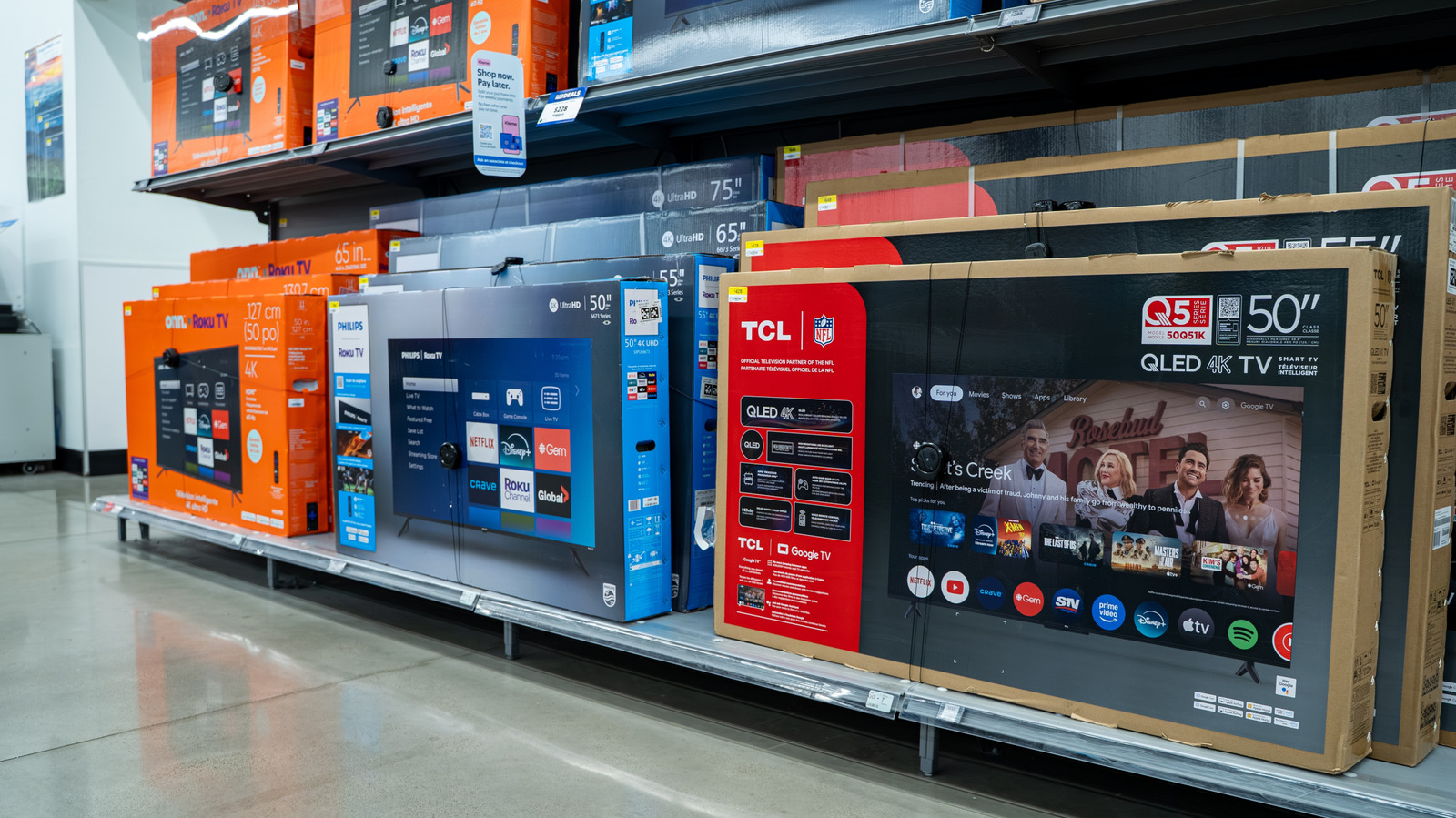
Over the past decade, smart TVs have gradually supplanted traditional television sets in the typical living room. Advancements in entertainment technology have made smart TVs more accessible and affordable, all but ensuring you can find an ideal set in your preferred size, specification, and price range. If you have all of those options at your fingertips, though, you do have room to be a little more choosy, going for optimal features like HDR, smart home integration, and the latest iteration of HDMI connectivity.
If you browse Amazon, you could find a generic smart TV for less than $100 fairly easily. However, choosing cheaper models means sacrificing functionality and quality. If you’re specifically choosing to buy a smart TV over a traditional set, you owe it to yourself to get one that has all of the best bells and whistles. With any luck, this TV will be in your home for many years, so ideally it is somewhat future-proofed to ensure you don’t need to upgrade any time soon.
A flexible, approachable OS
One of the most crucial decisions to make when shopping for a smart TV in 2026 is the operating system (OS) it’s running on. Rather than a box you simply turn on to pick up cable, a smart TV is more akin to a PC, and requires an operating system to deliver cable channels and streaming apps. If you buy the first smart TV that grabs your eye without checking the OS, you might be unhappy with the result. Remember, a TV being “smart” doesn’t automatically make it intelligent.
The best kind of smart TV platform is one that is equal parts approachable and flexible, something that doesn’t require too much setup while offering a respectable range of apps and services. Of every smart TV OS ranked worst to best, some of the most consistently popular — based on user reviews — are LG webOS, Roku OS, and Google TV. These options are known for offering many convenient integrations with existing PC and smartphone apps, services, and accounts, as well as a generally smooth user experience.
HDR and local dimming
A big perk of smart TVs over traditional TVs is that they can use the power of onboard computing to dynamically adjust and improve the picture. To do so, however, you’ll need a smart TV with HDR — which means High Dynamic Range — and local dimming. This allows it to adjust picture settings on the fly to better exemplify whatever is being displayed. Lights become lighter, darks become darker, colors become more colorful; all of which culminates in a more true-to-life picture, improving your overall viewing experience.
Most movies and shows these days are made with HDR in mind, so if you’re planning on using a smart TV as the centerpiece of a home theater setup, HDR is an absolute must. Local dimming, meanwhile, is a more hardware-centric feature, in which the physical LEDs in your smart TV are selectively dimmed and brightened to create an improved sense of contrast. Working in concert with HDR, local dimming helps create the most realistic, vibrant video possible, which will help you see the value of a smart TV.
Smart home integration
The front half of the smart TV equation is, of course, smart technology. These TVs have risen in prominence alongside the greater smart tech movement, and as such, have seen integration with smart home setups, managed via a smartphone app or PC. While these integrations don’t have as much direct effect on your TV-viewing experience as other features, if you’re going to purchase and set up up a smart TV, it wouldn’t hurt to get a little extra functionality in the bargain.
Depending on your smart TV’s OS, it may have built-in integrations with certain smart home systems. Amazon Fire TVs, for example, are natively compatible with the Amazon Alexa framework, requiring minimal setup to use the full scope of features. With your smart TV synced to your smart home environment, you can control the TV using voice commands via a remote with a microphone, or a smart speaker.
You can also use the remote control to search for content and play music, and this works in reverse. If you have a doorbell camera in your smart home setup, for instance, you could display its feed on your smart TV when someone rings the bell, instead of having to pull out your phone.
High refresh rate
The picture on an LED or OLED TV is generated by a multitude of tiny LED lights, illuminating in concert to produce a single, seamless view. As the video moves and changes, the lights dynamically change their configuration to keep up, and depending on the refresh rate, this may not look as seamless as you’d like. A TV with a low rate produces pictures that can look blurry as the LEDs lag behind.
It’s not conducive to quality entertainment, so if you’re buying a smart TV, get one with a high refresh rate. If you want the best-possible picture, you should shoot for a smart TV refresh rate between 120 and 144Hz. A higher rate ensures that the display can keep up with speedy, dynamic movement like live sports or action movies without getting blurry. A high refresh rate is particularly valuable when using your smart TV for gaming. A 120Hz rate is a must-have for gaming at 120 frames per second and vital for playing high-impact online games competitively.
Current HDMI standard
Choosing the best smart TV in 2026 isn’t just about apps and picture-improvement features, it’s also about physical hardware. Part of the future-proofing process is ensuring that your smart TV has the necessary hardware and connections to keep up with any changes to the industry standard. One of the primary weapons in this war against obsolescence will be your TV’s HDMI inputs. HDMI has become the near-universal standard by which external devices are connected to smart TVs, including video players, game consoles, and streaming sticks if you want to use an external smart platform.
The current standard is HDMI 2.2, which allows you to connect most devices with the highest degree of visual clarity and data transmission speed. Using the latest HDMI standard not only ensures you get the best connections with your external devices, but helps to shore your TV up against future shifts or upgrades in the standard.