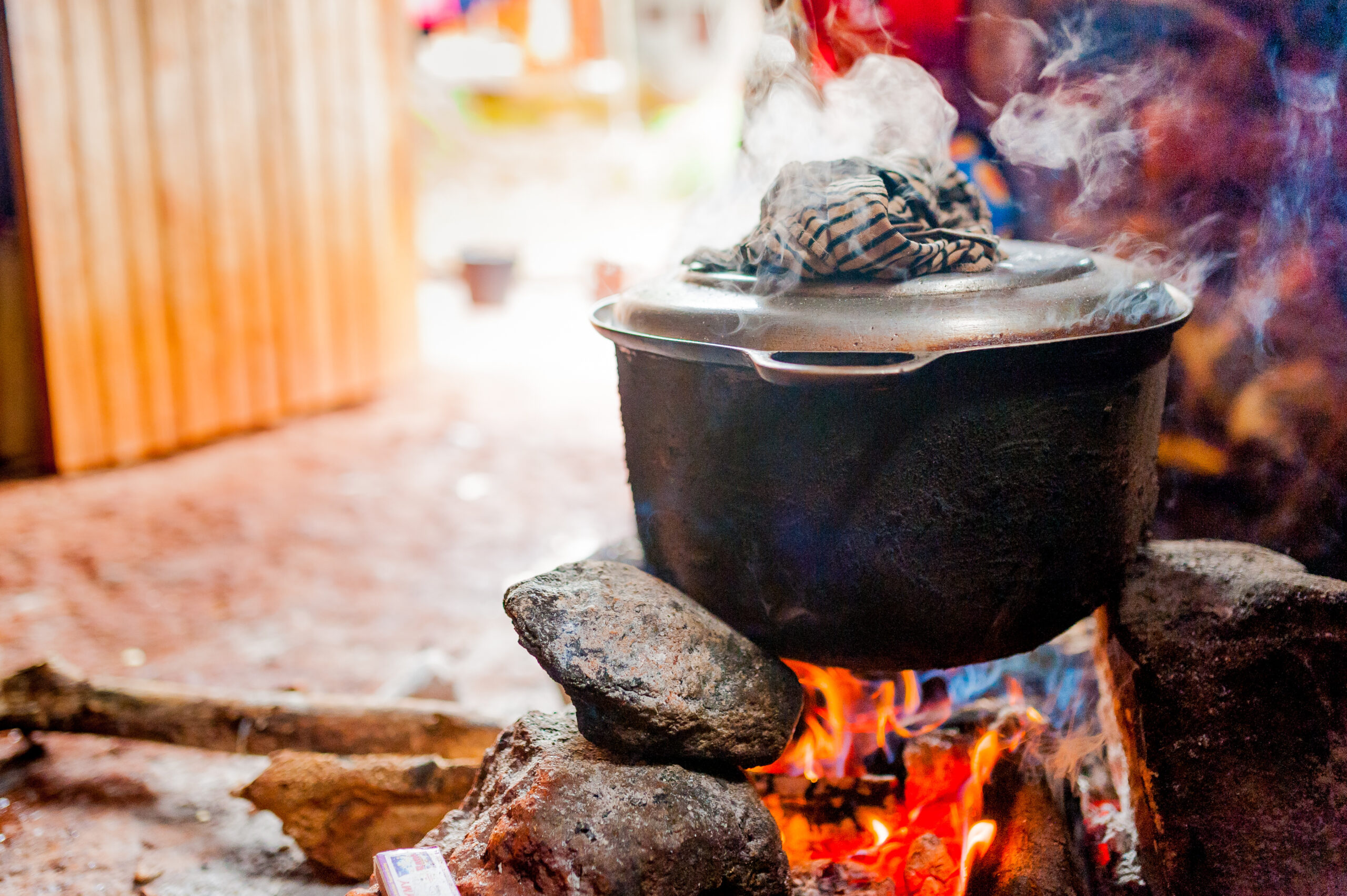
In most of Nairobi’s low-income neighbourhoods, like Mathare, Kibera or Mukuru, the arithmetic of clean cooking still collides with the reality that charcoal and kerosene are cheap because the majority live below the poverty line.
For over a decade, Kenya’s clean-cooking revolution has been sold as a rare climate win-win. Swap smoky charcoal for ethanol or biogas. Improve household health. Cut deforestation. Generate carbon credits. Sell those credits to companies, such as airlines in Europe or North America, to offset their emissions. Use the proceeds to subsidise fuel and stoves for low-income families to solve poverty and save the climate.
Then comes the abrupt collapse of KOKO Networks, once considered the poster child of this model. Its troubles expose more than a balance-sheet crisis. It begs the question whether the goal of financing basic consumption through carbon offsets is to build a sustainable business or to erect a subsidy machine powered by atmospheric accounting.
Is KOKO’s collapse fundamentally a company-specific failure or an early stress test of Kenya’s post-Paris carbon market framework?
“It isn’t clear-cut,” said Sheena Raikundalia, chief growth officer at Kuza One, a Kenyan social enterprise that works with smallholder farmers. “What can be said is that, since 2023, Kenya has put in place a formal legal and institutional architecture for carbon trading through the Climate Change (Amendment) Act and the Carbon Markets Regulations 2024.”
The carbon arithmetic
At the centre of this emerging debate is Article 6 of the Paris Agreement, which allows countries to trade emissions reductions. Kenya, responsible for less than 0.1% of global emissions and emitting roughly 0.4–0.5 tonnes of CO₂ per capita annually, suddenly finds itself in a peculiar position. It could export “mitigation outcomes” to high emitters such as Europe, China, and the US, or retain them for its own future industrial growth under its Nationally Determined Contribution (NDC).
“That reflects very low levels of energy use and industrial intensity,” Raikundalia noted. “The structural tension is whether future energy and industrial space is being constrained at the lowest end of global consumption, while the fastest-growing and most resource-intensive forms of demand continue to maintain higher levels of consumption by purchasing mitigation elsewhere.”
Raikundalia said under the Climate Change (Amendment) Act and the Carbon Markets Regulations 2024, Kenya created a sovereign system with the National Environment Management Authority (NEMA) as the Designated National Authority.
A Multi-Sectoral Technical Committee reviews all carbon-related projects before a final authorisation from the Cabinet Secretary. At least 40% of revenues from land-based projects must flow to communities. On paper, it is one of Africa’s most ambitious carbon market frameworks. In practice, it is layered, procedural and still bedding in.
David Ndii, an economic adviser to the government, described KOKO’s implosion as more than a corporate misstep.
“Koko’s case is uniquely multidimensional,” he said. “The Paris Agreement itself, the veracity of cookstove carbon credits, our investor-unfriendly NDC regime and carbon market regulations, transparency of Koko’s business model, diplomatic meddling.”
Who gets Kenya’s carbon?
The immediate trigger of KOKO’s revenue squeeze was the government’s refusal to issue a Letter of Authorisation (LOA) for the scale of credits the company sought to export. Trade Cabinet Secretary Lee Kinyanjui said on February 9 that Kenya could not allow one firm to absorb the country’s entire carbon allocation.
“The business model did not align. It was not possible to allow everything they wanted to claim because it would mop up everything that Kenya would otherwise do,” Kinyanjui said. “In the tabulation of numbers, there was no concurrence because if Kenya gave in and authorised the numbers they were claiming, no other company in Kenya would have been able to claim. They would have taken everything that Kenya is entitled to.”
But behind Kinyanjui’s bureaucratic talk lies the dilemma. Under Article 6, Kenya can decide to retain emission reductions to meet its own 32% below-business-as-usual target by 2030, or to authorise them for export. Selling credits brings hard currency today while retaining them preserves industrial headroom tomorrow.
For low-emitting, energy-poor countries, that trade-off is not theoretical. A single AI data centre in a high-income country can consume as much electricity as a mid-sized African city. Yet it is the African household’s cooking fire that becomes the offset commodity.
Cooking as a symptom
Supporters of carbon-backed clean cooking argue that without offsets, the numbers do not work. Low-income households cannot afford ethanol, LPG or biogas at market rates. So, carbon revenues close the gap.
Critics say that logic mistakes a symptom for a cause.
“Why do people cook on firewood and charcoal?” asked Katrin Puetz, founder of (B) energy and a long-time operator in the biogas sector. “Households typically choose the most affordable option available to them. Very few would prefer firewood or charcoal over gas or electricity purely for reasons of traditional taste.”
Puetz is unsparing about the carbon-credit architecture. ” It’s not a solid business model — it’s a house of cards. Built largely to meet Western compliance demands, but with the economic consequences borne in African markets.”
She argues that distribution-based crediting—awarding credits when a stove is handed out rather than when usage is verified—distorts both climate accounting and local markets.
“These cook stoves claim credits on the basis of being distributed not on the basis of actually measuring usage data… the damage for the climate is quite severe,” she said.
In biogas, she says, poorly maintained systems can leak methane, a far more potent greenhouse gas than carbon dioxide. “In the biogas sector, she says, if a system is not well managed, it often leaks gas. Emitted methane is a much more potent greenhouse gas. From a climate perspective, it’s a really bad deal, if the claimed off-sets are used as permission to pollute by somebody else.”
Her critique goes beyond emissions math. Certification for carbon projects can cost upwards of $150,000—an entry ticket affordable to foreign-backed firms, but prohibitive for many local entrepreneurs.
“Whoever has the financial capacity to get carbon projects certified wins the game,” she said. “Imagine you are a cook stove supplier and have to compete with a company like KOKO. You’re out. Good solutions fail, because somebody else gets the subsidy.”
In Europe, she notes, subsidising a specific market player would be considered dumping. “Subsidising technology that is expensive leads you to having technology on the market that doesn’t suit your market.”
Subsidy without sovereignty
The paradox is that Kenya’s framework was designed precisely to avoid a carbon free-for-all. The Climate Change (Amendment) Act embeds benefit-sharing, environmental audits and state oversight of international transfers. The intent is to prevent the country from becoming a cheap carbon supply zone for the Global North.
Yet complexity can breed uncertainty. This means companies or projects developed under earlier voluntary standards, such as Koko Networks, must now navigate national authorisation. The sequencing of approvals, the treatment of internationally certified credits, and the mechanics of “corresponding adjustments” remain works in progress.
Should companies whose revenues depend on credits be cushioned through transitional approvals?
The Kenyan law stipulates that participation in carbon markets must be approved by local authorities and be in line with the country’s climate commitments. But markets and investors crave predictability. Where authorisation decisions are opaque or slow, capital likely retreats.
However, the debate has less to do with investor sentiment and more about whether Kenya can design a carbon market that drives investments into green development without turning household consumption into a tradable asset.
Who benefits?
Globally, roughly 80–85% of climate finance flows to mitigation, around 15% to adaptation, and less than 3% reaches local communities directly. Supporters of offsets argue that, imperfect as they are, carbon markets can unlock funds for socially valuable projects like clean cooking, irrigation, decentralised energy, which are not luxuries.
Critics counter that households with negligible personal emissions are being enrolled into offset schemes so that corporations elsewhere can maintain higher consumption.
“Per-capita emissions in Kenya are about 0.4t per annum. How could we possibly expect people to compensate for emissions caused elsewhere while they are the lowest emitters in the world?” Puetz asked. “While these people are being used to offset those emissions, they’re not even getting paid for it.”
Petz is working on an alternative, ccCASH, which she claims pays households based on verified usage data. Not only climate-related revenues, but additional benefits are turned into direct income streams for all households that transition to clean fuels – and not into subsidies provided by a few individual companies.
“If we focus only on the cooking device, we are treating a symptom,” she said. “The deeper structural issue is income and economic opportunity.”
Is Africa using carbon markets as leverage to access global capital? Or trading away future industrial space at a discount?
Puetz argues that Kenya can still build a credible carbon market. However, it will require the country to move from a legal approach to operational clarity, streamlined approvals, transparent allocation of credits between domestic use and export, and a benefit-sharing system that is realistic and not punitive.
The deeper challenge is conceptual. If clean cooking depends on carbon revenues to remain affordable, then its affordability is contingent on continued emissions elsewhere. The subsidy is not coming from productivity gains or rising incomes; it is coming from the right to pollute.
That may keep a stove burning for now. But it is a fragile foundation for development.
Charcoal, after all, is not chosen because it is loved. It is used because it is cheap. Until incomes rise, any model that treats poverty as a carbon opportunity risks subsidising consumption with little more than hot air.