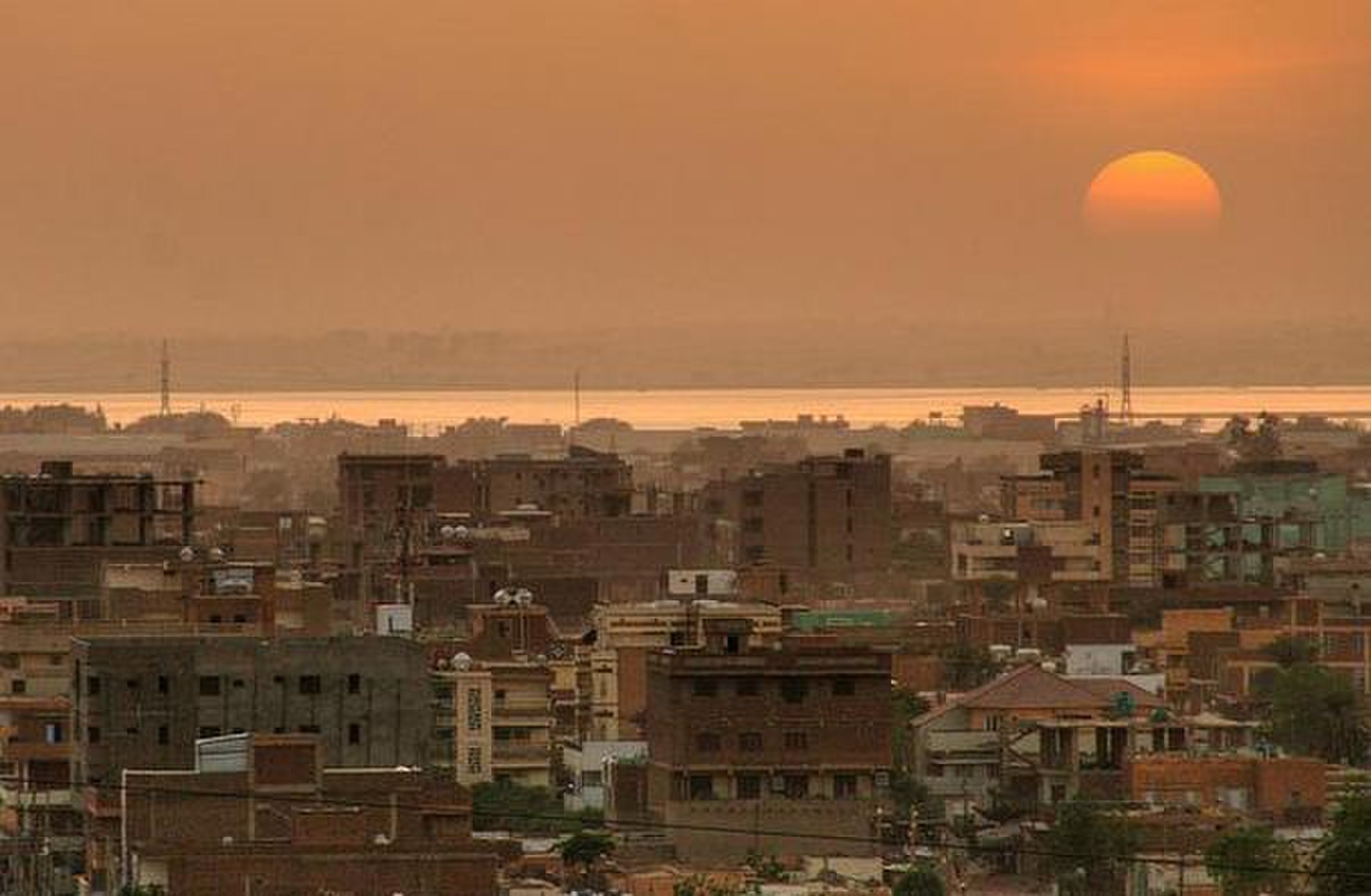
Sudan, located in northeast Africa, borders Egypt to the north and Ethiopia, Eritrea, and South Sudan to the south. Rich in culture, history, and resources, the county is being brutally torn apart by one of the worst humanitarian crises in the world.
The country has a population of over 50 million people and is known for its array of different ethnicities and tribes, as sources estimate that there are more than 500 tribes in the region, many identifying as either Arab or African/sub-Saharan African. This division of identity has been heavily imposed and idealized due to the traumatic history of British colonization in the region, which created the “non-Arab” versus “Arab” identities. British control imposed administrative separation between the north and the south of Sudan in 1924, preventing Muslim and Arab influence from spreading further south in the region.
The separation of identity in Sudan is a huge facet of the current genocide. It is regarded as a war against civilians, resulting in millions of Sudanese being forcibly displaced, facing man-made starvation, and experiencing increasing malnutrition. According to the World Food Programme, at least 21.2 million Sudanese are currently suffering from acute hunger.
It is estimated that there are around 40,000 Sudanese-Americans living in the United States. There are many pockets of Sudanese communities all across the country, primarily in Nebraska, Texas, Virginia, and Washington DC. Although the Sudanese community in Los Angeles is relatively small compared to other areas, many across the diaspora have been heavily affected by the genocide happening back home.
Nadra Widatalla, a Sudanese-American writer and filmmaker based in LA, said, “I’ve become a bit numb. Most moments I feel like I’m on autopilot, in a constant state of feeling everything but also nothing. I function, I go to work, I see my friends, I do things that bring me joy, I laugh, but I’m holding onto a lot of grief too.”
She continued, “The Sudanese community in Los Angeles is close-knit. There are frequent gatherings, meetings, fundraisers and events that keep the community close. As an immigrant community, Sudanese people here always find a way to come together, so it’s no different when in crisis.”
Local advocacy groups such as the Greater Sudanese American Alliance of SoCal, well-known for their advocacy for Sudanese refugees, work to spread awareness and to raise funds for families in Sudan. The genocide in Sudan has affected millions of the worldwide diaspora, shifting their understanding of their own identities; many are finding solace in connecting with community.
Widatalla said, “My friends and community have been very supportive. A year ago, a few of us started a Sudanese collective called Ya Zol. It’s a group of creative Sudanese Americans, living and working in Los Angeles, and it was created in response to needing a space and an outlet to process what was going on in Sudan, and looking for ways to help. Our first gathering was held in the historic Africa Town of LA, Leimert Park, and raised over $20,000 for victims of the war and genocide.”
To understand the present atrocities taking place, one must understand the two factions that have shaped Sudan’s current instability. Rival sides have torn the country in two and driven Sudan into conflict. One side, known as the Sudanese Armed Forces (SAF), controls the east, north, and center of Sudan, including the capital, Khartoum. These areas are controlled by the leader of the SAF, led by Abdel Fattah al-Burhan. The other side, known as the Rapid Support Forces (RSF), controls a large area in the west of Sudan and is led by Mohamed Hamdan Dagalo, mostly known as “Hemedti.”
This split has worried millions of Sudanese over the possibility of it becoming permanent anddividing the country further. Sudanese have already suffered the trauma of having their land split off before: South Sudan seceded and was recognized as its own country in 2011.
Many humanitarian organizations are have concluded that what is happening at the hands of the RSF is genocide, including Genocide Watch. The US State Department issued a statement on January 7, 2025, regarding the horrendous atrocities that the RSF committed in Darfur, in the west of Sudan.
The roots of this genocide stretch back decades, beginning when Omar al-Bashir ruled Sudan as a dictator for over 30 years, from the late 1980s until 2019. During his rule, al-Bashir — who is originally from a Sudanese-Arab tribe known as Al-Bedairyya Al-Dahmashyya, primarily located in northern Sudan — was accused of favoring Arab communities from northern areas and near Khartoum. He placed them in higher positions of power in the government, disregarding and stifling African communities. This led to growing resentment and a total disregard for “non-Arab” communities.
In 2003, a few African tribes in the western region of Darfur launched an armed rebellion against al-Bashir’s government. Al-Bashir responded by arming Arab militias — known as the “Janjaweed” — to attack and massacre “non-Arab” communities. The Janjaweed were predominantly known to be nomadic herders, while the African tribes living in Darfur were known to be settled farmers. This created a deadly conflict between both groups in regards to control of land and water supply.
In 2003, once al-Bashir armed the Janjaweed, militias carried out a genocide against Darfur’s African communities, slaughtering over 300,000 Sudanese, while also uprooting and burning down entire villages.
In 2013, Omar al-Bashir then rebranded the Janjaweed as the Rapid Support Forces, with Hemedti as their primary leader. The RSF represented a paramilitary group under the guise of Omar-al Bashar, separate from the SAF, led by General al-Burhan.
Initially, both the RSF and SAF were cordial and worked alongside each other, playing a pivotal role in supplying the same system of security and defense force for Sudan.
Then, in 2019, everything changed. Across the country, Sudanese citizens protested against al-Bashir. Huge demonstrations calling for democracy and the end to al-Bashir’s dictatorship spread like wildfire. Within a few months, the Sudanese army and the RSF turned against al-Bashir, removing him from power. Celebrations erupted across the country, marking the end of his dictatorship.
This change had ushered Sudan into a new era that brought hope and stability to the region. However, that was utterly shattered, as the RSF and SAF refused to let go of their quest for control of Sudan.
In October of 2021, al-Burhan conducted a military coup, dissolving the civilian-military transitional government, and putting an end to the power-sharing agreement with civilian groups. Hemedti supported the coup, despite tensions slowly rising between both him and al-Burhan in regards to power and control.
As time went on, tensions between the two deepened as they negotiated matters related to security and how and when the RSF would integrate itself into the Sudanese Armed Forces. This move threatened Hemedti’s dominance and influence in the region.
Tensions continued to rise. This triggered the civil war that we are witnessing today in Sudan, which began in Khartoum and spilled into other parts of the country. Tens of thousands have been killed and over 12 million have been displaced. Both sides have slaughtered men, women, and children. Sexual violence is used as a weapon of war by the RSF. A manmade famine has been imposed on civilians across the country, and hardly any humanitarian aid is entering the country.
The city experiencing the brunt of the violence is Darfur, where the RSF is trying to reinforce their power in the region. It currently controls the entirety of Darfur and is pushing for more control in the east. Intense battles between the RSF and SAF are also currently taking place in the east, in North and West Kordofan.
The RSF continues to impose genocidal practices against the people of Sudan by cutting off food and water supplies in the cities that they control and capture. In cities like El-Geneina, where as many as 15,000 civilians were slaughtered in 2023, the RSF continues to carry out brutal massacres of African communities.
Many Sudanese today believe that what is happening in Sudan is a continuation of the genocide the Janjaweed started in 2003.
Widatella said, “Last month I had the opportunity to travel to Egypt to visit members of my displaced family. We were able to unite my grandmother with her sisters, who fled Sudan to Alexandria when the war erupted. It was a bittersweet trip filled with lots of tears, moments of joy, and everything in between. I’m happy my family is safe and in Egypt, but visiting them and seeing how much the war has aged them and taken a toll on their bodies was quite devastating. They’ll never be the same people they were. I hope one day they will be able to return home.”
She continued, “I have an uncle, we call him Dino, who is still in Omdurman. He refuses to leave his childhood home and neighborhood despite the war, despite the bombs, despite the violence. The communication with him has consisted of WhatsApp messages when we can and Facebook Messenger. When I ask him how he’s doing he doesn’t want to talk about it. He’s always asking about how I am. He wants to hear about the good. It makes him smile. I know he’s smiling even though I can’t see him. It feels weird. It feels selfish telling him about my life here, but he would always ask. And he would always smile as he listened. I don’t know what Sudan will look like, and I don’t know how I will feel when any of us will get to go back. All I care about right now is that he stays alive.”
It is essential to note that there are outside players in this genocide as well. Many influences have stifled political support and ensured the arming of opposing sides, to continue destabilizing Sudan. Egypt, Turkey, and Iran have been known for arming the SAF. The RSF is backed by the United Arab Emirates (UAE), though the UAE denies providing political and military support. China, Serbia, and Yemen have also been reported to sell weaponry to the RSF, despite the UN arms embargo imposed on the RSF since 2004. Another important facet of Sudan is it is a country rich in gold. Gold is used to buy food, fuel, weapons, and supplies and is a significant source of income for the SAF and the RSF.
When asked what she wishes the world understood more about Sudan, Widatalla answered: “That every day people are dying. That it’s been over 1000 days of war. Over 12 million people have been displaced. And millions more need our help. Talk about Sudan, help someone, do something small, do whatever you can, just do something.”