I’ve been using an Apple iPhone 17 Pro for a while now, and the one thing that really shines is the camera. It’s a big improvement over previous models, one I can see in my photos. Many other things have changed, mostly for the better, but the camera is the headliner.
What’s New in the New iPhone?
This year’s model is slightly larger, but you’re unlikely to notice it unless you put the two back-to-back. It is also a bit heavier at 7.27 ounces, though the Pro is notably heavier than the regular iPhone 17 or the iPhone Air. The Pro model I tested has a 6.3-inch display with 2,622 by 1,206 pixels, just like the iPhone 17 and iPhone 16 Pro.
(Note that the 17 Pro Max model has an even bigger 6.9-inch, 2,868-by-1,320-pixel display and an even larger battery, but it is notably heftier at 8.22 ounces. Personally, I’m a fan of the bigger models, but it all depends on how big a phone you want to carry.)
iPhone 17 Pro Max and iPhone 17 Pro (Credit: Eric Zeman)
There’s a bigger change in the materials. Apple returns to an aluminum frame on the Pro models, as opposed to titanium, with a Ceramic Shield rear panel, and it feels more durable than previous models. Apple says it is three times more scratch resistant. I tested a Deep Blue phone that looked quite good, but Apple also makes silver and Cosmic Orange models.
Some of the differences in this year’s models sound significant on paper, and could be important to some users, but in practice, I didn’t notice a big change.
The A19 Pro processor in the 17 Pro adds a number of features compared with the A18 Pro in the iPhone 16 Pro. Both have two performance cores and four efficiency cores, but the new version runs at a slightly higher clock speed and adds “neural accelerators” to the GPU, which should help with high-end video capture and processing, and with more efficient photo editing for things like the AI features.
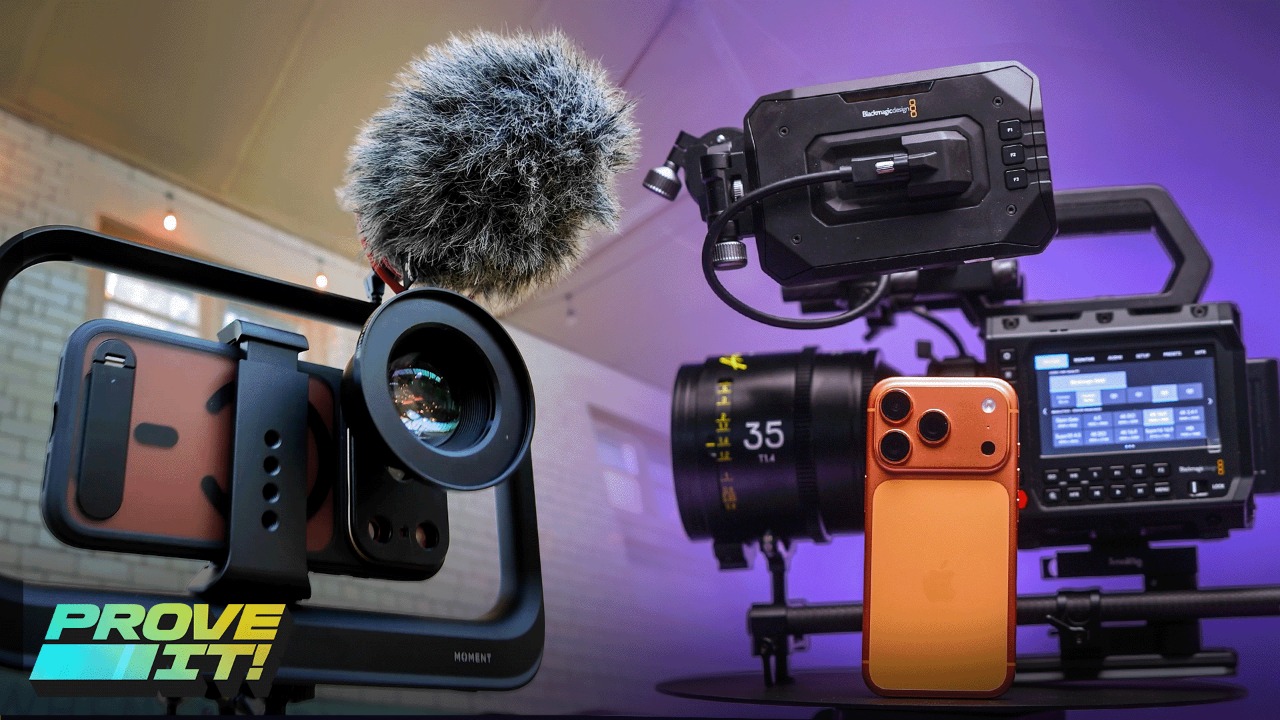

iPhone 17 Pro vs. BlackMagic Pyxis Camera | Prove It
For the rest of us, the big difference should be higher performance for longer periods of time due to better cooling. That’s particularly important for gamers. But in my daily use, I didn’t find much difference, since I don’t tend to play intense games or edit lots of video on my phone. A more obvious difference is that the base model now comes with 256GB of storage, up from 128GB.
The OLED display on the 17 Pro is brighter with 3,000 nits peak outdoor brightness compared with 2,000 nits on the 16 Pro, and you can certainly tell the difference side by side. But in using them, I didn’t find many situations where I could read the 17 Pro but not the 16 Pro.
On the other hand, the battery is bigger and with that, you simply get more battery life. PCMag’s test show 24 hours, 31 minutes of battery life for the 17 Pro versus 17 hours, 47 minutes of battery life for the 16 Pro, a significant jump. I didn’t run as detailed a test, but it absolutely did appear to last longer; I could get two or even three days in my normal usage. In this respect, it is a step ahead not only of last year’s model, but much better than the Samsung Galaxy S25 Ultra or the Google Pixel 10 Pro.
iOS 26 and Apple Intelligence
Since you can upgrade the 16 Pro and even 15 Pro cameras to the same version of the operating system (iOS 26.2 is the latest) and get the same levels of Apple Intelligence, I didn’t see much difference among the phones there.
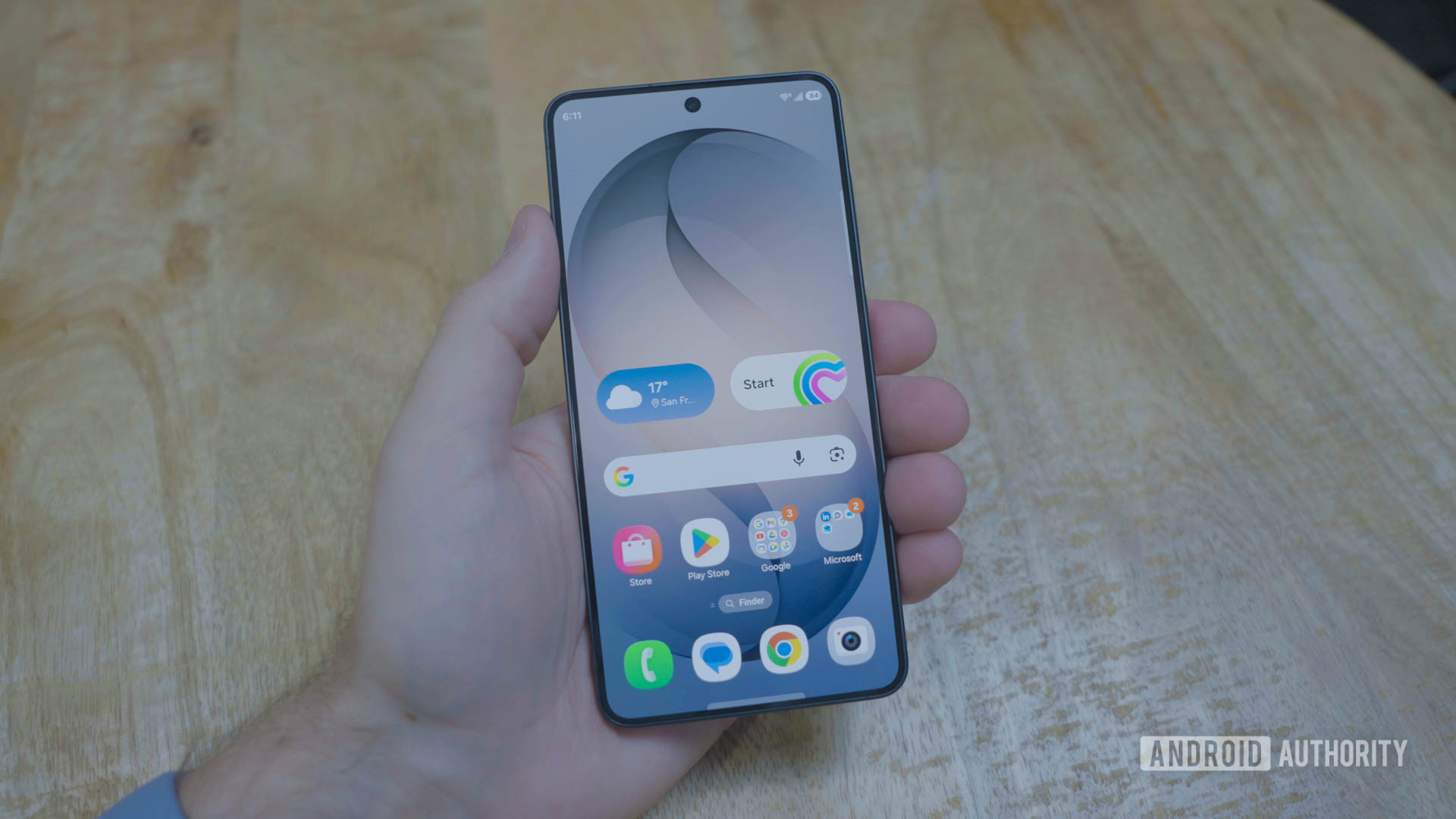
Apple’s iOS 26 has a new interface called Liquid Glass. Lots of people seem to like it, but others complain about the transparency. For me, it took a little getting used to, but pretty soon I just took it for granted, which is how an operating system should be.

Get Our Best Stories!
A Smart, Bold Take on the Wireless World

By clicking Sign Me Up, you confirm you are 16+ and agree to our Terms of Use and Privacy
Policy.
Thanks for signing up!
Your subscription has been confirmed. Keep an eye on your inbox!
Apple Intelligence is getting smarter. Siri now often gives me good answers to questions I ask, even if it often requires asking ChatGPT. Still, there are plenty of times when it gets confused, and in general, I still find Gemini on Pixel or Samsung Android phones to be better.
The standard photo and video applications are improved, including some “AI features” such as an improved Clean Up feature for removing unwanted items or people from the background in your photos, and this seems to be working better than it did when it first came out.
In addition, the iPhone 17 models, like the 16 models, have a separate Camera Control button that brings up the camera app with one click, and this seemed to work very quickly.
A Vastly Improved Camera
And then we get to the camera itself, and the changes here really matter. Both this year’s version and last year’s include 48MP main and ultra-wide cameras. But the 17 Pro adds a 48MP telephoto camera, capable of up to 8x optical zoom, which is the equivalent of having a 13mm to 200mm zoom range. That’s a big difference compared with the previous 16MP camera, which went up to 5x optical.
Recommended by Our Editors
In these shots of the Empire State Building, you can see the differences as I move from ultra-wide through the main camera and up to 8x optical zoom, and what you get when you move it up to 25x hybrid optical and digital zoom, the most the camera will support.

Empire State Building zoom 1x, 2x, 4x, and 8x (Credit: Michael J. Miller)
For the past few years, I’ve put Samsung at the top of the camera market for zoom. Its Galaxy S25 Ultra has a 200MP main camera and a 50MP telephoto with 5x optical zoom plus another 10MP camera with 3x optical zoom and a camera system that goes up to 100x with its hybrid “Space Zoom” feature. The new iPhone doesn’t match the 100x optical, but otherwise seems to match and maybe even beat it.
For example, here are some shots of Grand Central Terminal in the day, and then a close up of the clock in the center:

(Credit: Michael J. Miller)
And then here’s a night shot of the Terminal and a close-up of the exterior clock. I was quite pleased with the quality. Photos of people in regular and portrait mode also worked well.

(Credit: Michael J. Miller)
The front-facing camera has also changed dramatically. Instead of the standard 4:3 aspect ratio, the 17 Pro now has an 18MP sensor with a 1:1 aspect ratio, so it crops the photo. In other words, it can take either a horizontal (landscape) or a vertical (portrait) picture no matter how you’re holding the phone. And you now have zoom and wide-angle new controls that together give you more control over selfies. This is a real improvement.
Video remains a strength of the iPhone Pro line, with a lot of options from resolution and frame rates, and several shooting modes. Apple has long been the market leader when it comes to shooting video on a phone, and the Pro 17 series continues this tradition.
Overall, I’m quite pleased with the iPhone Pro 17. It works well, with lots of little improvements in many areas. It still doesn’t top the market in AI features; Google and Samsung have an advantage there. It also doesn’t have the Galaxy S25 Ultra’s “Space Zoom.” But it’s clearly catching up in those areas.

About Our Expert

Michael J. Miller
Former Editor in Chief
Experience
Michael J. Miller is chief information officer at Ziff Brothers Investments, a private investment firm. From 1991 to 2005, Miller was editor-in-chief of PC Magazine,responsible for the editorial direction, quality, and presentation of the world’s largest computer publication. No investment advice is offered in this column. All duties are disclaimed. Miller works separately for a private investment firm which may at any time invest in companies whose products are discussed, and no disclosure of securities transactions will be made.
Until late 2006, Miller was the Chief Content Officer for Ziff Davis Media, responsible for overseeing the editorial positions of Ziff Davis’s magazines, websites, and events. As Editorial Director for Ziff Davis Publishing since 1997, Miller took an active role in helping to identify new editorial needs in the marketplace and in shaping the editorial positioning of every Ziff Davis title. Under Miller’s supervision, PC Magazine grew to have the largest readership of any technology publication in the world. PC Magazine evolved from its successful PCMagNet service on CompuServe to become one of the earliest and most successful web sites.
As an accomplished journalist, well versed in product testing and evaluating and writing about software issues, and as an experienced public speaker, Miller has become a leading commentator on the computer industry. He has participated as a speaker and panelist in industry conferences, has appeared on numerous business television and radio programs discussing technology issues, and is frequently quoted in major newspapers. His areas of special expertise include the Internet and its applications, desktop productivity tools, and the use of PCs in business applications. Prior to joining PC Magazine, Miller was editor-in-chief of InfoWorld, which he joined as executive editor in 1985. At InfoWorld, he was responsible for development of the magazine’s comparative reviews and oversaw the establishment of the InfoWorld Test Center. Previously, he was the west coast bureau chief for Popular Computing, and senior editor for Building Design & Construction. Miller earned a BS in computer science from Rensselaer Polytechnic Institute in Troy, New York and an MS in journalism from the Medill School of Journalism at Northwestern University in Evanston, Illinois. He has received several awards for his writing and editing, including being named to Medill’s Alumni Hall of Achievement
Latest By Michael J. Miller
Read Full Bio