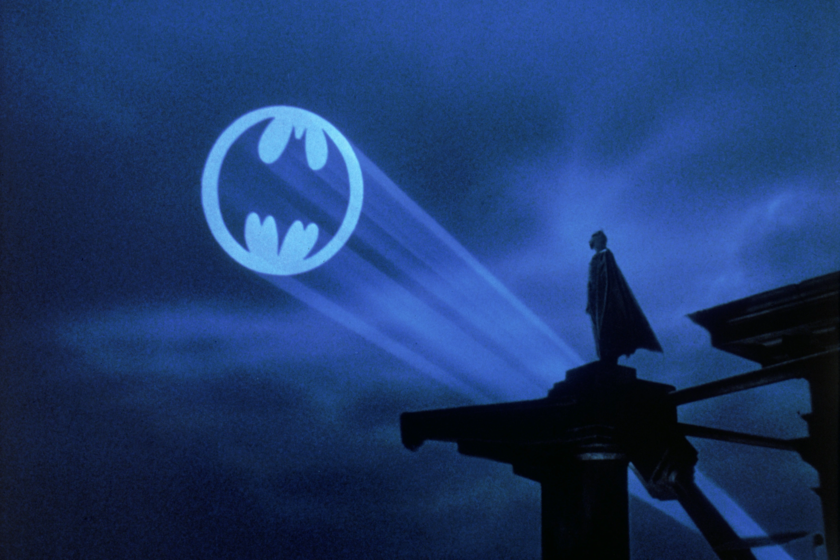
At the end of the eighties, Batman was not that perfectly oiled machine of franchises, shared universes and millimeter marketing, but rather a risky bet. Warner Bros decided to blow up the image camp inherited from Adam West and entrusting the character to a guy like Tim Burton, a director with a dark, gothic and deeply authorial imagery.
The result was a success almost as famous as his fall into hell.
When Batman stopped being sellable. As we said, the result of Burton’s hiring was Batman (1989), a huge success that not only devastated the box office, but also legitimized superhero movies as more than just children’s entertainment.
Burton not only redefined the character, he also laid the aesthetic and emotional foundations for everything that would come after. Gotham became an architectural nightmare, Bruce Wayne a lonely and disturbed millionaire, and the genre took an irreversible leap toward maturity.
Creative freedom and unbridled sequel. That success placed Burton in a unique position: almost total creative control for Batman Returns (1992). The director took advantage of the margin to go even further, delivering a film less interested in the hero than in his villains, more sexual if you will, but also more grotesque and uncomfortable.
Danny DeVito’s Penguin was not a graceful eccentric, but a monster abandoned at birth, violent, repulsive and tragic. Catwoman, a broken and vengeful figure, and Gotham City a warped reflection of corruption, power and alienation. Batman Returns was not a children’s movie, and possibly not intended to be. Burton never conceived it as such, and in fact fought with censors and studios to avoid an even more restrictive rating.
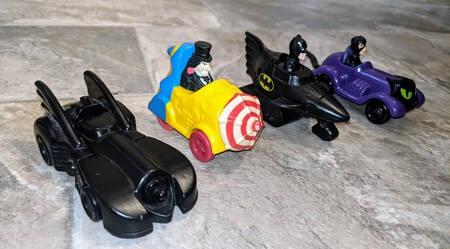
The clash with merchandising. The problem wasn’t the movie itself, but everything that was built around it. Warner Bros. activated a massive marketing campaign, supported by sponsors who had not seen either the script or the final cut. McDonald’s was the star partner. Themed restaurants like Gotham, collectible glasses, toys and, above all, Happy Meals aimed at children between five and ten years old.
The contradiction was total: a dark, disturbing film not recommended for children under 13 years of age sold as a familiar, colorful and sweetened product. The Penguin case was the breaking point. While Burton showed a villain on screen who bit noses and spit black bile, McDonald’s distributed a softened and almost endearing version of the character on its children’s menus.
The perfect storm: parents. The reaction did not take long to arrive. Outraged parents, letters to newspapers like the Los Angeles Times, religious organizations and civic groups accusing McDonald’s and Warner of irresponsibility and deceit. The question was always the same: how on earth was it possible for a movie full of nightmares to be actively marketed to young children?
McDonald’s tried to defend itself by claiming that the toys did not promote moviegoing, and Warner claimed that it had avoided using real elements from the film, something that was not entirely true. The damage, after all, had already been done. Batman Returns became a public relations problem, not for failing at the box office, but for not fitting the mold that marketing needed.
Find a culprit. Fearing that the franchise would burn out in the long term, Warner Bros opted for a radical turn. The solution was not to change the relationship between cinema and merchandising, but to change the tone and sacrifice the director. Tim Burton was removed from the saga on the grounds that his vision was “too strange” and unfamiliar.
Michael Keaton, who did not want to continue without Burton, also left. The message was clear: Batman had to be bright, accessible and, above all, sellable again. Joel Schumacher took over and the result was Batman Forever, a film designed to please sponsors and fast food chains (and that today would embrace the algorithm), with garish colors, exaggerated humor and a tone that made any trace of Burton’s introspective and gothic Batman impossible.
The Happy Meal as a symptom. Years later, Burton would sum it up with irony and bitterness: he had upset McDonald’s. The famous phrase about “that black thing that comes out of the Penguin’s mouth” encapsulated the real problem. It was not just a fast food chain behind it, but the definitive clash between an artistic vision and an industry that was beginning to understand franchises as merchandising platforms rather than as cinematographic works.
In that sense, Batman Returns didn’t fail creatively, it failed as a children’s product, and that was inexcusable.

The legacy. Burton’s departure marked a before and after. The saga entered a drift that would culminate with the infamous Batman & Robin and its suits with nipples, a cartoon that buried the character for years. Paradoxically, time has been generous with Batman Returns, today considered one of the most personal and brave films of the genre, and possibly one of Burton’s best works.
His “failure” was, in fact, the early demonstration of a conflict that would define Hollywood for decades: when superhero movies stopped belonging to directors and began to respond, above all, to toys that had to fit in a Happy Meal box.
Image | Warner
In WorldOfSoftware | In 1975 a party ended on the beach. What happened next was so chilling that people were afraid to swim in the sea
In WorldOfSoftware | The best advertisement within a movie is this science fiction classic: it was so good that it made us doubt the Nazis