Back in 1941, Isaac Asimov was already playing with an idea that for decades sounded more like literature than infrastructure: capture solar energy in space and send her back to Earth. It was not a minor occurrence. Basically, it posed a question that today no longer belongs only to science fiction: what do we do when the energy available down here is not enough to sustain what we want to build. More than eighty years later, that question has found a new protagonist: artificial intelligence.
What we have seen in recent years is a race to build AI infrastructure at enormous speed. More models, more servers, more data centers and, as a direct consequence, more need for stable electricity. Meta places the problem there: current clean sources help, but have obvious limitations when looking for continuous supply. Solar doesn’t produce at night, the wind doesn’t always blow, and the grid needs storage to turn that intermittent energy into a more reliable basis for its operations.
The energy that AI is pushing beyond Earth
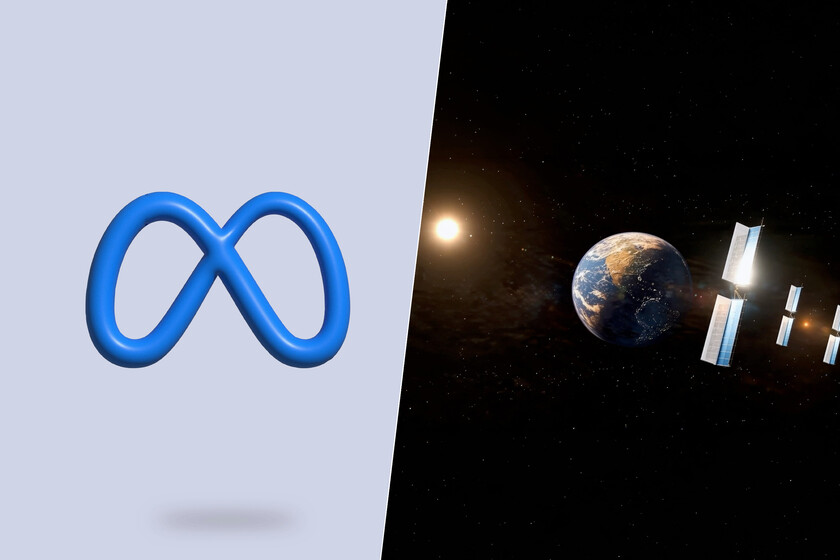
The Meta movement comes in the form of two agreements that attack the problem from different sides. The first is with Overview Energy, a startup with which Meta has reserved until 1 GW capacity of orbital solar power to support the company’s data center operations. The second is with Noon Energy, with whom Meta has reserved up to 1 GW/100 GWh of very long duration storage capacity. The idea is not to replace one technology with another, but to combine generation and storage to get closer to a more continuous supply.
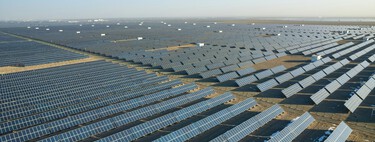
Overview Energy’s proposal is based on a premise that is simple to tell, although difficult to execute. Its satellites would be in geostationary orbit above the Earth’s equator, where sunlight is constant. From there they would capture energy and send it to existing solar installations on Earth as low-intensity near-infrared light. According to Meta, these plants would convert the beam into electricity and inject it into the grid just as they do today with direct sunlight, also during the hours in which they now remain inactive.

Capture of a video about the project shared by Meta
It’s a good idea to put things in perspective. The company itself places this technology in an early phase: Overview plans a orbital demonstration in 2028when your system should try to send power wirelessly from space to a solar plant on Earth for the first time. If successful, commercial delivery to the US grid could begin, at the earliest, in 2030. In between, the most difficult part remains: proving that the system works, that it scales, and that it can do so in an economic sense.

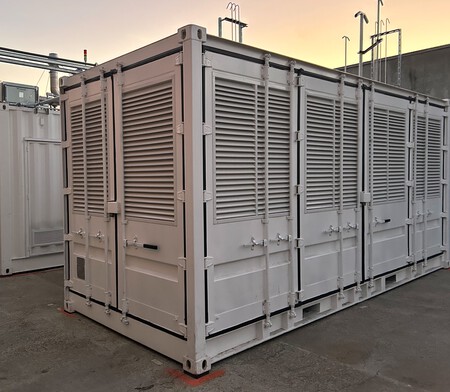

Noon Energy Energy Storage System
The second alliance looks at a less striking, but equally important problem: what happens when clean energy has already been generated and needs to be conserved for longer. Noon Energy works with reversible solid oxide fuel cells and carbon-based storage to offer more than 100 hours of storage, well above what Meta says lithium-ion batteries can offer today.

These two alliances fit into a much broader energy strategy. Meta assures that it has already contracted more than 30 GW of clean and renewable energyand places these agreements alongside its next-generation geothermal projects with Sage Geosystems and XGS Energy, in addition to 7.7 GW of nuclear energy linked to Vistra, TerraPower, Oklo and Constellation Energy. What remains is a fairly clear snapshot of the moment: AI is not only pushing technology companies to buy more chips, it is also forcing them to look for electricity in increasingly unconventional places.
Images | with Grok
In | Kimi Code is eight times cheaper than Claude Code and does 75% of your work. The question is whether it is enough