There is virtually nothing in the Metropolitan Police policy to constrain where it deploys live facial recognition (LFR), the High Court has heard during a judicial review into whether the force is using the technology lawfully.
Brought by anti-knife campaigner Shaun Thompson, who was wrongfully identified by the Met’s system and subjected to a prolonged stop as a result, and privacy group Big Brother Watch, the legal challenge revolved around whether there are meaningful safeguards in place to effectively constrain how the Met uses the technology.
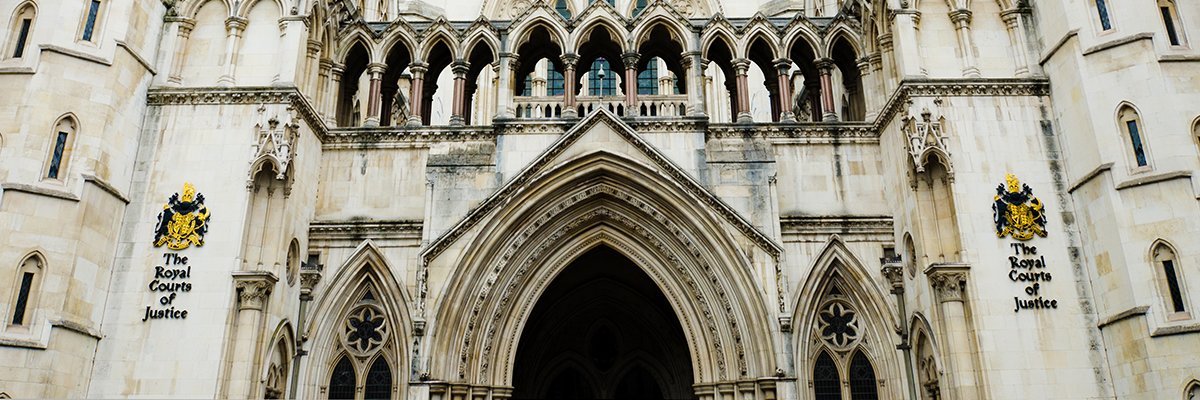
Over the course of the two-day hearing, held at the Royal Courts of Justice, lawyers for Thompson and Big Brother Watch director Silkie Carlo argued that the Met’s use of LFR does not satisfy legality tests, because the policy dictating how officers choose to deploy it is overly broad, opening the technology to arbitrary use.
In particular, they stressed their view that, in practice, the policy essentially allows the Met to deploy the technology in any part of London they choose, because the only criteria limiting where the Met can deploy it is whether it’s a “permitted location”.
The three situations where the Met can use LFR are in “crime hotspots”, including “access routes” to those hotspots; outside public events or critical national infrastructure under “protective security operations”; and locations based on intelligence about “the likely location [of] … sought persons”.
Noting that the force regularly uses watchlists with 16,000 to 17,000 images, they added that there is no real connection between the “who” and “where” when deploying in practice, which risks people being put on watchlists on the chance they will pass an LFR camera.
They also added that of the three use cases under which the Met can deploy LFR, the crime hotspot approach is used in the vast majority of deployments, whereas the other two use cases have only been relied on a handful of times.
‘Permitted locations’
Based on their reading of the Met’s LFR policy and its deployment patterns, the lawyers contended that the only thing in practice constraining choice is whether the deployment area is a “permitted location”, and that the force relies on the hotspot use case because it essentially allows them to drop the technology where they please.
Highlighting how vast swathes of London are designated as “crime hotspots” by the force – and the fact that the Met has conducted multiple deployments on the same day, using the same watchlists, but in completely different hotspot locations – they argued this means there is very little link between the “who” and “where” questions of LFR’s use.
Other issues raised by Thompson and Carlo’s lawyers include the broad definition of “serious crime” used in this context – which is whether the alleged offence would lead to prison for a year or more, a criteria they said does not appear in any other police or government definition of serious crime; how the mass scale of LFR’s use and its automated nature elevates the level of intrusion; and how the Met has chosen to frame the “why” criteria of the deployment.
Highlighting how the Met essentially frames the “why” of LFR as “locating sought persons”, the lawyers argued this is not a constraint on the technology, and simply a description of how it works.
Police arguments
Police lawyers, however, contended that Thompson and Carlo’s challenge is a “proportionality claim dressed up as a legality claim”, and that there are a number of protections against police using LFR arbitrarily.
For example, they noted the LFR policy “leaves no room for capricious decision-making” because it contains specific use cases on when LFR can be deployed; requires officers to create written justifications for their decisions that are then authorised by another, more senior officer; does not allow officers to dictate what counts as a hotspot; and compels them to conduct a deployment-specific analysis against rights enshrined in the European Convention on Human Rights.
Ultimately, they argued that these and other measures taken together means policy sets a roadmap that means officers’ discretion is sufficiently limited, and that it creates an “administrative environment” in which the rules of the policy become inescapable.
Met lawyers also argued that the claimant’s case was a full-scale attack on overt LFR by the police, and that if the court sided in their favour, it would “substantially” hinder the force’s ability to use the technology effectively.
Highlighting how the “primary value” of LFR is to find people whose location is currently unknown to the police, Met lawyers added that confining the force’s deployment to “use case C” – under which LFR can be used at “a particular location where the [Met] has concluded, based on specific intelligence, that a person who is eligible for inclusion on a LFR Watchlist … is likely to be at that location” – would effectively “neuter the value of the technology to policing”.
The judges – Lord Justice Holgate and Mrs Justice Farbey – will now deliberate on the arguments put forward, with a judgement handed down at a later date.
A day before the judicial review hearing started, home secretary Shabana Mahmood announced plans to substantially expand the use of facial recognition by police forces across England and Wales, despite there being an ongoing consultation about a new legal framework for the technology.
While the use of LFR by police – beginning with the Met’s deployment at Notting Hill Carnival in August 2016 – has already ramped up massively in recent years, there has so far been minimal public debate or consultation, with the Home Office claiming for years that there is already “comprehensive” legal framework in place.
However, in December 2025, the Home Office launched a 10-week consultation on the use of LFR by UK police, allowing interested parties and members of the public to share their views on how the controversial technology should be regulated.
The department has said that although a “patchwork” legal framework for police facial recognition exists (including for the increasing use of the retrospective and “operator-initiated” versions of the technology), it does not give police themselves the confidence to “use it at significantly greater scale … nor does it consistently give the public the confidence that it will be used responsibly”.
It added that the current rules governing police LFR use are “complicated and difficult to understand”, and that an ordinary member of the public would be required to read four pieces of legislation, police national guidance documents and a range of detailed legal or data protection documents from individual forces to fully understand the basis for LFR use on their high streets.