December 19, 2025
Russia’s full-scale invasion of Ukraine in February 2022 challenged much of the common Western understanding of Russia. How can the world better understand Russia? What are the steps forward for Western policy? The Eurasia Center’s “Russia Tomorrow” series seeks to reevaluate conceptions of Russia today and better prepare for its future tomorrow.
Table of contents
Russia’s invasion of Ukraine has been, by any metric, a strategic nightmare for Moscow. Not only has Russia lost more soldiers in Ukraine than in any war since World War II—and might well end up losing more troops than the United States lost during the entirety of WWII—but the Russian economy has lurched between overheating and stagflation. All the while, the Kremlin’s decision to expand its invasion of Ukraine has resulted in a NATO both enlarged and enhanced; in Russia’s transition from regional hegemon to a “junior partner” (and even potential vassal) of China; in waning influence in places such as the South Caucasus, the Middle East, Africa, and Europe; and the creation of a heavily armed, deeply resentful neighbor in Ukraine, which will see Kyiv nurse both an animus toward Russia and a desire to reclaim much of the occupied territories for years to come.
The entire war has been an exercise in Russian myopia, accelerating Russian decline and leading to a broad range of self-inflicted wounds. Mirroring other neo-colonial wars—France in Algeria, the Netherlands in Indonesia, Portugal in southern Africa—the war has exposed Russia as a pretender to great-power status and a shell of a once-swaggering empire. While Moscow might yet gain more towns scattered throughout Ukraine’s eastern Donbas region, any remaining victories will remain pyrrhic, with Russia continuing to sacrifice its future prospects for any present gains.
Much of Russia’s failure rests on Ukrainians’ ongoing sacrifices, as well as on the broader West’s willingness to back Ukraine’s troops. But a great deal of this disaster also stems from a series of muddled narratives that Russia has peddled about precisely why it launched the expanded invasion in the first place. Pushing a sprawling, occasionally contradictory series of goals and rationales, and without a clear narrative push to consolidate either support or success, Moscow has flailed for years, lurching from one rationale to another—all while its troops continue dying en masse and its domestic population continues to feel escalating pain and stress as the war drags on.
Given all of the competing claims Moscow has put forth to defend its invasion of Ukraine, it is worth analyzing how the Kremlin has justified its expanded war and how Moscow has tried to sell the deadliest war Europe has seen since the days of Adolf Hitler and Benito Mussolini. Such analysis can not only help Western allies of Ukraine figure out how best to back Kyiv’s efforts but can provide a roadmap for sounder Russia policy in the West overall. In sifting and sorting these narratives, we can identify precisely what is motivating the Kremlin—and, better yet, how to stop it.
Selling the war
The Kremlin’s public rationales for its war in Ukraine fall into two broad buckets.
The first rests directly on Russia’s relationship with Ukraine, focusing specifically on the links, both historic and contemporary, between Moscow and Kyiv. The narratives focused specifically on Ukraine, and on Russians’ relationships with Ukrainians, can be broken down further into three primary prongs.
- The Ukraine war is primarily about “rescuing” Russians and Russian speakers, especially (but not exclusively) in eastern and southern Ukraine. This is primarily predicated on the idea that Ukraine is overseen by “fascists” and “Nazis,” who have been in power since the 2014 Euromaidan “coup.”
- Russia and Ukraine are actually “brotherly” nations, and Ukrainians are simply “confused” about their relationship as subalterns to Russia. This is primarily predicated on the idea that Ukraine is simply “Little Russia,” part of the “triune state” of Russia, Belarus, and Ukraine—and, naturally, not part of the West. The war is simply about restoring that Ukrainian status. It is also about restoring Russia’s colonial control of Ukraine and keeping Ukraine as an entity subservient to Russia.
- “Ukraine” does not actually exist but is a Leninist fabrication. This is predicated on the idea that Vladimir Lenin and other Soviet leadership were mistaken to draw any internal, republican borders within the Soviet Union—and that the entire “near abroad” is rightfully Russian. The war is about rectifying this Leninist mistake.
However, the Kremlin’s rhetoric explaining its war in Ukraine has often expanded far beyond Ukraine itself. Indeed, while the fighting might take place largely on Ukrainian (and occasionally Russian) territory, the Kremlin has often claimed that the war is both global and epochal, linked directly to the second broad bucket of narratives and focused on the status of Russia’s global standing. Those narratives centering on Russia’s role in the broader international context, as well as the creation of a new geopolitical order, can also be broken down into three primary threads.
- This war is primarily about beating back NATO and Western expansion. NATO “pledged” in 1990 that it would not expand its borders, and this war is simply about forcing NATO to uphold that pledge. This war is a “defensive” war, aimed at preventing Russian “encirclement.”
- This war is about the non-Western world standing up to Western bullying, hypocrisy, and decadence. Russia is at the vanguard of the non-Western world’s fight against Western “colonialism,” trying to restore “traditional values” that the West is attempting to destroy around the world.
- This war is about restoring Russia’s status as a “great power,” both in Europe and globally. It is primarily about ushering in a “multipolar” world, with other “civilization-states” such as China and India rising to parity with the United States.
None of the narratives above are mutually exclusive. Indeed, one of the difficulties in assessing these narrative components is the multiple instances of reinforcing themes and topics. For example, the idea that Russia and Ukraine are brotherly nations—or even the notion that Ukraine does not exist—can be directly tethered to the idea that NATO must never extend to Ukraine and that the war is necessarily defensive. The false claim that Ukraine’s 2014 revolution was in reality a coup is also often paired with the idea that the war is about rolling back Western influence and meddling in non-Western nations. These narratives can often work in conjunction—and are often included in the same speeches and writings from Russian President Vladimir Putin and his allies.
Adding to the difficulty, many of these narratives are also in tension with one another. For example, Putin wrote at length about the supposed brotherly relationship between Ukraine and Russia, yet he has simultaneously claimed that Ukraine is a mere fabrication set to be annulled. Likewise, the idea that this is somehow an anti-colonial war grates against the claim that some countries are civilization-states destined to rule over smaller nations.
Still, each of these narratives is worth analyzing on its own. The remainder of this paper will be dedicated to just that: detailing the primary contours of each of these narratives, as well as offering analysis (and often corrections) therein. The paper will also offer a brief conclusion about what these competing and contradictory narratives reveal about Russia’s aims—and how best to combat Russian expansionism in Ukraine and elsewhere.
Russia’s relationship with Ukraine
- The Ukraine war is primarily about “rescuing” Russians and Russian speakers, especially (but not exclusively) in eastern and southern Ukraine. This is primarily predicated on the idea that Ukraine is overseen by “fascists” and “Nazis,” who have been in power since the 2014 Euromaidan “coup.”
Details
One of the primary narratives that Russia has relied on since its expanded invasion did not originate in February 2022, or even in the months beforehand. It instead traces back to at least early 2014, when Ukrainian protesters successfully ousted former President Viktor Yanukovych in the democratic Euromaidan Revolution—and when Putin launched Russia’s initial invasion of Ukraine in Crimea and parts of the Donbas.
At its simplest, Russia’s post-Euromaidan narrative boiled down to the idea that the Ukrainian protesters were illegitimate usurpers, ousting a democratically elected leader and instituting a new regime dedicated not only to wresting Ukraine out of Moscow’s orbit but focused especially on the immiseration of Russians and Russian speakers. The “junta” responsible for this “coup” was secretly in hock to its “real masters in the West,” who were simply using Ukraine and its post-2014 government as a means of targeting Russia and Russian interests. In this view, these new Ukrainian leaders—including Volodymyr Zelenskyy—should be considered fascists and Nazis, simply because they were opposed to Russia writ large, whether that meant not recognizing Russia’s claims to Crimea or encouraging the use of the Ukrainian language throughout the country.
According to Russia, this supposed junta continued its persecution for years until things reached a breaking point in early 2022. That February, Moscow was supposedly forced to invade Ukraine for the express protection of Russians in regions like eastern Ukraine. As Putin claimed, Russia did not need to annex any further parts of Ukraine, but authorities in Kyiv needed to recognize the nominal independence of both the Donetsk People’s Republic and Luhansk People’s Republic—building upon previous demands that these entities must also have a veto over Kyiv’s foreign policy decisions. According to Moscow, Ukraine also needed to renounce any fascist or Nazi leaders and sympathies forevermore.
As Putin said during his address announcing the expanded invasion, “The purpose of this operation is to protect people who, for eight years now, have been facing humiliation and genocide perpetrated by the Kiev regime.” As he added in 2025, the crisis did not begin with Russia’s invasion but was the “result of the coup d’etat in Ukraine, which was supported and provoked by the West.” More specifically, Putin said in 2022 that Russia’s expanded invasion was a direct response to the “tragedy” in the Donbas. As Tass reported, Putin told a twelve-year-old girl that Ukraine’s “bombardments, artillery strikes and combat operations” in Donetsk and Luhansk “compelled Russia to start this military operation.”
Putin’s rhetoric also built on this narrative to call for the notion of “denazifying” Ukraine. As he memorably claimed during his February 2022 address, Russia would “seek to demilitarize and denazify Ukraine, as well as bring to trial those who perpetrated numerous bloody crimes against civilians, including against citizens of the Russian Federation.” The Russian Foreign Ministry and the Russian ambassador to the United Nations echoed this language.
Analysis
The idea that Russia needed to invade Ukraine in order to rescue compatriots and remove Nazi elements from Ukraine’s leadership is, to outside observers, perhaps the most farcical of the narratives detailed here. The notion that Ukraine—whose president is Jewish—requires denazification was immediately met with ridicule and mockery. However, this argument also provided a sense of flexibility for Putin. After all, it remains unclear what denazification would actually entail—whether regime change, full lustration, the ending of any pro-Western trajectory policies, a mix of these options, or something else entirely. Likewise, the call has a clear domestic component, with Putin able to sell the war as a battle against a new generation of supposed fascists and a reprise of Moscow’s victory in World War II.
The calls that Moscow must rescue ethnic Russians suffering in Ukraine, especially in the Donbas, also have significant salience for domestic audiences in Russia. For many Russians, the Donbas remains a traditionally Russian land and Moscow maintains a unique role in protecting Russians in neighboring nations—including beyond Ukraine. Given its salience, this line of argument would likely be employed again should Russia launch another invasion of a neighboring nation in the future, with potential usage from Estonia to Kazakhstan.
- Russia and Ukraine are actually “brotherly” nations, and Ukrainians are simply “confused” about their relationship as subalterns to Russia. This is primarily predicated on the idea that Ukraine is simply “Little Russia,” part of the “triune state” of Russia, Belarus, and Ukraine—and, naturally, not part of the West. The war is simply about restoring that Ukrainian status. It is also about restoring Russia’s colonial control of Ukraine and keeping Ukraine as an entity subservient to Russia.
Details
As with the narrative on Ukraine suffering a coup via fascists in 2014, the idea that Russia and Ukraine are brotherly nations—and that they are destined for embrace, with Russia lording as the “elder brother” over Little Russia—long predated Russia’s 2022 expanded invasion. Indeed, such a narrative stretches back to at least the middle of the nineteenth century, when young Russian aristocrats “discovered” Ukraine and began “to work intensely to uncover the region’s supposed original Russianness,” wrote Johns Hopkins University’s Eugene Finkel, whose 2024 book traced the origins of such efforts. No longer was Ukraine a separate polity with a distinct history; by the 1830s and 1840s, as Russian Slavophile writer Aleksei Khomiakov noted, Ukraine was “an organic and inseparable part of a single Russian nation.” Russia and Ukraine, alongside Belarus, formed a supposed triune state, in which all three nations were part of one greater Slavic nation headed by Russia.
It is an idea that, nearly two centuries later, remains largely unchanged—and which helped provide the outline for one of Moscow’s prime narratives about why it needed to launch its expanded invasion in 2022. This narrative formed much of the basis for Putin’s lengthy 2021 treatise on the topic, in which he detailed the supposed “historical unity of Russians and Ukrainians.” As Putin wrote:
I am confident that true sovereignty of Ukraine is possible only in partnership with Russia. Our spiritual, human and civilizational ties formed for centuries and have their origins in the same sources, they have been hardened by common trials, achievements and victories. Our kinship has been transmitted from generation to generation. It is in the hearts and the memory of people living in modern Russia and Ukraine, in the blood ties that unite millions of our families. Together we have always been and will be many times stronger and more successful. For we are one people.
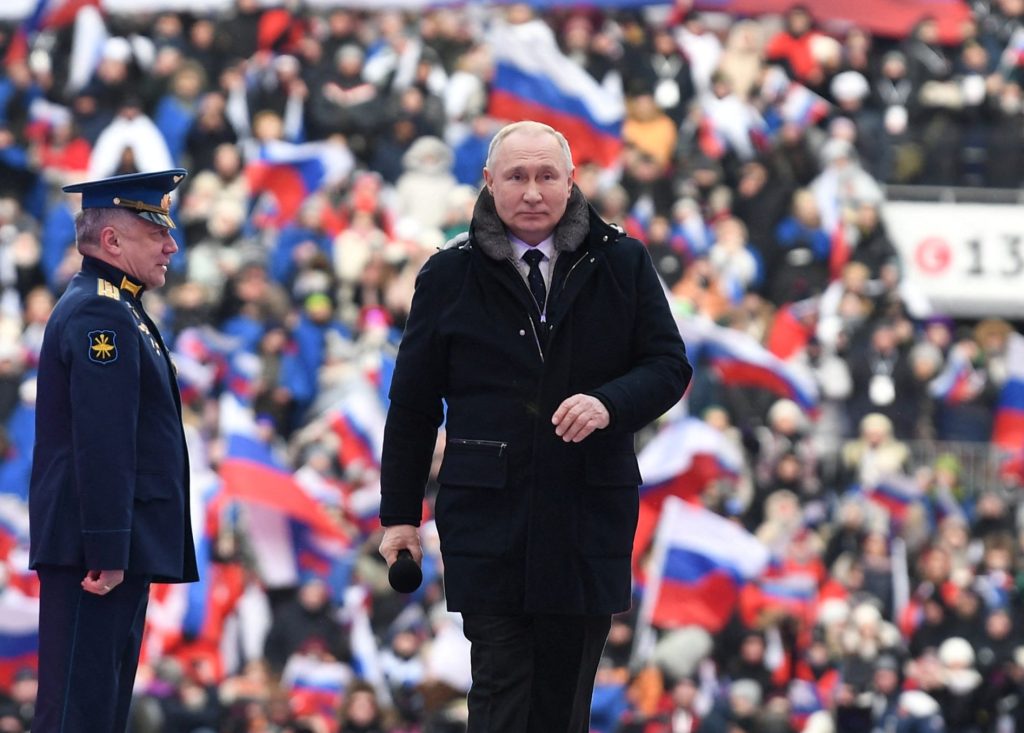
If anything, Putin’s beliefs in the historical unity binding Russia and Ukraine have only grown despite the military setbacks and massive casualty rates continuing to climb. In late 2022, Putin announced the supposed “annexation” of further Ukrainian territory, including territory Moscow had not yet even conquered. As a means of getting around this awkward fact, Putin pointed to the supposed unity already extant between Ukraine and Russia—found, naturally, in the land he was now claiming as Russia’s. As Putin said, those in Ukraine were “our compatriots, our brothers and sisters . . . the native part of our united people.”
Nor is it just Putin who has peddled such tropes. In a malicious, revelatory article originally posted on (and later removed from) RIA Novosti, one Russian writer laid out what Russian victory in Ukraine would look like. “Ukraine has returned to Russia,” the article begins. “It will be reorganized, re-established and returned to its natural state as part of the Russian world . . . [Russia, Belarus, and Ukraine] will now act in geopolitical terms as a single whole.” Thanks to the invasion, “Russia is restoring its unity” via a “de facto civil war” waged by “brothers.” And thanks to Moscow’s victory, “Russia is restoring its historical completeness, gathering the Russian world, the Russian people together—in all its totality of Great Russians, Belarusians and Little Russians [i.e., Ukrainians].”
Analysis
In this narrative, Ukraine and Ukrainians still exist in concept, but only as a nation and people subordinated to Russia and Russian sovereignty. It is, if anything, a vision that posits Ukraine as simply another Belarus: a state that retains nominal independence but is nonetheless tightly embraced by Moscow and subservient to the Kremlin’s demands. This, as Moscow sees it, is the natural state of things—and anything else would simply be a historical anomaly.
This narrative, of course, is chock-full of historic revisionism, outright fabrications, and warmed-over excuses for empire. As Finkel noted, Kyiv’s origins predate Moscow’s founding by centuries, and few if any Russian intellectuals ever considered Ukraine part of their history and identity until the middle of the nineteenth century. Moreover, this narrative grossly ignores what Ukrainians actually think—and blinded Moscow to just how fiercely Ukrainians would fight to preserve both their state and their nation moving forward.
- “Ukraine” does not actually exist but is a Leninist fabrication. This is predicated on the idea that Vladimir Lenin and other Soviet leadership were mistaken to draw any internal, republican borders within the Soviet Union—and that the entire “near abroad” is rightfully Russian. The war is about rectifying this Leninist mistake.
Details
This narrative flips the notion of a supposed triune state on its head. Instead of Ukraine being a constituent part of a greater Russia, there is no Ukraine whatsoever—and any claims of a separate Ukrainian nation, language, or identity are simply slander against the one, true, and indivisible Russia. It is a narrative that tips into the genocidal, giving Russia cover to try eliminating Ukrainian identity entirely.
As with other narratives mentioned above, the idea that Ukraine is not a separate polity but is simply a “project” meant to target and undercut Russia has a lengthy lineage. In the 1860s, Russian officials shunted the idea of Ukraine entirely to the side, claiming that the Ukrainian language “never existed, does not exist and cannot exist,” culminating in a tsarist edict banning the teaching of Ukrainian and marking the first instance of Russian authorities trying to stamp out the idea of Ukraine entirely.
The key inflection point in this narrative—that Ukraine is a mere fabrication, rather than a fraternal nation that has lost its way—came in the early 1920s, when Lenin and other Soviet higher-ups began outlining the borders of the new Soviet republics. Given the levels of support in Ukraine for Ukrainian nationhood, Soviet leadership granted Ukraine (and a number of other polities) republican status, effectively placing it on par with the Russian Soviet Federated Socialist Republic. For Putin and others, this decision was a “time bomb” that ultimately detonated in the Soviet Union’s dissolution and is a historic wrong that must be corrected.
We see elements of this narrative throughout Putin’s speeches and writings. In the same essay mentioned above about the supposed historical unity of Russia and Ukraine, Putin claims that “modern Ukraine is entirely the product of the Soviet era,” created “on the lands of historical Russia.” As he added when announcing the expanded invasion, “modern Ukraine was entirely created by Russia or, to be more precise, by Bolshevik, Communist Russia. This process started practically right after the 1917 revolution, and Lenin and his associates did it in a way that was extremely harsh on Russia—by separating, severing what is historically Russian land . . . When it comes to the historical destiny of Russia and its peoples, Lenin’s principles of state development were not just a mistake; they were worse than a mistake.”
As such, the time had come to rectify that “mistake”—even to the point of destroying and subsuming Ukraine entirely.
Analysis
Putin might play-act as a historian, but his reading of history is saturated in grievance and mythmaking, cherry-picking facts and concocting details of his own. The idea that Ukraine is a fabrication or some facile project is, of course, belied by the fact that Ukraine and Ukrainians continue to exist and continue to fight back against Russian forces.
Moreover, Putin’s shoddy history is easily dismissed by those who have actually studied the region. As acclaimed historian Serhii Plokhy noted, the idea that Ukraine exists on historical Russian lands is nonsensical. “Even a cursory acquaintance with the history of the Russian Revolution and fall of the Russian Empire that accompanied it indicates that the modern Ukrainian state came into existence not thanks to Lenin but against his wishes and in direct reaction to the Bolshevik putsch in Petrograd in October . . . of 1917,” Plokhy wrote. “The Bolsheviks tried to take control of Kyiv as well but were defeated, jumpstarting the process of the modern Ukrainian state-building.”
Putin is hardly the only Russian nationalist who has learned the hard way the peril of dismissing Ukrainian identity. During the Russian Civil War, the pro-tsarist White forces refused to grant Ukraine (among other nations) any political freedoms or sovereignty. They instead claimed they were fighting for “Russia, one and indivisible”—a cry that rallied few non-Russians and eventually doomed the White forces to defeat.
Russia’s global standing
- This war is primarily about beating back NATO and Western expansion. NATO “pledged” in 1990 that it would not expand its borders, and this war is simply about forcing NATO to uphold that pledge. This war is a “defensive” war, aimed at preventing Russian “encirclement.”
Details
Not all of the Russian narratives backing the expanded invasion center on Ukraine. In fact, a number claim that Ukraine is simply the latest flashpoint in a far broader struggle Russia is waging against a perfidious West, and the United States in particular. A case in point is the claim that the war in Ukraine is not just about toppling Kyiv’s “regime,” or even preventing Ukraine from joining NATO, but that it is about unwinding NATO’s post-1991 gains and preventing the wholesale encirclement of Russia by Western forces.
Such a narrative came to the fore in the weeks leading up to the expanded invasion in early 2022. In December 2021, the Kremlin moved from demanding that Ukraine simply acquiesce to Russian demands (especially foregoing NATO membership) to demanding that NATO deployments leave much of Eastern and Central Europe entirely. Moscow specifically called for the removal of NATO forces and weapons from countries such as Romania and Bulgaria, and formally called for NATO to pull back to its 1997 borders, effectively abandoning Poland, Czechia, the Baltics, and others—and effectively restoring military parity between the United States and Russia in Europe.
The Kremlin has justified these demands by claiming that the United States pledged in the early 1990s not to expand NATO eastward. Putin has regurgitated these claims multiple times, including after Russia first launched its invasion in 2014, when the Russian leader stated that Western leaders “have lied to us many times . . . This happened with NATO’s expansion to the east, as well as the deployment of military infrastructure at our borders.” According to Putin, all NATO enlargement following the Soviet dissolution is invalid and must be rolled back. Preventing Ukraine from NATO membership is simply the first domino in a far broader effort to push NATO out of all of its newest member states.
Analysis
Putin’s claims that the United States pledged not to expand NATO are ahistorical and fabricated. The United States never pledged any such veto. Even Mikhail Gorbachev, then ruling as Soviet premier, attested to this, saying that the “topic of ‘NATO expansion’ was not . . . brought up in those years.” Moreover, the key comment in question, in which Secretary of State James Baker floated the idea of NATO moving “not one inch east,” referred solely to NATO troops from West Germany moving into East Germany. The George H. W. Bush administration, however, never adopted this or any prohibition on NATO expansion as formal policy.
However, such a lie is a handy means of cultivating support among gullible audiences, both domestically and internationally, and helps present Russian aggression as being defensive in nature. Of course, this kind of framing—that invading a neighbor is not imperialism but is actually a defensive move—long predates Putin. It can be found in everything from the US decision to invade Mexico in the 1840s to Japan’s decision to invade much of Asia in the 1940s. This “defensiveness” was also the basis for much of the Soviet Union’s rationale for invading numerous neighbors, from Hungary in 1956 to Czechoslovakia in 1968 and beyond. Putin will almost certainly not be the last imperial leader to claim his country’s expansion is defensive in nature.
Thankfully, the Kremlin’s demands have been roundly dismissed by NATO and Western governments alike, and Ukraine remains dedicated to joining NATO. Yet the demands highlight how Russia has spun the war in Ukraine as a means not simply of thwarting NATO’s enlargement but of restoring a military parity between the United States and Russia on the European continent. It implies, in other words, an effective return to the Cold War military status quo within Europe and an unwinding of all the post-Cold War gains that have helped beat back malign Russian influence and military dominance in Europe, far beyond just Ukraine.
- This war is about the non-Western world standing up to Western bullying, hypocrisy, and decadence. Russia is at the vanguard of the non-Western world’s fight against Western “colonialism,” trying to restore “traditional values” that the West is attempting to destroy around the world.
Details
While the war is taking place in Ukraine, this narrative posits that the war is about far more than simple NATO expansion or Ukrainian nationhood. Instead, it is about finally standing up to Western predation and perfidy, and to the West’s attempts to spread supposedly liberal values around the world—including all those elements opposing so-called traditional values.
Russia’s efforts to transform itself into a bastion of these supposed traditional values dates back at least a decade, when the Kremlin first began positioning itself as the primary bulwark for those opposed to liberal democracy. These include those opposed to LGBTQ rights, those opposed to so-called “gender ideology,” and even those opposed to democracy writ large. This effort has been largely successful, with Russia and Putin widely viewed as the lodestar for these anti-democratic forces.
The war in Ukraine, then, is simply a continuation on this theme. Announcing the expanded invasion in 2022, Putin claimed that the West “sought to destroy our traditional values and force on us their false values that would erode us, our people from within.” Patriarch Kirill, one of the key spokesmen for Putin’s regime and the titular head of the Russian Orthodox Church’s Moscow Patriarchate, echoed Putin’s claims that the war was predicated on those in eastern Ukraine “refus[ing] to accept the so-called values that are being offered by” the West, including “the gay parade.” RT editor-in-chief Margarita Simonyan, one of the war’s biggest boosters, warned that Ukraine risked becoming “an LGBTQ capital or a venue for the Transgender Olympics.”
More broadly, the Kremlin has attempted to position the war as an effort to stand up to Western “neo-colonialism.” Ignoring centuries of Russian colonialism in Ukraine (and elsewhere), Putin has attempted to sell the war as a means of beating back Western colonial efforts. As he said when announcing the supposed annexations of multiple Ukrainian provinces in late 2022, “The West is ready to step over everything in order to preserve the neo-colonial system that allows it to parasitize, in fact, to plunder . . . Hence their aggression towards independent states, towards traditional values and original cultures[.]”
Analysis
It’s difficult to take seriously Russia’s claims that it is waging a war in Ukraine for traditional values, or that it has some kind of spiritual mission to beat back the encroachment of LGBTQ rights. After all, Russia is a country in which the rate of regular church attendance is in the single digits, while the country’s abortion rate remains higher than that of many other European nations. Moreover, the country routinely persecutes Christian denominations, even in Russia itself. The country is hardly a bastion of traditional values, despite Putin’s claims otherwise.
However, the claim that Russia is supposedly leading an anti-colonial war is perhaps the most farcical. Russia was a constituent part of the broader, ghastly story of European colonization, stealing lands and brutalizing populations from Eastern Europe and the Caucasus to North Asia and Central Asia—and even joining Great Britain, France, and Spain in colonizing North America. Claiming it was spreading “civilization” and “Christianity” to “heathen” groups of “savages,” Russia’s colonialist claims were indistinguishable from those in European empires elsewhere. In other words, Moscow was as much a European colonizer as London, Lisbon, Brussels, or Paris.
This was true not just in Chechnya, Kazakhstan, Sakha, or Finland, but also in Ukraine, where Moscow—during tsarist, Soviet, and now Putin eras—routinely engaged in colonial behavior, from ethnic cleansing to cultural genocide to mass murder, all while claiming non-Russian lands as its own. The war in Ukraine is indeed colonial, but with Russia once more in the role of colonizer.
- This war is about restoring Russia’s status as a “great power,” both in Europe and globally. It is primarily about ushering in a “multipolar” world, with other “civilization-states” such as China and India rising to parity with the United States.
Details
Arguably the broadest narrative propounded by Russian authorities is that the war in Ukraine is not about the status of certain Ukrainian provinces, or Ukrainian security arrangements, or even the size and status of NATO in Europe. It is instead about restoring Russia’s role as a supposed great power on par with a small number of other states that make up an exclusive club of nations dominating geopolitics. These nations include the United States, China, and potentially India, with Russia also seen as a natural member.
The Kremlin claims Russia’s rightful status as a great power has been dismissed by the West—and especially by the United States, which has preferred to oversee a unipolar world—but no more. In invading Ukraine, Russia has announced its permanent status as one of the supposed civilization-states in a new multipolar world. This is not to say that Russia is aspiring to global dominance, per se. Rather, Russia is aspiring to—and has already achieved—a role as one of the key geopolitical players internationally, regionally dominant and globally relevant. Ukraine remains firmly within Russia’s supposed sphere of influence and, as such, Russia should have the right to do whatever it wants within Ukraine with no outside interference.
This obsession with great-power status has long pervaded Putin’s rhetoric, infusing and inflaming Russia’s revanchism. In October 2022, when he announced Russia’s supposed annexation of four Ukrainian provinces, Putin claimed that Russia is “a great millennial power” and a “country-civilization” that will follow its own path. In March 2023, Putin signed a strategic blueprint outlining Russia’s “historically unique mission” as a “unique state-civilization.” As Uppsala University’s Igor Torbakov wrote, it was the first time that Russian leadership had “officially stated that Russia is a sui generis civilization.”
Much of this narrative has manifested in specific calls for a “new Yalta,” in which leaders in Moscow, Beijing, and Washington effectively carve up the world, Ukraine included. In such a scenario, Russia would be the modern equivalent of the United Kingdom: an empire that might not be quite as powerful or wealthy as the other two nations, but that nonetheless deserves a place at such a summit. “Putin has never hidden that his dream is a new Yalta . . . [to] establish a new world order,” writes journalist Mikhail Zygar. Russia’s Ukraine war—and its supposedly imminent victory—is merely the opening salvo in a far broader global reordering. As the much-maligned RIA Novosti article mentioned above claimed, the invasion of Ukraine meant that a “new world is being born before our eyes”—a world that Russia will help steer.
Analysis
This pretension to greatness hardly began with Putin. Years before Russia’s expanded invasion, the Kremlin and Russian intellectuals were long obsessed with “the pursuit of derzhavnost,” which scholar Seva Gunitsky translates as “both being a great power and being recognized as such by others.” Not only does this mean acting as a regional hegemon, but it also means being entitled to “an unquestioned sphere of influence.” This rhetoric—of Moscow’s “special mission” and its “historic destiny” as a “great power”—stretches back centuries and was evident in the Kremlin’s tsarist, Soviet, and post-Soviet history.
It is perhaps ironic, then, that little has done more to expose the hollowness of Putin’s claims than his invasion of Ukraine. Rather than restore Russia’s great-power status, the war has led not just to the degradation of the Russian economy and outright military disaster in Ukraine but to Russia’s weakening influence in the South Caucasus, the Middle East, Africa, and, of course, Europe more broadly. It has likewise forced Russia to rely on North Korea to shore up national security, and to lean on China to shore up Russia’s teetering economy.
The war has only accelerated Russian decline and undone, perhaps for good, the potential restoration of Russian greatness. Moscow might still maintain its status on things like the United Nations’ Security Council and might still be the only post-Soviet state with nuclear weapons. But the idea that Russia is, or will soon become, a great power is increasingly laughable—and a testament to what a disaster Putin’s rule has been for Russia.
Conclusion
Wars can often contain multiple narratives. The US invasion of Iraq, for example, was originally pegged to removing Iraq’s supposed weapons of mass destruction program before it shifted to fostering “democracy” for Iraqis. The US Civil War was originally launched to restore the sovereignty of the federal government before it shifted to eliminating slavery within the United States entirely. A war with multiple narratives does not necessarily portend either success or failure.
Rare are those wars, however, that push as many competing narratives as Russia has peddled in Ukraine. Indeed, it’s difficult to think of another war that has seen so many different justifications from the invading party. And it’s difficult to identify another war that has seen such a massive difference in scale of what those narratives are proposing, from simple territorial shifts to the entire reordering of the state of global affairs.
But as we’ve seen above, this is precisely what Russia has attempted with its invasion of Ukraine. From protecting pockets of Russians in the Donbas to ushering in an entirely new geopolitical era, from restoring a supposed Slavic unity to eliminating liberal values, the Kremlin’s justifications for its war have been breathtaking in their breadth.
They have also been a confused, muddled mess and a testament to just what a fiasco Russia’s entire war has been for Moscow. Instead of a clear-cut series of goals and aims, Russia’s leadership has flailed for excuses for its invasion, tossing idea after idea into the ether to see what might succeed. Such narrative confusion has stemmed, in large part, from Russia’s overall failures in Ukraine, forcing the Kremlin to reach for more and more justifications as the war drags on. At the same time, the confusion has played a significant role in Russia’s overall strategic failures in Ukraine and elsewhere; without a clear set of strategic goals, there’s little reason to think that tactical or battlefield successes would follow. Of course, much of this is also predicated on the Kremlin’s historical myopia as it pertains to Ukrainian history and Ukrainian nationhood; rather than a constituent part of some kind of Greater Russia, Ukraine is a distinct polity with a unique, separate history—a reality that hundreds of thousands of Russians have now died to learn. While Russia might continue to occupy sections of Ukrainian territory, the Kremlin has all but assured that a heavily armed Kyiv remains Russia’s greatest geopolitical foe for decades to come, if not longer.
For those looking forward, all this narrative confusion highlights one thing: there’s little reason to think Putin will be satisfied with simple recognition of Russian sovereignty over places such as Donetsk or Kherson. As Russian authorities have claimed, this war is about far more than the status of certain sections of eastern Ukraine, or even about Ukrainian membership in NATO. The Kremlin has far broader, and far more destabilizing, goals than simply dominating Luhansk and Zaporizhzhia, or even necessarily toppling Kyiv. Ukraine is but a stepping stone to Putin’s far more sweeping goals of rolling back US and allied interests, reaffirming Russian dominance over all of its neighbors (China and North Korea excepted), and creating a world in which the rights of smaller nations are subject to the whims of a handful of great powers. Given Putin’s ongoing obstinacy about winding down the war and finding a so-called “off-ramp,” it is clear that, for him, this war is about far more than simply the territorial status of parts of eastern or southern Ukraine.
It is, indeed, a reflection of the Kremlin’s obsession with derzhavnost—an obsession of which Ukrainians have done everything they can to disabuse Russia. And it reflects the fact that what can end this war is not the status of places like Crimea or Donetsk oblasts, but a full and outright defeat of Russia. Anything less would simply tempt the Kremlin to try again—with another effort to upend the global order and another war to try making Russia great again.
Read the full issue brief
About the authors
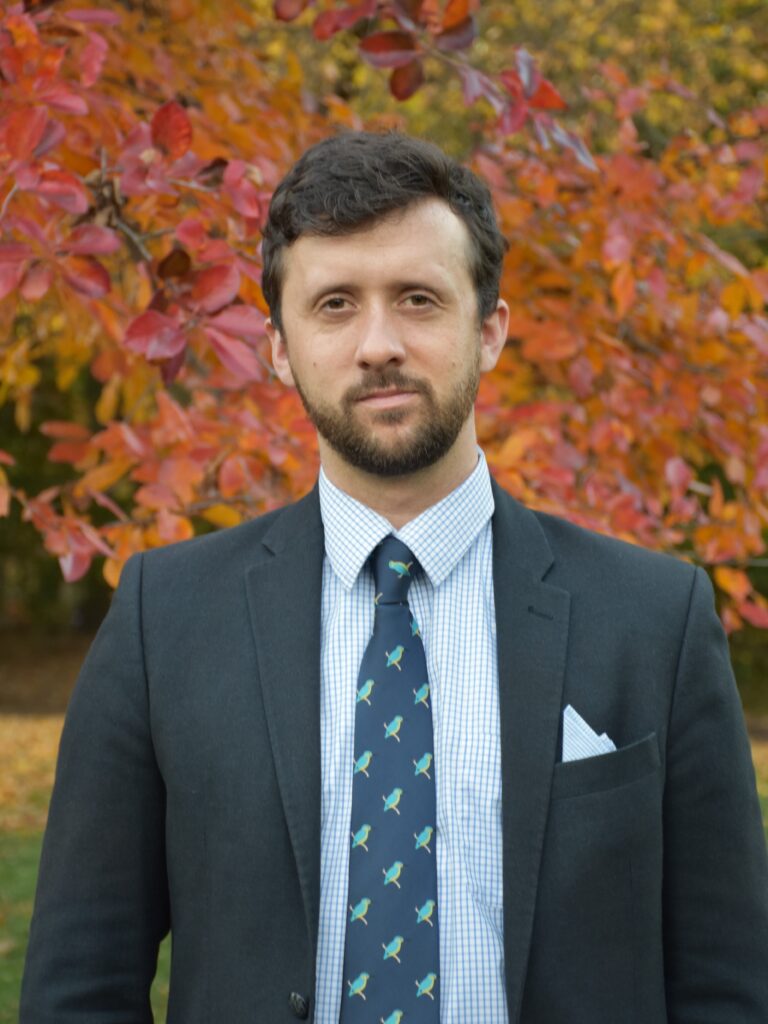
Casey Michel is an author and journalist who writes extensively on international corruption, kleptocracy, national security, and Russia policy. His writing has appeared in the New York Times, Foreign Affairs, Financial Times, Wall Street Journal, and many other outlets. His 2021 book, American Kleptocracy, was named by the Economist as one of the “best books to read to understand financial crime,” and his 2024 book Foreign Agents was named by Foreign Policy Magazine as one of the “biggest foreign-policy book releases of 2024.” His next book, United States of Oligarchy, will be released in summer 2026.
He is based in New York, and is currently sanctioned by the Russian regime for his work.
Related content
Explore the program

The Eurasia Center’s mission is to promote policies that strengthen stability, democratic values, and prosperity in Eurasia, from Eastern Europe in the West to the Caucasus, Russia, and Central Asia in the East.