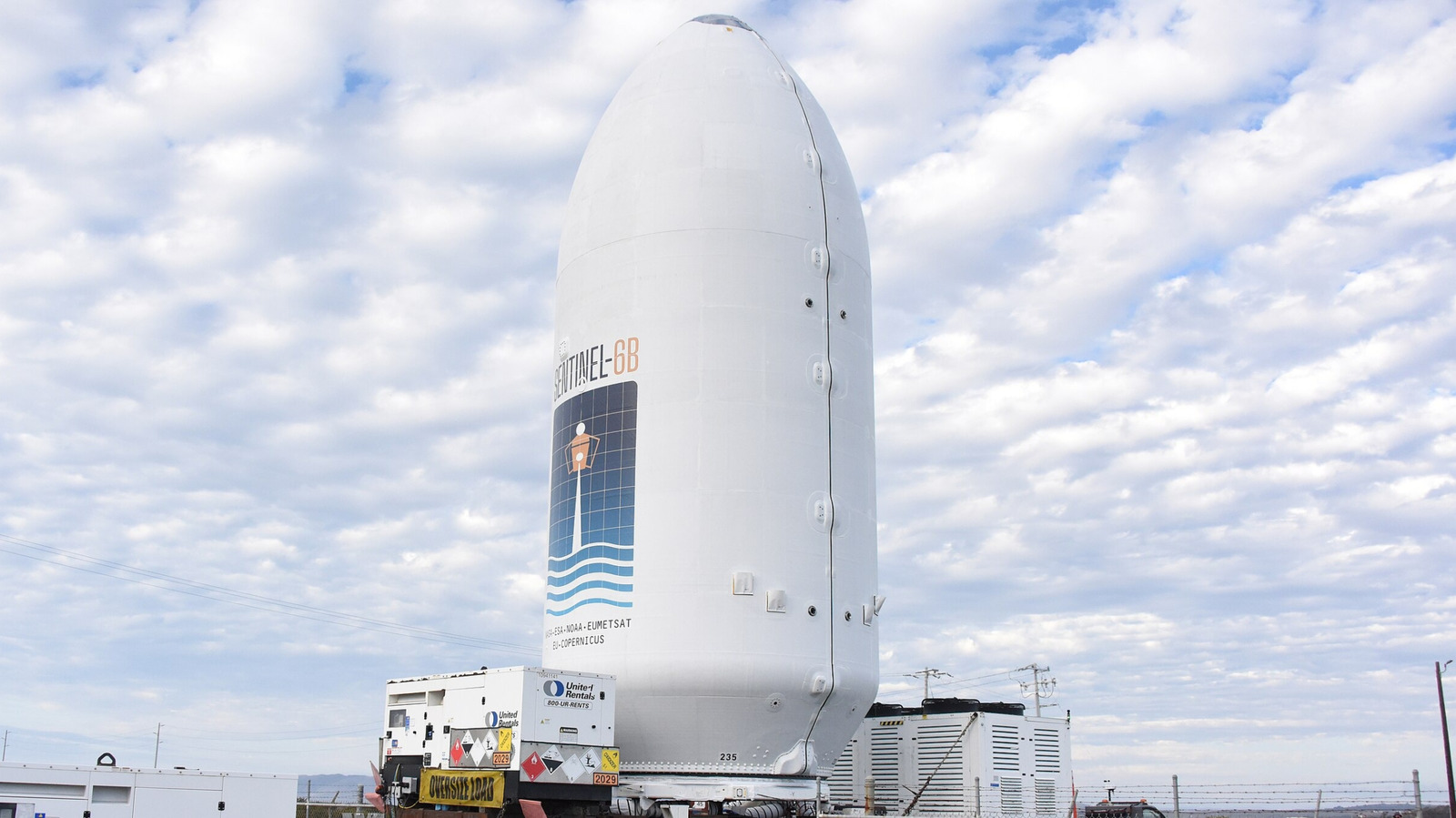
In an effort to monitor our climate more accurately, the Sentinel-6B Earth-observing satellite was recently launched. Behind this project is an international coalition of space agencies, led by NASA. Other included parties are the European Space Agency (ESA), the European Organization for the Exploration of Meteorological Satellites (EUMETSAT), and the National Oceanic and Atmospheric Administration (NOAA). The mission was scheduled for lift off on November 17, 2025, from Vandenberg Space Force Base in California, and the launch went according to plan.
Sentinel-6B took over the mission of its predecessor, Sentinel-6 Michael Freilich, which was launched in 2020. Thanks to these efforts, scientists can continue to record global sea-level changes without interruption. The warming oceans and melting ice are driving the global sea levels to rise at an alarming rate. Tracking these changes is crucial because even the smallest of changes can influence and magnify storm surges. Coastal floodings are also intensifying, and the communities in these regions are in constant danger. The mission of Sentinel-6 and its successor, Sentinel-6B, is a vital tool in safeguarding our coasts and fighting climate change.
Monitor sea levels from space
The mission of Sentinel-6B (also known as Jason-CS B) is to continue and enhance the 30-year-plus record of global sea-level measurements. It is built on international cooperation that has become essential for monitoring our changing planet. The cooperation pooled scientific expertise, technical infrastructure, and decades of ocean-observing experience. The partner agencies have created a mission that no single nation could deliver alone. With the launch complete, Sentinel-6B joined its predecessor, Sentinel-6 Michael Freilich. The two satellites will be flying in tandem for approximately a year.
During this handover phase, both satellites will operate simultaneously on nearly identical ground tracks. This will allow scientists and engineers on Earth to calibrate and cross-validate their measurement systems. This way, the continuity of the data stream will be ensured. The new satellite’s data needs to align seamlessly with the already established baseline.
“Understanding tidal patterns down to the inch is critical in protecting how we use our oceans every day on Earth”, explained Nicky Fox, associate administrator for NASA’s Science Mission Directorate, in a NASA press release. She noted that Sentinel-6B will extend the work of Sentinel-6 Michael Freilich by delivering measurements that strengthen the forecast used by coastal communities. The data gathered by this mission will also be used to ensure the safe return of the astronauts, including crews from NASA’s future Artemis lunar missions.
After the handover, Sentinel-6B will become the world’s primary satellite for measuring sea levels. It will continue the long record of observations that scientists rely on for climate research, forecasting, and planning. EUMETSAT now oversees the satellite’s operations and will run the mission along with its European and U.S. partners.
More about Sentinel-6B
Sentinel-6B builds directly on the work of its predecessor, Sentinel-6 Michael Freilich. However, the newer model is more refined as its upgrades allow it greater reliability in measuring global sea levels. One of the key enhancements is the extended handover phase, but that’s not all.
Sentinel-6B carries the same high-precision Poseidon-4 radar altimeter technology as its predecessor. It’s capable of measuring sea-surface height with centimeter-level precision. It also carries an advanced microwave radiometer for climate (AMR-C) to correct for atmospheric water vapor. Moreover, it features improved orbit-determination hardware that includes Global Navigational Satellite System (GNSS) receivers, Doppler Orbitography Radio-positioning Integrated by Satellite (DORIS), and a laser retroreflector. This enables it to achieve more accurate positioning and take better sea-level measurements. It will cover approximately 90% of Earth’s ice-free oceans every 10 days.
Sentinel-6B isn’t just a follow-up mission. It is a key upgrade that secures almost three decades of measurements and supports improved decision-making for our planet’s changing oceans, rising sea levels, and melting ice shelves.