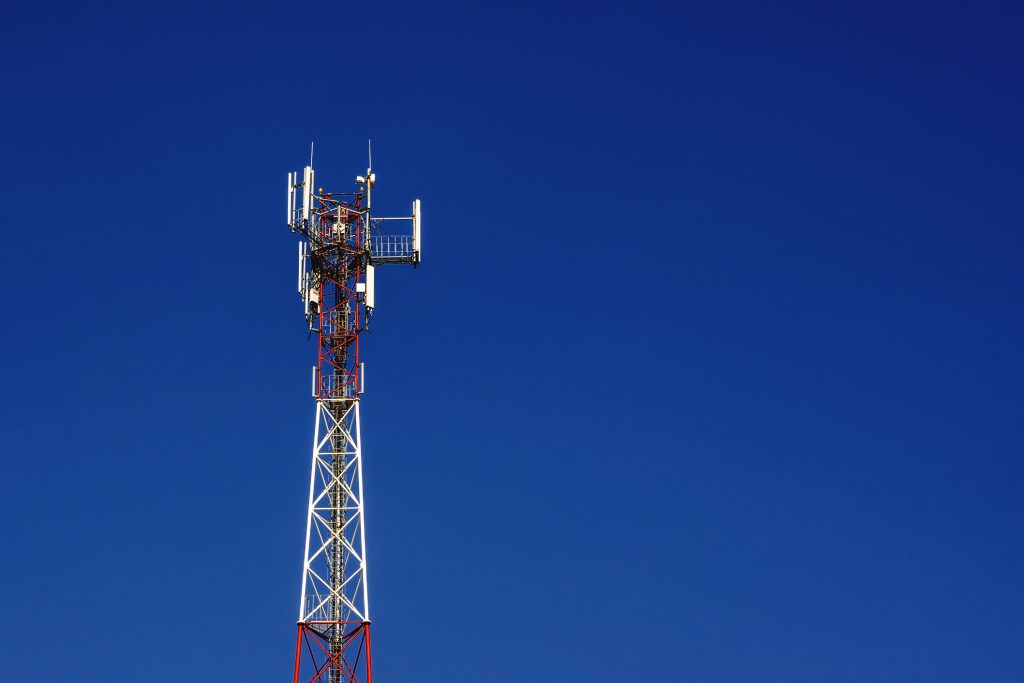
The Nigerian Communications Commission (NCC)’s newly released 2025–2030 Spectrum Roadmap aims to bring broadband to 23 million people across 87 unserved and underserved clusters, according to the Universal Service Provision Fund, Nigeria’s primary financial vehicle for closing the digital divide.
The roadmap, released in December 2025, sets out how Nigeria plans to allocate, price and deploy radio spectrum over the next five years. Spectrum, the invisible resource that powers mobile networks, satellites and wireless internet, is one of the most powerful tools available to the government to shape connectivity outcomes. The NCC bets that reforming how this resource is managed can unlock rural broadband coverage that market forces alone have failed to deliver.
At its core, the roadmap answers a pressing question: how can Nigeria make it commercially viable for operators to serve communities that have long been considered too remote, too sparsely populated or too expensive to connect?
Why spectrum reform matters now
Nigeria crossed 50% broadband penetration in 2025, but that milestone masks deep geographic inequality. Urban centres enjoy multiple layers of 4G and growing 5G coverage, while many rural areas still rely on patchy 2G or remain completely offline. The challenge is not demand—millions of Nigerians want connectivity—but cost. Building towers, laying fibre and powering base stations in rural terrain is expensive, and returns are slower.
The NCC’s roadmap frames spectrum reform as a supply-side intervention. By lowering the cost and complexity of deploying networks, especially in low-income and high-cost regions, the regulator hopes to tilt investment decisions in favour of rural expansion. The policy prioritises efficient use of low-band spectrum below 1 gigahertz (GHz), which travels longer distances and requires fewer base stations, making it particularly suited for rural coverage.
Flexible licencing is another key pillar of the policy. Rather than forcing operators into rigid, one-size-fits-all deployment models, the NCC plans to allow spectrum use to reflect local realities. The regulator is also weighing targeted incentives for operators that extend coverage into hard-to-reach areas, using regulatory levers to shift investment where it is most needed.
“Overall, Nigeria’s evolving spectrum landscape demonstrates that long-term market leaders have built spectrum depth through sustained investment, early technology adoption, and consistent participation across multiple assignment cycles—ranging from refarmed GSM holdings to digital dividend and capacity bands,” the NCC said in its roadmap.
From edge case to core strategy
A notable shift in the roadmap is the elevation of satellite connectivity from a complementary option to a core pillar of national coverage. The NCC acknowledges that terrestrial networks alone cannot economically reach every part of Nigeria. Low-Earth Orbit satellite systems are expected to play a growing role in connecting remote schools, health facilities and communities where fibre and towers are impractical.
The Commission also plans to optimise existing geostationary satellite assets and explore high-altitude platforms and other non-terrestrial technologies for mobile backhaul. These alternatives could reduce reliance on expensive fibre links and lower the overall cost of rural network operations.
This approach reflects a broader rethinking of what “universal access” looks like in a country with Nigeria’s size and geography. Connectivity, under the roadmap, does not have to be delivered through a single technology, so long as service quality and affordability targets are met.
The pricing question
While the NCC presents the roadmap as an investment-friendly framework, operators say execution, especially around pricing, will determine whether the policy succeeds.
Gbenga Adebayo, president of the Association of Licensed Telecommunications Operators of Nigeria (ALTON), which represents the four biggest mobile network operators, including MTN, Airtel, Globacom, and T2 Mobile, argues that spectrum pricing remains one of the biggest risks to network expansion. According to Adebayo, evidence from global markets shows that when spectrum prices are set too high, consumers ultimately pay the price through slower rollouts, weaker coverage and higher service costs.
“Radio spectrum is a scarce and valuable resource,” Adebayo told . “ But when spectrum prices are too high, consumers suffer from slower mobile data speeds, worse coverage and delayed deployment. That directly undermines digital inclusion and the National Broadband Plan.”
ALTON has pushed for what it calls “reasonably objective” spectrum pricing, arguing that affordable access to sufficient spectrum is essential for delivering high-quality mobile broadband services.
Closely linked to pricing is the industry’s call for instalment-based payment options. In Nigeria, spectrum licences are typically paid for upfront and in full, a model operators say drains capital that could otherwise be invested in network rollout. Adebayo notes that, apart from one exception, the upfront payment model has left operators with limited funds to meet coverage obligations after winning spectrum.
Licence refarming challenges
ALTON is also urging the NCC to align licence durations with global best practice. Citing GSMA research, the group argues that long-term licences—often 20 years or more—provide the certainty needed for large-scale network investments, especially in Sub-Saharan Africa, where payback periods are long.
Another flashpoint is spectrum refarming. As demand for 4G and 5G grows, operators need the flexibility to repurpose spectrum currently tied to legacy 2G and 3G services. Technology-neutral licensing, ALTON says, would allow operators to upgrade networks at a pace driven by market demand, maximising the social and economic impact of mobile broadband.
The industry group has also raised concerns about how spectrum assignments are handled. Under current practice, some spectrum lots are auctioned while others are administratively assigned. ALTON says this has created opportunities for arbitrage, where entities acquire spectrum without plans to deploy networks, only to trade it later for profit.
The NCC did not respond to requests for comments on the concerns raised by ALTON.
Quality of experience, not just coverage
Beyond access, the roadmap places growing emphasis on the quality of experience. The NCC has committed to nationwide minimum data speed thresholds by the end of the decade, alongside improvements in reliability and service consistency.
Achieving those targets will require more than new spectrum. The roadmap prioritises stronger fibre backhaul to base stations, better integration of existing networks and redundancy through microwave links in hard-to-reach areas. Spectrum trading guidelines are also being refined to allow operators to manage capacity more efficiently.
What comes next?
The NCC’s Spectrum Roadmap sets out an ambitious vision: near-universal 4G coverage, expanded 5G adoption and deeper integration of satellite services by 2030. If delivered, it could reshape Nigeria’s digital landscape and bring millions of citizens into the formal digital economy.
But ambition alone will not close the gap. Operators continue to face high energy costs, security challenges, right-of-way charges and currency pressures—factors that hit rural deployments hardest. The success of the roadmap will depend on whether spectrum pricing, licence terms and refarming rules genuinely free up capital for network investment.
The roadmap answers the “what” and the “why.” The harder test lies ahead: whether Nigeria can translate spectrum reform into towers on the ground, signals in the air and affordable internet in communities that have waited the longest to be connected.