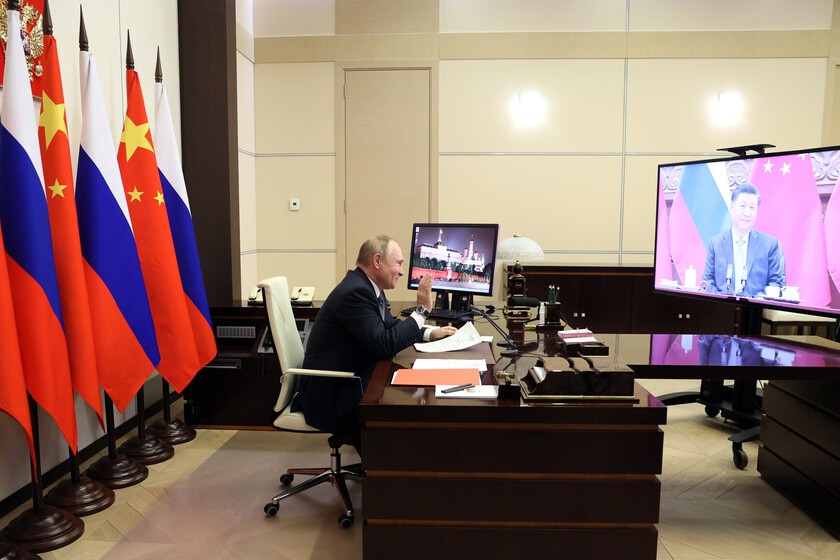
If Trump’s words in Davos are confirmed, it seems that “nothing” is going to happen in Greenland. That leaves another reading that is beginning to gain strength among analysts: that the United States’ threats to force control of Greenland have opened a crack that, without the need to fire a single shot or lift a single finger, immediately benefits two nations.
The geopolitical gift. While Washington has presented the movement as a maneuver to stop its rivals, in Europe it is interpreted as a direct threat to the sovereignty of an ally and to the very credibility of NATO. Meanwhile, in Moscow and Beijing it is read as proof that the Western order is no longer sustained by shared rules, but by impulses, blackmail and force.
In this climate, the simple debate about “who’s in charge” and “how far the American umbrella extends” erodes the cohesion that for decades had been the main strategic brake (at least on paper) for Russia in Europe and the biggest structural obstacle for China in its global struggle.
Russia far ahead. We have told it before. In the Arctic, Russia is not starting from scratch or playing for the future: it has already been installed and has been operating for years with a material and geographical advantage that the United States cannot quickly match. Moscow has a consolidated military presence in the north, with bases, infrastructure, operational experience and an integrated defense logic around its sea routes, its resources and its strategic deterrence, in addition to key assets such as its Northern Fleet and the symbolic and technical weight of having used the region as a testing and projection space since the Soviet era.
So when Washington turns Greenland into an open crisis, Russia sees two things at once: the opportunity to weaken Western unity and the risk that the Arctic will go from being a terrain of contained competition to a zone of direct confrontation, one in which any miscalculated move accelerates militarization and possible escalation.
The Russian method. The Russian reaction to the tension over Greenland has been marked by a combination of irony, enthusiasm and cold calculation, like someone suddenly finding a perfect lever to improve their position without visible effort. The message that is repeated in the Kremlin environment is transparent: the best thing that can happen to Russia is that the United States and Europe dedicate themselves to fighting among themselves, because that, first of all, distracts from Ukraine, poisons cooperation and pushes allies to distrust American leadership.
In this framework, they reported in AP that Russian propaganda allows itself the luxury of celebrating that “Atlantic unity is ending,” of joking that Europe has no real tools against Washington, and of presenting the entire episode as a didactic scene in which Russia’s rivals tangle themselves.
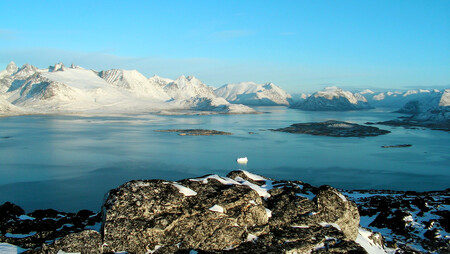
Greenland as a smoke screen. One of the most immediate benefits for Moscow is this shift in political and media focus: when the European agenda is filled with Greenland, Ukraine loses diplomatic oxygen and negotiation space. The tension is forcing European leaders to put out internal fires rather than focus on the war, and that reduces collective pressure on Russia just as Moscow seeks concessions or relief in any negotiating process.
Furthermore, the simple fact that NATO is discussing whether or not it should “block” American expansion introduces a disturbing idea: that the alliance is not an automatic pact of trust, but rather a kind of club where the strongest can change the rules if it suits them.
Putin and Trump. Russia also seems to be careful with its tone with the White House because its priority is not to clash with Trump while it tries to obtain advantages over Ukraine and rebuild its relationship with Washington. That is why he avoids openly condemning the pressure on Greenland (a few hours ago Putin said that they care “zero”) and, instead, surrounds it in a comfortable ambiguity.
It is a position that, although passive, is actually strategic, because it allows the conflict to unfold. cook within the Western camp without Moscow appearing as the instigator. At the same time, it introduces a dangerous idea into the debate: that international legality is secondary to the will of a great power, something that Russia knows well and cynically exploits when it suits it.
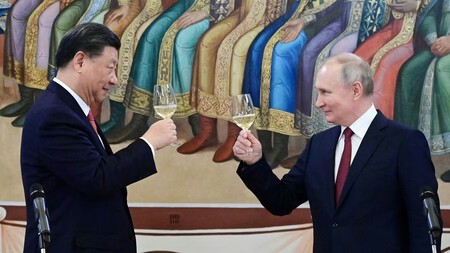
China doesn’t need Greenland. From Beijing, the opportunity is not so much in “winning” Greenland, but in observing how the United States fights with its allies and devalues the system that gave it a strategic advantage over China. They recalled in the Guardian that, in Chinese eyes, the ideal scenario is not to conquer Arctic territory, but to see how the discipline of the Western bloc is broken, because the great multiplier of American power has always been its network of alliances.
China may have interests in polar routes, research and resources, but its greatest prize is political: a Europe more distrustful of Washington, open to its own balance and more tempted to take refuge in trade as a lifeline in a world of tariffs and blackmail.
The Polar Silk Road. We have told it before. China has been building an Arctic story for years that presents it as a legitimate actor, with official roles where it defines itself as “almost arctic” and with the promise of a Polar Silk Road supported by melting ice, new maritime routes and faster transportation between Asia and Europe.
There are concrete signs of that ambition, such as the use of the Northern Maritime Route to drastically shorten travel times, although that route depends largely on Russia and its control over the corridor. In that sense, each crisis between the United States and Europe is not only a political problem: it is an economic window for Beijing, because it messes up rules, pushes Europe to look for alternatives and gives China room to present itself as a “stable” trading partner, although that stability may be more rhetorical than real.
Davos and a resignation. The clash over Greenland is aggravated because it comes accompanied by a broader discourse: the United States no longer wants to lead the liberal economic order or support European security as if it were a free service. The message that comes out of Davos is that the US market has an entry Price, that military protection is not given away and that the alliance is measured in money (and obedience), not in shared values.
Even if Trump modulates his tone or changes tools (tariffs yes, tariffs no), the damage has already been done because the world has heard the central idea: Washington is willing to use its economic power and its security umbrella as a coercive lever on friends and rivals alike.

Free dirty work. The threat to Greenland these weeks has worked like a machine that produces strategic benefits for Moscow and Beijing without them having to lift a finger: dividing NATO, distracting from Ukraine, eroding the credibility of the United States and turning the global debate into a discussion about naked power instead of rules.
Moscow gains time, political air and confusion in the enemy camp, while China gains a perfect narrative to argue that the West is no longer a coherent bloc and that the future points to multipolar by attrition, not by conquest. And the most disturbing thing of all is that, although Greenland does not finally change hands (or so it seems), the fracture has already opened: the simple fact of having tried has demonstrated from “outside” the West that the center of gravity of its strength, unity, was also its weakest point.
Imagen |Presidential Executive Office of Russia, Heute, Jensbn
In WorldOfSoftware | There is a very simple reason why the US is not going to forget Greenland soon: the Nobel Peace Prize
In WorldOfSoftware | If there is no other option, Europe has a missile for Greenland. One that points out where it hurts the US the most: its obesity