Artificial intelligence and the resulting AI semiconductor boom are powering a once-in-a-generation shift. But what happens when the very idea of what a computer is begins to change?
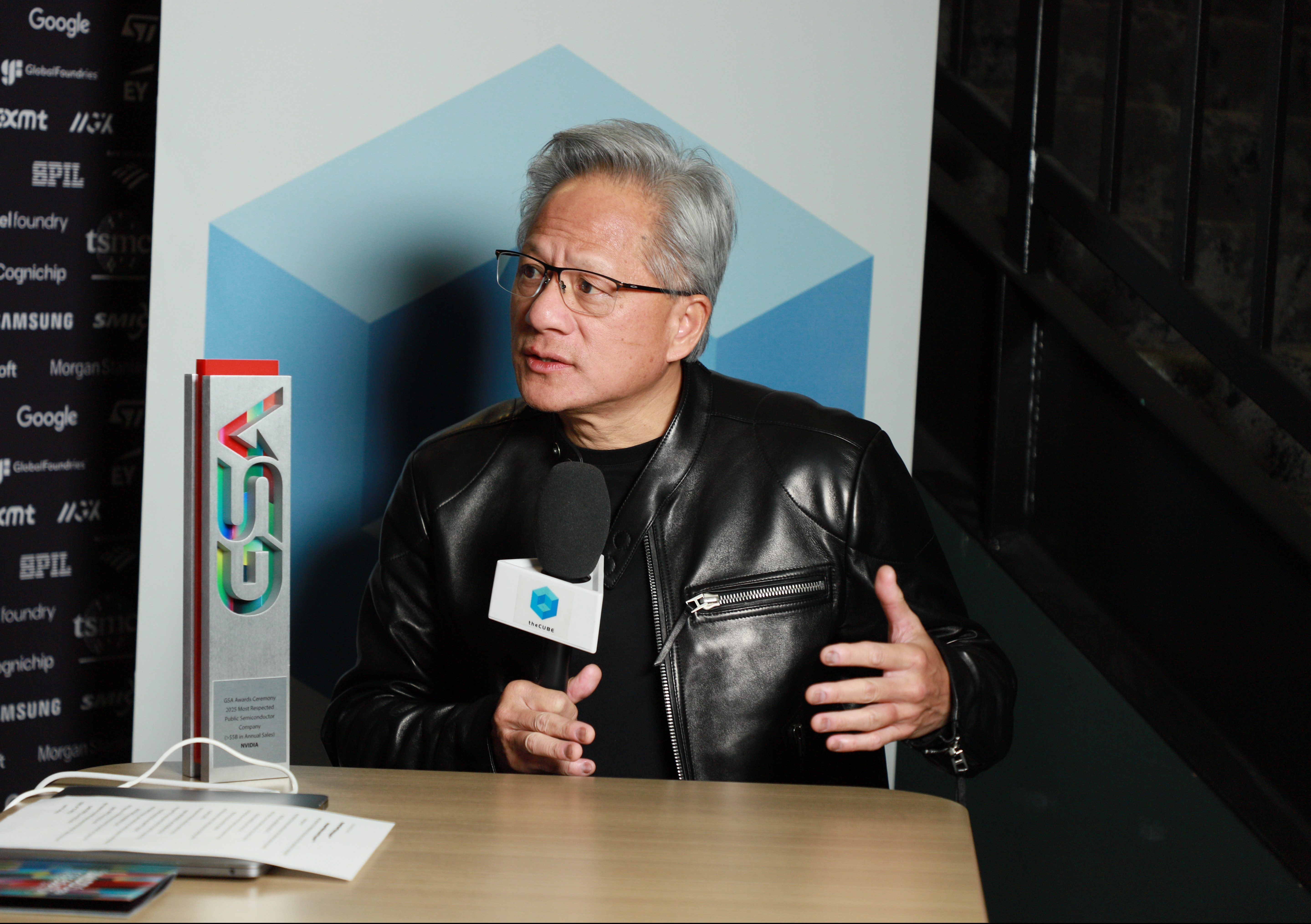
Nvidia Corp. is positioning itself as the company with the clearest answer. Fresh off being named “Most Respected Public Semiconductor Company” at last week’s GSA Awards, the chipmaker is casting itself as the architect of a new computing era — a market-defining transformation without precedent, according to Jensen Huang (pictured), founder and chief executive officer of Nvidia.
“We’re reinventing computing as we know it. What was general-purpose computing — software written by engineers, pre-computed, distributed as binaries — [is] no longer that way. What’s important now is that we’re creating what we call AI data centers … essentially intelligence factories that are generating intelligence in real time,” Huang told theCUBE, News Media’s livestreaming studio. “The number of computers, the number of these factories that we have to build around the world is going to be extraordinary. This is the largest semiconductor opportunity in history.”
Huang spoke with John Furrier following the GSA Awards Celebration, during an exclusive broadcast on theCUBE. They discussed the AI semiconductor boom reinventing computing and marking a watershed moment for the semiconductor industry.
The AI semiconductor boom, from the cloud to the edge
From his vantage point at the top of Nvidia’s explosive growth, it’s clear AI is transforming not just data centers, but the fabric of computing itself, Huang explained. AI will increasingly run in massive cloud facilities, smart devices and autonomous machines in real time, setting up a globally distributed fabric of AI “factories” that generate intelligence on demand, he added.
“We’re going to be generating intelligence out of these computers from all over,” Huang said. “Sometimes they’re centralized. We call them AI factories. Sometimes they’ll be distributed — that would be at the edge. They might even be processed completely in real time inside the systems themselves — for example, robotic systems. AI is utterly transformative in every possible imaginable way.”
The stakes are significant. Estimates suggest that AI-driven data center investment could climb toward $1 trillion annually by 2030 as cloud providers and chipmakers race to construct AI factories and the networks to feed them. Against that backdrop, modernizing six decades of computing in roughly one decade will create extraordinary upside for the companies supplying the silicon and systems that make it possible, Huang noted.
“We’re reinventing computing from the ground up, every single layer of the tech stack, for the first time in literally 60 years,” he said. “When you think about how long the computers have been in society, how deeply integrated it’s already into all of the industries and use cases and how we’re going to completely modernize it over the course of the next decade, the amount of growth opportunity that’s been created for the semiconductor industry is extraordinary.”
Here’s the complete video interview, part of News’s and theCUBE’s coverage of the GSA Awards Celebration:
Photo: News
Support our mission to keep content open and free by engaging with theCUBE community. Join theCUBE’s Alumni Trust Network, where technology leaders connect, share intelligence and create opportunities.
- 15M+ viewers of theCUBE videos, powering conversations across AI, cloud, cybersecurity and more
- 11.4k+ theCUBE alumni — Connect with more than 11,400 tech and business leaders shaping the future through a unique trusted-based network.
About News Media
Founded by tech visionaries John Furrier and Dave Vellante, News Media has built a dynamic ecosystem of industry-leading digital media brands that reach 15+ million elite tech professionals. Our new proprietary theCUBE AI Video Cloud is breaking ground in audience interaction, leveraging theCUBEai.com neural network to help technology companies make data-driven decisions and stay at the forefront of industry conversations.