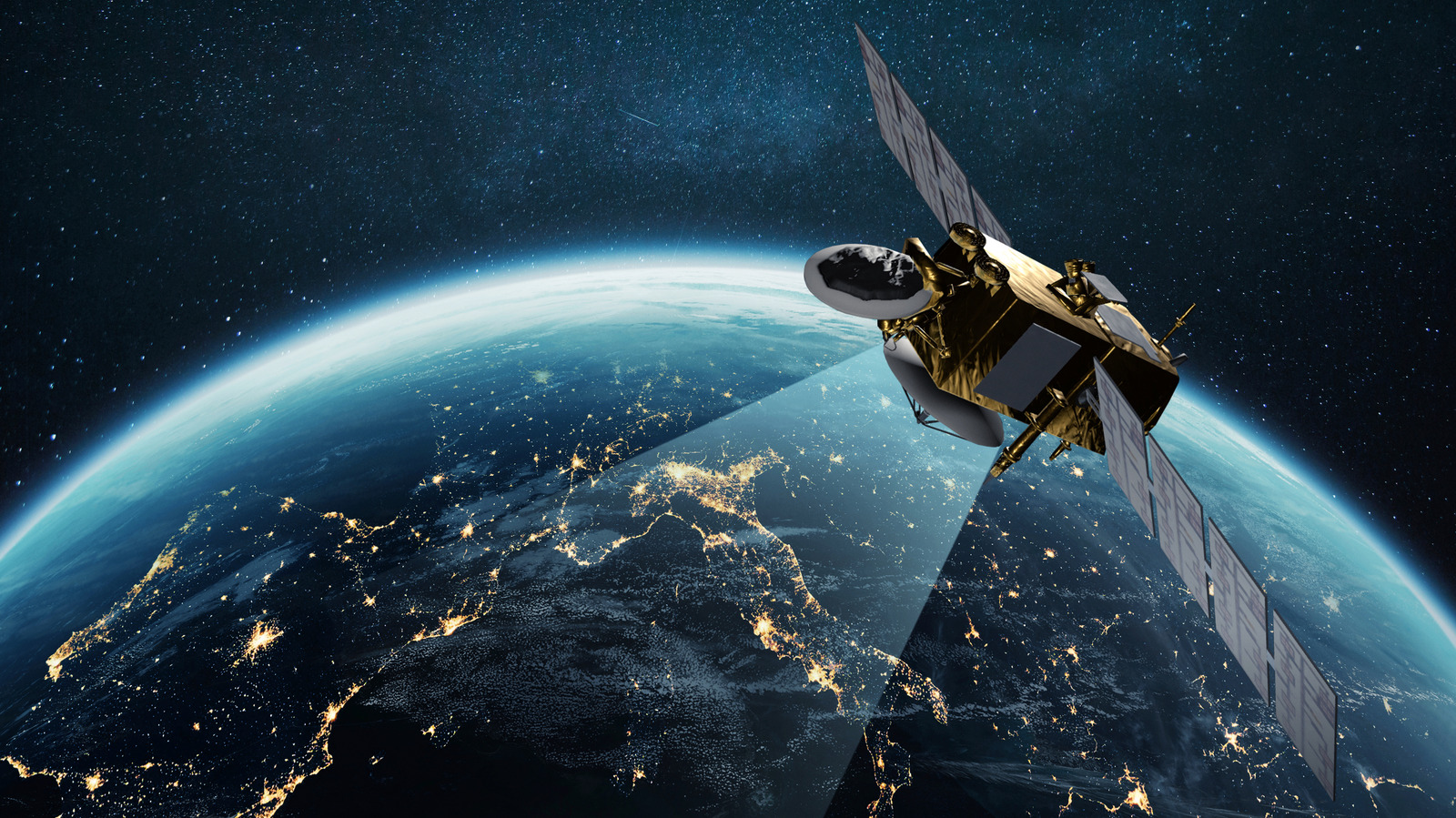
Humanity has invested a lot in satellites, and not just in terms of money. Yes, the most expensive satellites can cost close to a billion dollars, but the bigger investment comes in terms of our reliance on this orbiting technology. Television broadcasts, navigation systems, weather forecasts, and numerous forms of financial exchanges all rely on satellites to work. If all of Earth’s satellites suddenly shut down, international communications systems would begin to fail, transportation would grind to a halt, clocks would fall out of sync, and global supply chains would collapse. It’s a scenario befitting a disaster movie, but unfortunately, it’s also a very real danger. It could take as little as one solar storm or a single software glitch to destroy every satellite in under a week’s time.
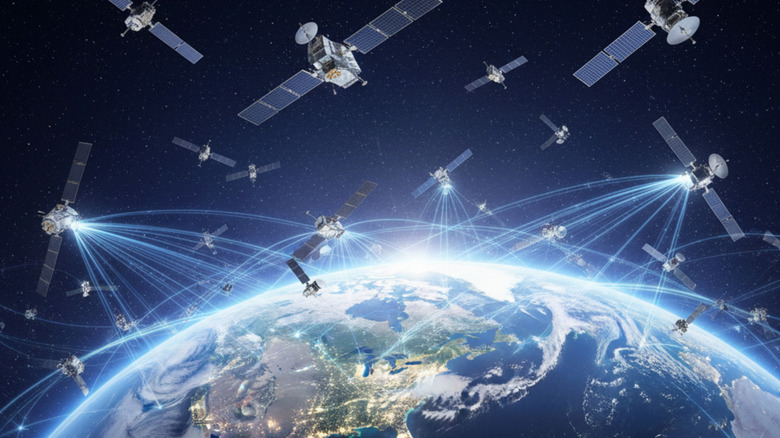
The number of satellites in orbit has been growing exponentially, especially since the introduction of SpaceX’s Starlink satellites. As of January 2026, there are roughly 15,000 satellites in orbit, of which around two-thirds are Starlink. As the space around Earth becomes more crowded, satellites need to make increasingly frequent maneuvers to avoid crashing into each other. It’s gotten to the point that SpaceX alone is performing collision avoidance maneuvers every two minutes. However, if SpaceX or any other satellite operator lost contact with its technology due to, say, a solar storm or software glitch, they wouldn’t be able to perform the necessary evasions. This could set off a domino-like series of crashes that brings down all of Earth’s satellites in mere days.
Scientific attempts at measuring the risk of satellite collisions
Scientists have been expressing concerns about this risk since the very first satellites were launched at the height of the Space Race. In 1978, NASA researcher Donald Kessler published a paper in the Journal of Geophysical Research, warning of the rising risk of satellites colliding with one another and creating a belt of debris around the Earth that would block our access to space. This in turn gave rise to the term “Kessler Syndrome,” a vaguely-defined scenario wherein low Earth orbit becomes so overcrowded with satellites that one single collision would trigger another and another and so on. Lose one satellite … lose them all.
Kessler created mathematical models to demonstrate the risk, but obviously, that didn’t stop companies from making more and more satellites. In light of a new reality, Princeton University graduate student Sarah Thiele and her colleagues devised a new way to measure the risk, called the Collision Realization And Significant Harm (CRASH) Clock. The CRASH Clock uses satellite position data to estimate the time it would take for a catastrophic collision between satellites to occur if the ability to perform avoidance maneuvers was lost. As of the writing of this article, the CRASH Clock sits at just 5.5 days. That’s less than a week for satellite engineers to avoid disaster. What’s even scarier is how quickly the risk has advanced. In 2018, before Starlink’s satellite megaconstellations were introduced, the CRASH Clock was at 164 days.
Past accidents serve as a warning
The CRASH Clock is perhaps the clearest warning yet of how quickly we are approaching a Kessler Syndrome scenario. In less than a decade, the clock went from five-and-a-half months to just five-and-a-half days, a chilling increase in danger. The risk isn’t just hypothetical either. A growing sample of real collisions and outages is putting the fragility of our satellite systems on display. Studies show solar storms are already interfering with some satellites, increasing the drag forces they experience in orbit. This doesn’t bode well for the possibility of an extra-powerful solar storm, something for which there is precedence.
On May 19, 1998, the Galaxy IV communications satellite failed following a period of intense solar flares. The loss of the satellite disabled 80–90% of all the pagers on the North American continent. This was the late ’90s, and pagers ran the world, especially in the medical field, where doctors and nurses relied on them for emergency calls. Suddenly, those critical medical professionals couldn’t be reached. Meanwhile, NPR, CBS, and the Chinese Television Network lost their signals. Fortunately, services were able to reconnect through other satellites, but that was nearly 30 years ago, and space was much less crowded. If the same event happened today, Galaxy IV wouldn’t just have gone out, but would have likely crashed into adjacent satellites, bringing everything down like a house of cards.