
You may not know it, but there are people convinced that you have been listening to music ‘badly’ all your life. Not just you. Everyone. And not because of a matter of taste or a problem with the bands, but because of how we tune the instruments. In his opinion, we have been using the wrong reference (in hertz) for decades as a result of a Machiavellian Nazi plan to distort consciences.
Everything is limited to a dilemma: 432 Hz or 440 Hz?
Of hertz, Nazis and conspiracies. At this point in the film, anyone would say that it is difficult to be amazed by conspiracy theories. And rightly so. The conspiracy theorists have years decades defending wild conjectures that talk about the end of the world or diabolical population control plans.
If the Magufo universe has something, however, it is an infinite capacity to surprise, as demonstrated by a theory that has been loudly heard in recent years. Its premise is certainly surprising: we have been tuning our musical instruments poorly for decades and we do it this way for a Nazi plan.
a little history. Before getting into conspiratorial arenas, it is necessary to remember some history. Today we may be accustomed to (almost) all musicians and orchestras tuning the same, which basically means that all the “la” notes (do, re, mi… or any other) sound the same; but it has not always been like this. James Felton of IFL Science recalls that centuries ago players were actually accustomed to local variations in tuning.
What’s more, a composer could lean towards an “a” at 423 hertz and another at 422. It is not a minor nuance because the hertz indicates the speed of vibration, which in practice affects how high or low the sound that reaches us is. “Taking pre-1600 Germany as an example, organ pitch is thought to have varied between a high of A=567 Hz for the early simple pipe organs of the Middle Ages and a low of 377 for the early modern German organs of around 1511,” explains Lynn Cavanagh in a paper about the matter.
What if we set a standard? That is the idea that was making its way among music professionals. Why not set a single standard that guarantees that an “la” is tuned the same (in hertz) in one country as in another, meaning that the same song will sound the same no matter who or where it is performed?
This effort to unify can date back at least to the end of the 19th century, when the Music Commission of the Italian Government opted for all orchestras to use a 440 Hz tuning fork. The debate was not settled, however, and it would be decades before musicians reached a consensus. Without going any further, France and Austria advocated for 435 and some composers advocated for 432.
In 1917 the American Federation of Musicians supported the Italian position, in 1939 a world conference organized by the British Standards Institute made a similar recommendation and already in the 1950s an international agreement was reached so that the “A” note of pianos was tuned to 440 Hz. The objective: that the same key sounded exactly the same whether it was pressed in Spain or in Canada, India or the United States. The decision was endorsed decades later, in the 70s.
Matter settled? Not at all. And not only because there are musicians who opt for other tunings or even certain orchestras opt for alternative solutions, such as the A-436 hz. Some conspiracy lovers have found in this global commitment to 440 hertz material to feed a theory that combines the Nazis, the effect of music on our health and a delirious experiment for mind control. There are those who even put the Rockefellers, the Great Pyramid of Egypt, Stonehenge, the Sun and the Moon or the Sri Yantra into the equation.
Curling (even more) the curl. To better understand the phenomenon, it is good to take a look at an article published in 2021 by Reuters Fact Check. In it, the news agency echoes the hoax and dismantles it point by point, speaking with academics. Before, he cites verbatim one of the publications on networks that defend the theory, a unique opportunity to learn about his argument:
“Did you know that Jimi Hendrix, along with John Lennon, Bob Marley and Prince, tuned their music to a specific frequency of 432 hertz? It is known as the ‘heartbeat of the Earth’, it has important healing benefits and ancient Egyptian and Greek instruments have been found tuned to 432. However, since 1953 all music has been tuned to 440. This frequency has no scientific relationship with our universe and, in fact, causes turmoil. “The Nazis used it in World War II against their enemies to make them feel and think a certain way.”
Is it an isolated theory? No. In fact, a quick Google search shows a good number of articles that cover the theory in one way or another, with variations. After all, if there is one thing about conspiracy theories, it is that they are not usually standardized, just like musical tuning was centuries ago.
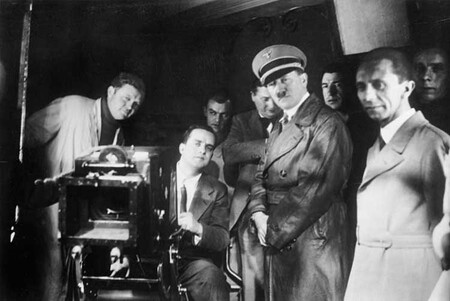
They read statements such as that the Rockefeller Foundation promoted the 440 Hz standard as part of a supposed “war against consciousness”, that one of the great supporters of the change was the Nazi minister Joseph Goebbels, who saw in 440 Hz a way to distort consciousness, or that tuning at 432 hertz is much better for humans because it “reflects the proportions” of the Sun, the Earth and the Moon, among other things. As a test, they show the patterns of water when it is vibrated with a 432 Hz sound.
“They have no empirical basis”. Although there are strong supporters of these ideas and that we would all be much better off if we listened to our music tuned to 432 Hz, their statements raise the eyebrows of experts. And that at least. “There is no empirical research to suggest that the universe has a preferred acoustic frequency,” explains Susan Rogers of Berklee College of Music.
Of a similar opinion, Ian Cross, of the University of Cambridge, insists that statements of this type “have no empirical basis.” University of Maryland professor Jeffrey Herf is even more emphatic when asked about Joseph Goebbels’ alleged effort to use a certain type of tuning to manipulate enemies: “I have never heard anything like it. It’s absurd.”
Images | Peter Ivey-Hansen (Unsplash), Wikipedia and Brief History of Cinema (Flickr)
In WorldOfSoftware | In 1940 the Nazis invaded a British island. There they encountered an unexpected enemy: a language that no one understood.