The old way of plumbing enterprise workflows is on its last legs, and process intelligence is set to remake it. For companies drowning in log files, legacy systems and fragmented toolchains, a fresh standard is rising.
That standard is borne largely by Celonis SE — the decacorn that has quietly turned process mining into a full-blown, AI-driven execution platform. The global market for process-mining and process-intelligence tools was estimated at about USD 1.4 billion in 2024, and is forecast to grow to roughly USD 21.9 billion by 2030 — and possibly as high as USD 27.7 billion, depending on adoption rate and market definition, according to a recent report.
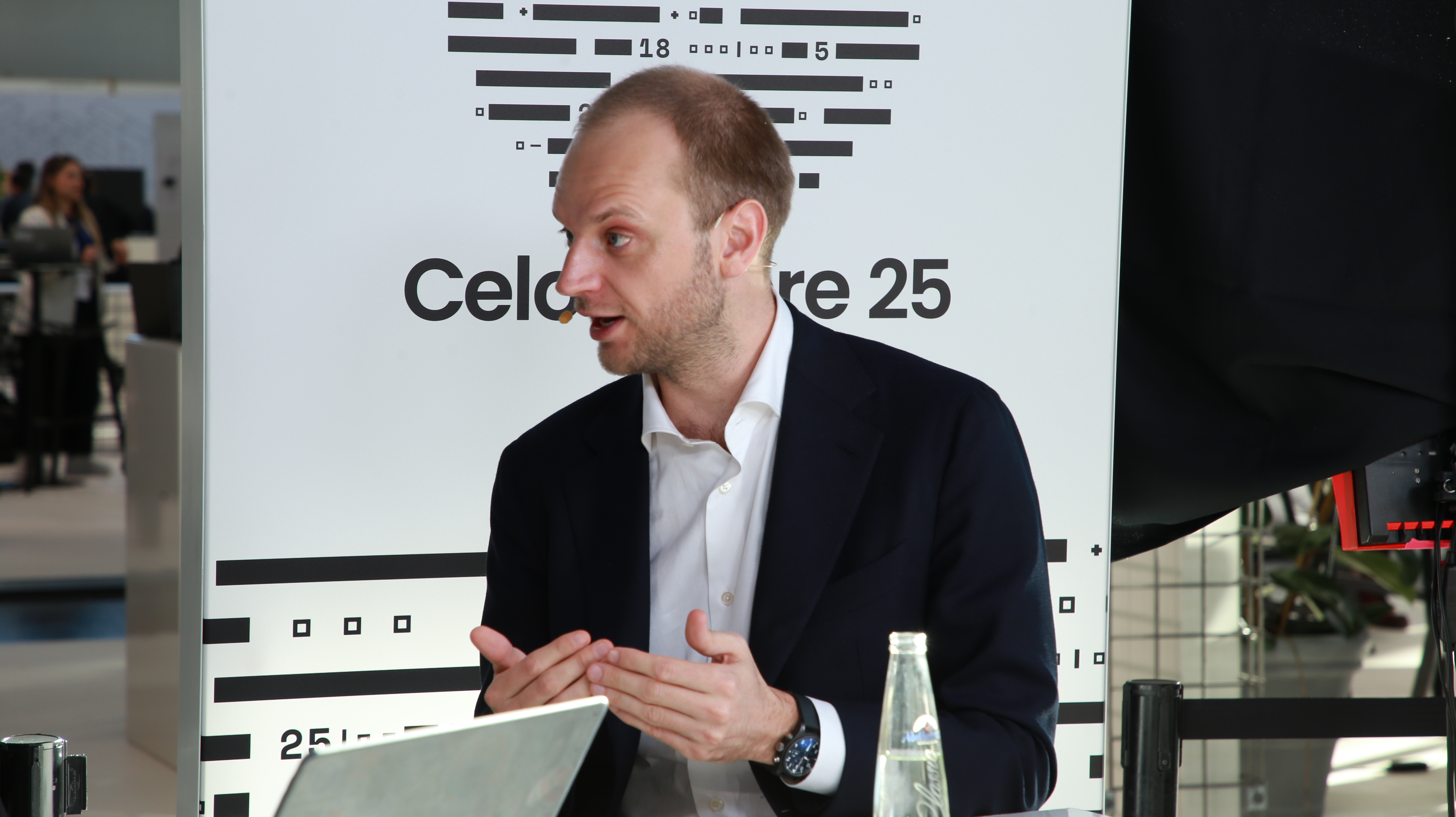
That kind of growth doesn’t come from small gains. It comes because enterprises are no longer satisfied with static audits or monthly dashboards — they want real-time, actionable insight. They want AI that doesn’t just surface problems, but triggers correction. They want intelligence stitched into execution. And they want it across the enterprise — from supply chain to finance, and even software engineering, according to Alex Rinke (pictured, co-chief executive officer and co-founder of Celonis.
“When we look at the data … only 11% of companies are getting any type of measurable benefit from their AI investments,” Rinke said in an interview with News at Celosphere 2025 in November. “If you just use an AI agent here or there, it’s not going to move the needle in terms of business outcomes.”
During the conference, Rinke spoke with theCUBE, News Media’s livestreaming studio, about integrating AI into process intelligence for real-time data analysis that improves operations and drive business transformation.
This feature is part of News Media’s ongoing coverage of the rise of process intelligence, AI-driven execution and real-time enterprise operations. (* Disclosure below.)
Celonis: A decacorn with a bullish bet on process intelligence
Celonis has the cash and pedigree to ride the new intelligence wave. It raised what sources list as roughly USD 2.37 billion in total funding, and following a 2022 extension plus credit facility, it commands a post-money valuation near USD 13 billion. That kind of capital gives the company a runway to build platform breadth. It also reflects a market placing heavy bets on process intelligence. At Celosphere 2025, Celonis didn’t just tweak a report builder. It unveiled a transformed platform. New capabilities turned process mining from a diagnostic tool into an operational weapon.
Major platform capabilities include Data Core — a high-performance backbone that ingests from any source, processes billions of records and feeds the system’s “living digital twin.” The Orchestration Engine, now generally available, lets companies map “Action Flows” — automated workflows — across SCM, CRM and custom tools. It orchestrates both human and machine tasks in real time.
Finally, there’s digital twin + AI agent support. Through what Celonis calls the “Process Intelligence Graph,” the platform fuses raw event data with business context. On top sits an AI-agent layer — leveraging AI to trigger decisions, suggest actions and even automate remediation. That’s no longer future talk; it’s available today, Rinke pointed out.
“AI is great for everyday tasks … but to provide maximum value for business, it needs to do things like telling you which customer deliveries are at risk and take automated action to reroute deliveries and notify logistics partners,” he said.
Analysts say it’s working — and getting more relevant
Many industry analysts are verifying the shift. Paul Nashawaty, practice leader and principal analyst at theCUBE Research, revealed that what’s broken in many firms isn’t the tools. It’s the invisible inefficiencies buried deep in how teams — from engineering to operations — actually work. He sees Celonis surfacing those inefficiencies, especially in software development pipelines.
“Teams are shipping more software … but the process debt underneath is catching up,” Nashawaty said. “Celonis is getting so much attention because it brings real-time visibility into how work actually flows across engineering, product, CI/CD and ops.”
Nashawaty predicts that over the next 18–24 months, many enterprises will consolidate fragmented tooling and spring for platforms that provide prescriptive insights, automated remediation and governance by design. Celonis, he said, is “uniquely positioned here.”
Rob Strechay, principal analyst at theCUBE Research, calls Celonis the “800-pound gorilla” of process intelligence. He noted that Celonis has evolved from use-case-based process mining to what he calls object-based process mining — a move that significantly boosts ROI when combined with agentic AI workflows. Integrating AI agents atop mapped and optimized processes is key to removing low-value toil across verticals, he added.
Strechay sees competition — not just from traditional RPA players pivoting to AI — but from giant platform providers. Still, he notes, “The big folks, like Microsoft, IBM and AWS, are partnering with them, not competing with them.”
The transformation Celonis is riding isn’t happening in a vacuum. Enterprises are rewriting their checklists. No longer is it enough to monitor process performance or audit after the fact. They want systems that unite insight, automation, governance and execution under one roof. Think of it as moving from “what happened” dashboards to living, breathing operational brains. Systems that don’t just surface inefficiencies — but actually fix them. That means combining: process intelligence across systems (CRM, SCM, data lakes, etc.); real-time analytics and monitoring; workflow orchestration across humans and machines; AI-driven decisioning and remediation; and baked-in governance and compliance, according to Strechay and Nashawaty.
That’s basically the architecture Celonis is building. Its revamped Data Core, Orchestration Engine, AI agent suite and integrations with major data platforms (such as Databricks and Microsoft Fabric) show how PI is becoming the glue in modern enterprise stacks.
Independent analyst bodies are taking notice. In the 2025 Everest Group PEAK Matrix for Process Mining, Celonis was named a Leader and Star Performer, while the 2025 Q3 Forrester Wave recognized the company as a top-tier vendor in process intelligence software. These nods signal that Celonis’ evolution from pure process mining to AI-driven execution intelligence is not just self-promotion — industry research validates its chops across operations and software development workflows.
Competition is real — but Celonis is playing smart
Sure, threats loom. RPA vendors are pivoting to AI. ERP giants and hyperscalers could bake process analytics directly into their suites. But Celonis isn’t waiting. It’s striking partnerships. Its latest announcements reference integrating with Databricks, embedding in Microsoft Fabric and cooperating with big consultancies and system integrators. That means Celonis isn’t just defending turf — it’s building the broader execution-intelligence fabric itself. Its advantage: specialization. Its horsepower: capital plus development velocity plus a clear vision for AI-driven workflows, according to theCUBE Research analysts.
If the market reaches $20–30 billion as predicted, Celonis may reap outsized gains. Its combination of AI-embedded infrastructure, orchestration and data integration could make it much more than a mining tool — a central nervous system for enterprise operations.
But with that potential comes high expectations. Enterprises will demand measurable ROI — not vague efficiency gains. They’ll want to see faster release cycles, fewer build breaks, better supply-chain agility, fewer manual touchpoints. They’ll expect not just dashboards, but action. If Celonis delivers, it could rewrite what “enterprise software stack” means. If it hesitates — or competitors move faster — the gap could narrow.
With Celosphere 2025, Celonis made a clear bet: Process intelligence isn’t just about discovering how work flows — it’s about driving how work gets done. With its Data Core, Orchestration Engine, AI agents and a surge in enterprise demand for unified platforms, the company is staking its claim as the backbone of next-gen operations.
The analysts watching the space agree. They see value where many still see a niche. In short: Celonis isn’t just riding the wave. It wants to be the engine that powers it.
(* Disclosure: TheCUBE is a paid media partner for Celosphere ’25. Neither Celonis, the sponsor of theCUBE’s event coverage, nor other sponsors have editorial control over content on theCUBE or News.)
Photo: News
Support our mission to keep content open and free by engaging with theCUBE community. Join theCUBE’s Alumni Trust Network, where technology leaders connect, share intelligence and create opportunities.
- 15M+ viewers of theCUBE videos, powering conversations across AI, cloud, cybersecurity and more
- 11.4k+ theCUBE alumni — Connect with more than 11,400 tech and business leaders shaping the future through a unique trusted-based network.
About News Media
Founded by tech visionaries John Furrier and Dave Vellante, News Media has built a dynamic ecosystem of industry-leading digital media brands that reach 15+ million elite tech professionals. Our new proprietary theCUBE AI Video Cloud is breaking ground in audience interaction, leveraging theCUBEai.com neural network to help technology companies make data-driven decisions and stay at the forefront of industry conversations.