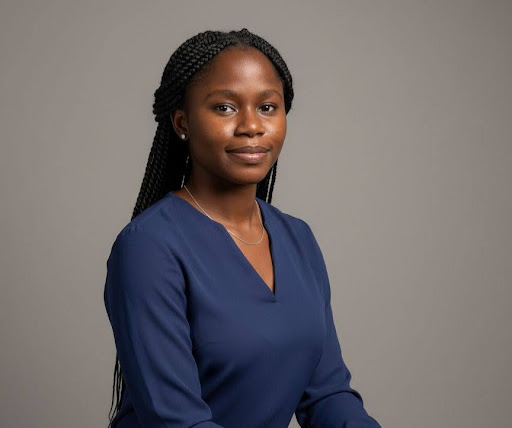
Eniola Taiwo is a digital innovator and founder with a mission to solve complex, real-world problems through technology. With a background in accounting and data analysis, she brings a rigorous, evidence-based approach to building inclusive digital products.
She is the founder of Smartsave, a Nigerian fintech company that pioneered a profitable “phygital” (physical-digital) model in Nigeria to bridge the trust gap in financial services. Under her leadership, the platform scaled to process over ₦210 million ($150,500) in transactions and achieved profitability.
Driven by this ethos of practical innovation, Eniola also led the development of Skill Bloom, an educational app prototype designed as a gamified, safe practice space for children with social communication challenges. Her work demonstrates a consistent ability to identify underserved needs and architect user-centric solutions, from financial technology to educational tools.
As a speaker and contributor, Eniola shares her insights on fintech, digital inclusion, and product strategy, turning her hands-on founder experience into actionable frameworks for others.
- Explain what you do to a 5-year-old.
Imagine your Aunty Tolu sells plantains in the market. Every day, she gets plenty of cash, notes and coins. She wants to save for your cousin’s school fees, but she’s afraid to keep it at home, and the bank feels too far or she feels so scared that if she keeps the money in the bank it disappears overnight because she doesn’t trust anything called digital. So, what do I do? I helped build a magic box on her phone. But here’s the trick: she doesn’t have to start there. She can give her cash to Uncle Fayokemi, our trusted agent. Uncle Fayokemi uses his own phone to put her money safely into her magic box. Now, Aunty Tolu can see her savings on her own phone and use it to buy electricity or pay for TV, all without carrying cash and this will happen after we have helped her to trust our app. My job is to build that bridge between the paper money in her hand and the safe money on her phone.
- You worked at Lloyds Banking Group as a Customer Service Advisor. What does that mean and what did it teach you about building fintech for Africans?
My job at Lloyds was simple: help customers who were confused, frustrated, or stuck with their money. I was the person you called when the ATM ‘swallowed’ your card or the app was working. The biggest lesson was this: people everywhere just want things to work without stress. At Lloyds, they kept making their app simpler, adding features for students, new parents, retirees, meeting people where they were.
Building for Africa, I took that lesson and added our own spice. For many here, the problem isn’t just a bad app, it’s total distrust of anything digital with money. My time at Lloyds taught me to have infinite patience. So for Smartsave, we didn’t just build an app and shout “Come!” We built a system that starts with the familiar: the corner shop, the human face you know and greet every day. The tech sits quietly in the background, earning trust slowly. The app has to be so simple , what an old human should be able to use.
- What is the biggest lesson you’ve learned from scaling a fintech product in Nigeria?
The biggest lesson is that scale will expose every single weakness you tried to hide. You can have 10,000 users and look like a star, but when you get to 100,000, every small wahala becomes a big fire.
Maybe your server wasn’t strong enough for a Friday evening when everyone is topping up airtime. Or your customer service team can’t handle the volume of questions. The market will test you for real. I learned that scaling isn’t about moving fast and breaking things. In Nigeria, if you break things, you lose people’s trust, and that trust is everything. It’s about moving carefully, building systems that don’t break, and knowing that your user’s patience is your most important asset. You’re not just scaling a company; you’re scaling trust.
- From your vantage point, what are the problems still worth solving in fintech and outside fintech?
In fintech, the big problems left are about deep understanding, not just transactions. First, we must solve for trust with first-time users who see digital money as risky. Second, we need tools for the reality of irregular income, farmers, traders, and gig workers who don’t have a monthly salary but still need credit and savings. Finally, products must be designed for real African behaviour, like using a trusted local agent, not just for how we wish people would act.
Outside of fintech, the problem worth solving is inclusion in the digital world itself. My focus is on neurodivergent children. The challenge isn’t just access to learning content, but access to safe, structured spaces where they can practice essential life skills. My product is designed to help these children learn social communication, emotional regulation, and other foundational skills within a guided, digital safe space. The opportunity is to use technology not just to teach, but to create a practice environment where they can explore, make mistakes, and build confidence at their own pace, preparing them for the world beyond the screen.
- You also worked as a Case Manager for the Department of Work and Pensions (DWP); what’s the story behind that career move?
This is personal. I saw the gap for neurodivergent children and wanted to help, but I’m not a doctor or therapist. I felt like an outsider. So, I thought, ‘How do I get to the heart of this without a medical degree?’ I decided to get the closest possible experience by working as a Case Manager at the DWP, where decisions about support for these children are made.
It was my way into the system. I sat with families, saw the paperwork, understood the real daily struggles, and learned the official language of care. That job wasn’t a career move; it was a research mission. It gave me the raw, real-life understanding no textbook could. It’s the reason I know my EdTech idea, Skill Bloom, isn’t just a nice app, it’s an answer to problems I saw with my own eyes.
- What is your ‘GOAT moment’ in tech? Tell us in a short story.
My greatest moment wasn’t when we hit a big number. It was a small story. One of our agents told me about a truck driver who saved small change with us every day for months. One afternoon, his wife called in a panic from the hospital; they needed to pay a deposit. Right from his bus park, he used his Smartsave balance to pay the hospital bill. He didn’t run across town with cash, he didn’t get loan from anyone, just a call to our agent to guide him and his phone, and he was able to pay the bill.
At that moment, everything clicked. All the tech, the coding, the meetings, it all came down to that one man, in a crisis, finding dignity and a solution through something we built. That feeling is why I do this. That’s my GOAT moment.”
- What is one thing you’re interested in but not particularly great at doing?
I love the idea of coding. I can sit with my tech team and we can dream up a beautiful, logical plan for a new feature. I see the whole structure in my head! But when I try to write the code myself… eh, it is well.
Once, I spent a whole weekend trying to build a simple tool to automate a report. I finally got it to work! Proudly, I showed my lead engineer. He smiled, said ‘Good attempt,’ then in about three minutes, he rewrote my entire code. My 100 lines became fifteen clean, efficient lines. It was like watching a master chef take your simple stew and, with two touches, turn it into a gourmet feast. I appreciate the art, but I’ve accepted my lane. I am the person who describes the delicious feast we need; I leave the cooking to the chefs.