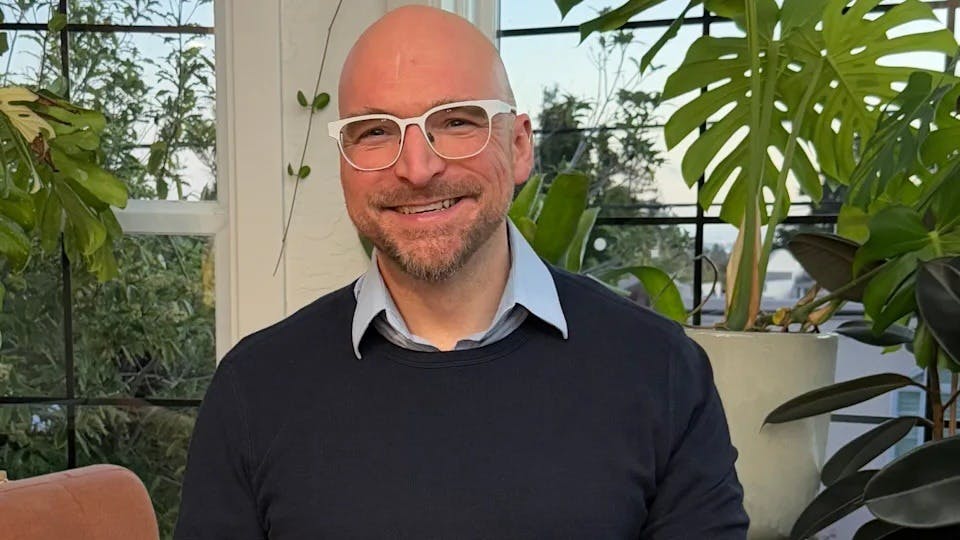
Justice Eziefule is the co-founder of Metastable Labs and one of the builders behind Liquid, a decentralised lending protocol for prediction markets. His path into tech has been shaped by bold career pivots: from walking away from a hairdressing apprenticeship at 19 to taking an unpaid internship at OlotuSquare instead of a traditional corporate placement. That choice led him to Rivers State Tech Creek, where he became an SQL instructor and set the foundation for a career defined by risk-taking and independent thinking.
Before co-founding Liquid, Justice helped build Paystack’s Virtual Terminal and was an early engineer at Lazerpay, where he shipped the minimum viable product (MVP) that went on to raise seed funding. He is now focused on reimagining user capital efficiency in decentralised finance (DeFi) by giving prediction-market participants the ability to place more conviction on their trades. Liquid, part of the YZi Labs cohort, reflects his belief in building B2C products that improve people’s financial lives and his conviction-driven decision-making, including recently turning down a high-paying engineering leadership role to go all-in on the product.
- Explain your job to a five-year-old.
Imagine you have a big box of Lego, and you can build anything you want with it. My job is like that, but instead of Lego pieces, I use code to build things on phones and computers.
I also help run the team that decides what we should build, kind of like being the person who says, “Let’s go outside and play,” and then helps everyone choose teams and what game to play.
So I’m both someone who creates things and someone who leads the building of new ideas, making sure everything works so people can use it every day.
- You turned down a high-paying engineering leadership role to build Liquid. What gave you the conviction to make that call?
I’ve always been a very ambitious person, and with that ambition came a clear desire to build my own products rather than spend the rest of my career working on someone else’s vision. When that lead engineering offer came, it was genuinely tempting: great role, great pay, and at that moment, Liquid had just two months of runway left. I also had a two-month-old son and a family depending on me, so on paper it looked like an easy decision.
But the more I thought about it, the more I realised I wasn’t actually risking as much as it seemed. Worst case, if Liquid didn’t work out, I could always get another job. The real failure would be walking away from something I believed in before giving it a real chance. Liquid was the first idea in years that felt worth betting every single thing on, and I knew that if I didn’t go all-in, I’d always wonder what could have happened.
Choosing Liquid was less about rejecting a job and more about backing myself. I wanted to build something meaningful, something that could genuinely reshape how people interact with prediction markets. And once that clicked, the decision stopped feeling risky. It just felt right.
- What’s the hardest trade-off you’ve had to make while building a prediction-market lending protocol?
Liquid wasn’t even meant to be a lending protocol for prediction markets. The original idea was an insurance product for prediction markets. We announced it on X, opened a waitlist, and dove straight into the math. For weeks, our whiteboards were filled with formulas, payoff curves, stress tests, all the things you do when you’re trying to build a market that doesn’t fall apart the moment volatility hits.
But as the numbers started to settle, the reality became uncomfortable. For LPs to make money, premiums had to be high. But the moment we priced them realistically, the product became too expensive for traders to use. And when we lowered the premiums enough to make sense for users, LPs would lose money, and the protocol would spiral into bad debt. We ran scenario after scenario, hoping to find a sweet spot. It just didn’t exist.
After a full month of work, it became painfully clear: the model wasn’t viable. That was the trade-off; keep pushing a product we could technically ship, or admit the economics didn’t support it and walk away from everything we’d already built.
And then something unexpected happened.
While working through the insurance math, we stumbled into a completely different insight, a way to solve the gap-risk problem that has always made leverage in prediction markets impossible. At first, it felt like an accident. Then, after more testing, it felt like a breakthrough.
That insight forced another decision: do we stick to the original plan because it’s familiar, or do we pivot into something bigger, even though it means throwing away weeks of work and rewriting the entire product direction?
We chose the pivot. That insight became the foundation for a new type of leverage mechanism. One that naturally led us to the lending layer that Liquid is built on today.
In hindsight, abandoning the insurance model was one of the hardest trade-offs we’ve made, but it’s also the moment Liquid became what it was supposed to be.
- You’ve worked at Paystack, Lazerpay, and now Metastable Labs. What’s the biggest engineering thesis you’ve formed about building products for Africans today?
One big thesis has shaped my thinking after building at Paystack, Lazerpay, and now Metastable Labs: Africans don’t need “lite” versions of global products. They need systems engineered to survive real-world constraints.
What that means in practice is simple: the environment defines the product. In markets where the internet can drop, payments fail unpredictably, device quality varies, and trust is low, you can’t build with the assumptions Silicon Valley teams take for granted.
At Paystack, I learned the importance of resilience. Transactions had to succeed despite network issues, bank outages, or device failures. Building reliable systems wasn’t a nice-to-have; it was the only way to earn user trust.
At Lazerpay, I saw how vital speed and clarity are. People aren’t patient with tools they rely on for income or business. Anything confusing, slow, or fragile simply doesn’t get used.
And now with Metastable Labs, I’ve realised a third piece: simplicity wins. If a product requires too much education or tries to “teach” Africans how to use it, it will die. The product needs to adapt to them, not the other way around.
So the thesis that ties all of this together is: Build products that assume nothing, break gracefully, handle chaos, and respect the fact that users are busy, not beginners. If a system can survive African unpredictability, it can survive anywhere.
- Prediction markets are still early in Africa; why do you think Liquid can scale when the underlying market is still building (early) momentum?
Liquid is designed for a global prediction-market ecosystem, so its growth isn’t tied to any single region’s maturity curve. But Africa, and Nigeria in particular, is already one of the fastest-growing crypto markets in the world. Nigeria consistently ranks among the top five globally in trading volume, and users here adopt new financial tools far more quickly than traditional markets expect.
So even though prediction markets are still early, the behaviour we’re seeing in Africa suggests strong upside: people are already comfortable with volatility, familiar with crypto wallets, and open to new financial primitives. That makes the continent a natural early adopter base, not a limitation.
With a product built to serve global users from day one and a region that embraces innovation faster than most, Liquid has room to scale long before prediction markets “mature” in the traditional sense.
- What was the moment you realised prediction markets needed a safe and capital-efficient way to introduce leverage?
For me, the real moment came after watching countless teams, some of the smartest people in the space, attempt leveraged trading on prediction markets and fail for the same reason: no one had figured out how to make leverage safe enough to scale or capital-efficient enough for traders to actually use.
Every week, someone on X drops a new thesis, a new diagram, or a fresh take on how leverage could work on prediction markets. And even though the ideas keep coming, the outcome is always the same: the models collapse under the weight of gap risk, bad debt, or unrealistic assumptions. It became obvious that prediction markets weren’t lacking interest; they were lacking a mechanism that allowed traders to take larger positions without blowing up the system.
At the same time, traders clearly want capital efficiency. Everyone wants to increase their position size without locking up unnecessary capital. They’re comfortable with liquidation risk; what they aren’t comfortable with is a fundamentally fragile system.
Seeing this tension, the demand for leverage vs. the inability of existing models to support it made it clear that something was missing. There needed to be a structural way to let traders scale their exposure while keeping the protocol solvent. That realisation is what pushed us to rethink the entire approach and eventually led us to the lending-based model Liquid uses today.
It wasn’t one dramatic moment. It was the accumulation of repeated failures across the industry and the very obvious desire from traders for a tool that simply didn’t exist yet.
- You describe yourself as a risk taker. What’s the biggest risk you’ve taken about anything (career, life, etc.) in the last five years, and what did that teach you?
I’ve taken a lot of risks in my life, but the pattern is always the same: when something doesn’t feel like my path, I walk away from it even when I don’t know where the new path leads.
The first big one came when I was 17. My parents had taken me to a salon to learn hairdressing. I spent almost 2 years there, working as a stylist. And even though I didn’t know what I wanted for my life, I knew that wasn’t it. One afternoon, the shop was quiet, everyone else was watching movies, and I just sat there asking myself, “Is this really what I’m meant to do?” I didn’t have an answer, but I knew the answer wasn’t hairdressing. So I stood up, walked out, and never went back. My parents were furious, but it was the first time I trusted my own instinct over everyone else’s expectations.
The second major risk came during my 400-level university. Most students applied to banks or oil companies for their 6-month internship because those places paid well. My parents wanted that for me too; we weren’t wealthy, and that stipend mattered to them. But I knew I wanted to become a better software engineer, so instead of chasing a “respectable” internship, I packed my bags, moved to a new city, and spent days walking from one tech company to another asking for an unpaid internship. I eventually found one, and even though there was no salary attached, I didn’t care. That decision shaped the entire trajectory of my career.
After graduating, I landed a solid software engineering job at Sabi. Steady income, stability. The kind of job every parent is proud of. But a friend reached out with a startup idea and asked me to join as a founding engineer. At the time, Lazerpay hadn’t raised a dollar. Leaving a stable role for a risky idea didn’t make sense on paper, but I felt the same pull I’d felt years earlier: this is the direction I should be moving toward. I joined, built the MVP, helped the company raise $1.1m, and eventually led the engineering team.
But the biggest risk, the one that truly kept me up at night, happened recently. I received a high-paying engineering leadership offer at a top company. On paper, it was life-changing. But Liquid had only two months of runway left, and I now had a wife and a newborn son. This time, the consequences weren’t just mine. Walking away from that offer wasn’t just a career decision; it was a family decision.
But deep down, I knew I would never forgive myself if I abandoned something I believed in just because the safe option was available. And I also knew that if Liquid didn’t work out, I could always get another job, but I couldn’t get another chance to build something meaningful at the exact moment it needed me most.
What all these moments taught me is simple: the real risk isn’t choosing the uncertain path; it’s choosing the comfortable one and spending the rest of your life wondering what would’ve happened if you’d bet on yourself.
- What’s one thing the DeFi ecosystem consistently gets wrong about user behaviour?
The DeFi ecosystem constantly assumes users want complexity. They don’t. Users don’t wake up thinking about protocols, yields, or mechanisms. They care about outcomes. Any product that requires education before value will always struggle. People want tools that work intuitively, not systems that make them feel like they need to become experts to participate.
- If Liquid succeeds, what part of the future of trading do you think will look completely different?
Prediction markets are still in their early days. Most people see them as simple betting interfaces, not as an advanced trading venue, the same way they view crypto, forex, or equities. If Liquid succeeds, that perception will flip completely.
A few things will change. First, traders will start treating prediction markets as a serious asset class. A place where you can express views, manage risk, use leverage, and build actual trading strategies, not just place one-off bets. Second, capital efficiency will become the norm. Instead of locking up large amounts of capital to take positions, traders will expect the same flexibility they enjoy in mature financial markets.
And finally, the industry will shift from “speculation for fun” to information trading — where markets become a real-time reflection of collective intelligence. With tools like Liquid making markets deeper, safer, and more tradable, prediction markets can evolve into one of the most important financial primitives of the next decade.
That’s the future we’re building toward.
- What’s one thing you’re very good at but not particularly interested in, and one thing you’re deeply interested in but not yet good at?
I’ve always been very good at math and general science. It came naturally to me in school, but I was never deeply interested in it unless I needed it for something practical. It’s a skill I can rely on, not one I’m passionate about.
On the flip side, something I’m deeply interested in but not yet great at is storytelling and narrative shaping, especially the kind that great founders use to rally users, investors, and teams around a vision. I’ve realised that building a product is one thing, but being able to communicate its purpose in a way that moves people is a completely different skill. It’s something I’ve been intentionally working on, because I’ve seen how much it amplifies a founder’s impact.