Safaricom has begun migrating users from its standalone M-PESA app to a new unified platform, My OneApp, in a consolidation move aimed at bringing more than 10 million users onto a single interface and defending its fintech dominance from increasingly aggressive Kenyan banks.
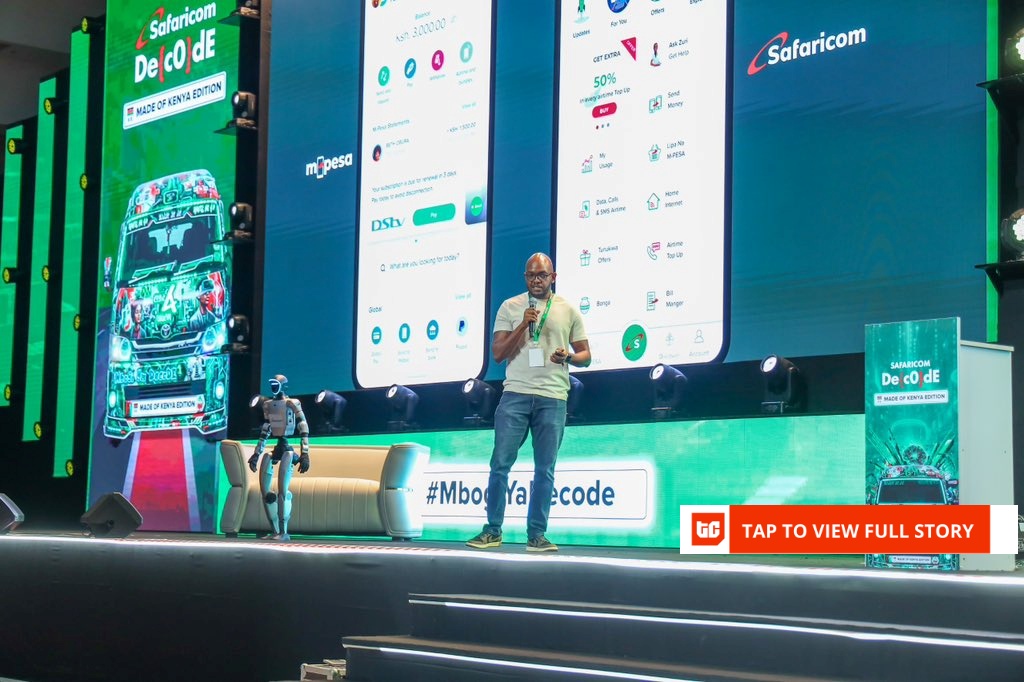
Kenya’s biggest telco unveiled Safaricom My OneApp on April 2 at its Decode 4.0 engineering summit. The platform, which has been in public beta for several months, marks a shift from a fragmented service model to a unified system.
Since April 3, M-PESA app users have been receiving updates redirecting them to My OneApp, signalling the start of a phased migration. The mySafaricom app remains active for now, with no confirmed timeline for when legacy apps will be fully retired.
The move sits at the centre of Safaricom’s FinTech 2.0 strategy, which aims to push the company beyond telecoms into a broader technology platform by 2030. By merging the M-PESA and mySafaricom apps with overlapping features, Safaricom is looking to reduce app switching and pull users into a single environment where behaviour and spending can be tracked more closely.
Safaricom did not respond to requests for comment on the shutdown timeline.
Merging the M-PESA app, with over 6.5 million users, and the mySafaricom app, with under 3 million users, is a clear indication of the company’s intention to reduce duplication across systems. It also simplifies its API structure and lays the groundwork for more advanced automation using AI-driven prompts and recommendations.
The move comes as lenders such as Equity Group Holdings and KCB Group improve their mobile apps to match M-PESA’s ease of use, targeting payments, transfers, and savings products that once sat firmly inside Safaricom’s ecosystem.
“The fragmented app strategy was a legacy of how the company grew; telco first, then finance,” said an internal Safaricom source who asked not to be named, as they are not authorised to speak for the company.
Running two separate apps created silos for users and an extra load for engineers.
“Maintaining two separate codebases, two security protocols, and two user journeys was becoming a liability,” a Safaricom engineer, who asked not to be named, said.
A more powerful platform
Built on a cloud-native architecture capable of processing 6,000 transactions per second, My OneApp is designed to significantly outperform its predecessors. The app hosts over 80 third-party services, ranging from train bookings to M-TIBA health insurance, allowing Safaricom to collect a platform tax and valuable consumer data without the user ever leaving the interface.
Unlike the old apps, My OneApp uses machine learning to surface quick actions. If a user consistently pays their Kenya Power bill on the 15th of each month, the app will automatically prompt them to complete the transaction on the home screen.
The app also embeds the new Ziidi money market fund and trader share-trading tools directly into the M-PESA flow, positioning Safaricom as a direct competitor to traditional wealth management firms.
The success of My OneApp will be measured by stickiness. Safaricom believes that a single interface, accessible via biometric authentication, will increase average revenue per user (ARPU) while reducing customer acquisition costs.