Satgana, a venture capital firm that invests $570,000 each in African and European climate tech startups, is raising two new funds—one for each continent. The firm, named after the Sanskrit word for “good company,” has deployed capital into 30 startups across both regions, backing companies where climate efficiency drives the business model.
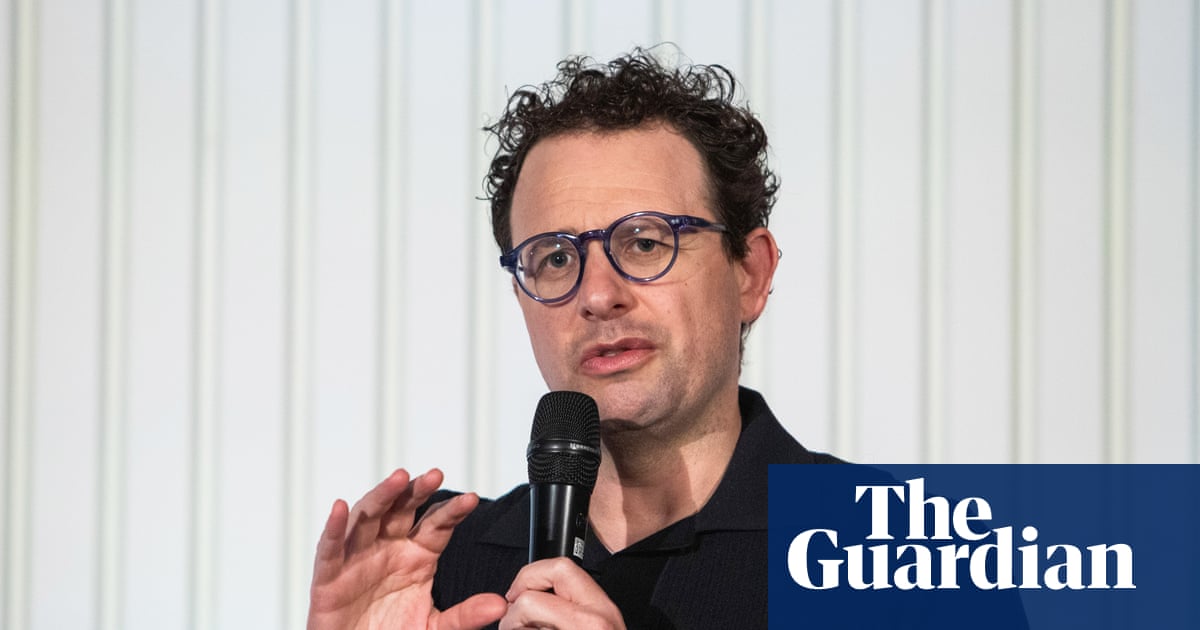
“We are currently structuring two dedicated vehicles, one focused on Europe and one on Africa,” said Anil Maguru, a partner at Satgana. “We are not communicating final fund sizes publicly yet, as the process is still ongoing.”
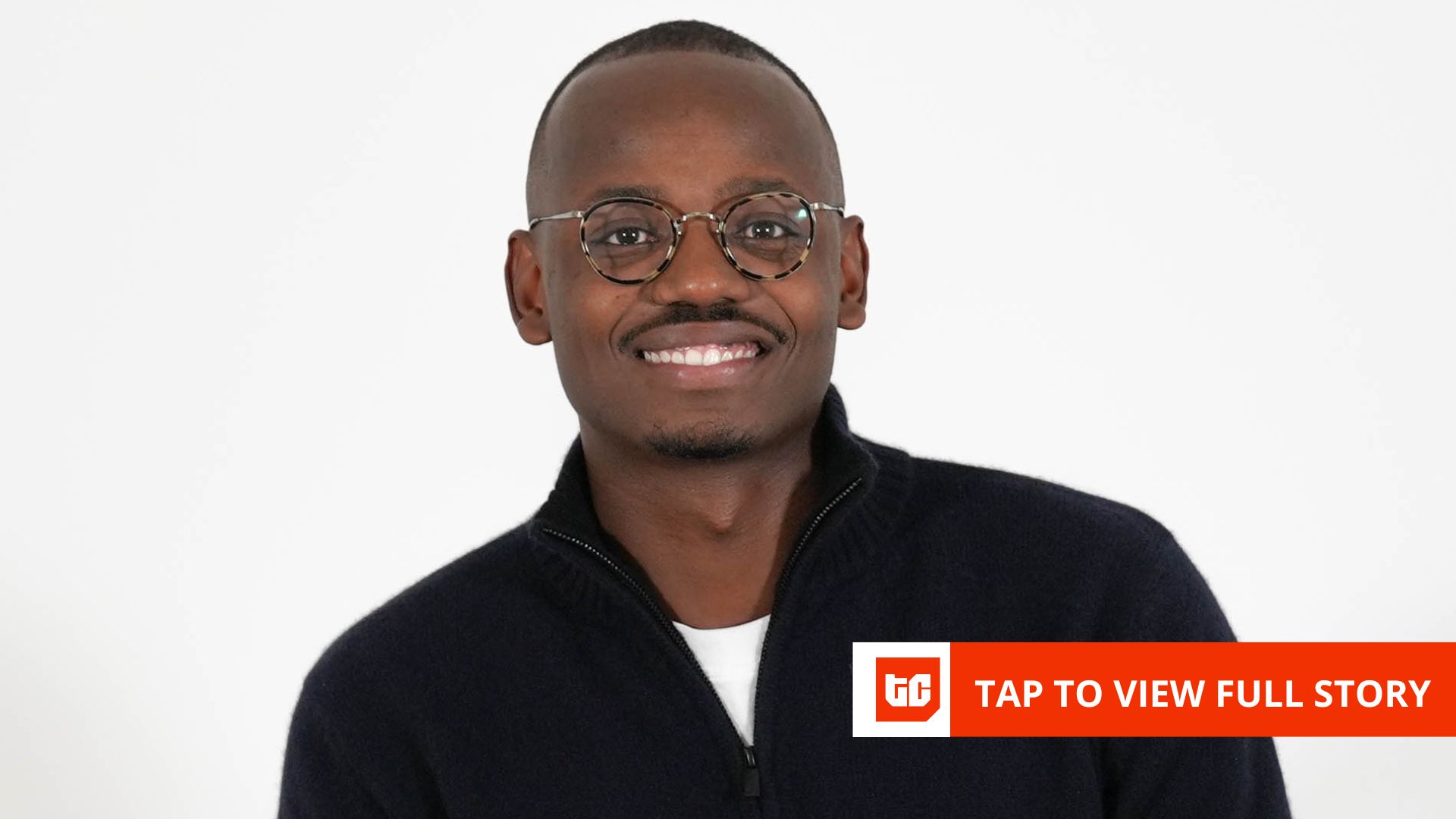
Maguru joined Romain Diaz, Satgana’s founder, as a founding member and partner when the fund was launched in 2020, and his unique perspective with Diaz helped build the firm’s Africa-European strategy.
“The European and African positioning is less about geographic diversification and more a design principle: African markets often act as a strong filter that forces companies to build for resilience and real demand, while Europe provides industrial partners, capital depth, and exit routes,” said Maguru.
Satgana invests in climate technology solutions across transportation, energy, food and agriculture, industry and construction, carbon abatement, and the circular economy. Crunchbase
Some of Satgana’s portfolio companies include Orbio Earth, a Germany-based startup that uses satellite imagery and proprietary algorithms to track and quantify methane emissions from the oil and gas industry; Mazi Mobility, a Nairobi, Kenya-based mobility-as-a-service company electrifying the motorcycle taxi (“boda boda”) industry with electric bikes and battery swapping stations; and Revivo, a Nairobi, Kenya-based B2B marketplace connecting small repair shops with quality electronic spare parts, accessories, and repair tools to build a circular repair economy.
For this week’s Ask an Investor, I spoke with Maguru about the fund’s strategy of backing climate-tech startups across Africa and Europe, how Satgana evaluates startups, and why the firm prioritises solutions that work under imperfect market conditions.
This interview has been edited for clarity and length.
You’ve been investing in startups and helping to build companies for several years now. How have the past five or six years been for you, and what have you learned?
Over the last six years, it has been an intense journey. When we started, everything was a first for us: first-time team, first-time fund, first-time investments together, really, first-time everything.
But now, looking back over the past five or six years, we’ve built a record we are very proud of. We manage about $10 million in assets under management. We have backed 30 companies across 16 countries. We have more than 150 investors from 25 different countries. About 90% of our portfolio is still alive, which is a very high survival rate, and close to 50% of the portfolio has gone on to raise follow-on rounds.
Of course, none of it would have been possible without the amazing founders we’ve met along the way. At the same time, we’ve also experienced our first failures; some companies have started to go down. But overall, things have gone very well.
The team has also grown. We now have dedicated teams looking at both regions: Europe and Africa. The impact is growing, and we still see more opportunity ahead.
You talk about opportunity. What is Satgana’s next chapter?
From our first fund, we were fortunate to invest in 30 amazing companies and back exceptional founders, including female founders, across Europe and Africa. We saw firsthand how much both regions have to offer. For us, it was therefore very logical to double down on this strategy.
We are now launching two new funds: one dedicated to Europe and one dedicated to Africa, each with a dedicated team. The goal is to source even more founders, become even more pan-African than we were before, and build dedicated vehicles for dedicated geographies.
These funds will also be larger. We will be able to write bigger tickets and have more capacity to double down on the right companies.
In Africa, especially, we are looking for companies that show strong signals early—companies with paying customers, companies that do not rely heavily on subsidies, companies where adoption spreads through trust and word of mouth, and companies led by founders with real financial discipline. That, for us, is real traction.
So, for companies that see themselves in that description, we would very much encourage them to reach out. We need to find them because those are exactly the kinds of businesses we want to back with these new funds.
Climate tech is a very broad category. It can cover everything from carbon accounting software to nuclear fusion. What is Satgana’s own definition of climate tech, and where do you draw a hard line on what you would not invest in?
For us, the hard line is drawn at businesses where climate is simply a story layered on top of a normal company, rather than the engine of the company itself.
For instance, if a startup’s margins improve when emissions increase, or if the impact disappears the moment subsidies disappear, then the alignment is broken. We try as much as possible not to invest in green narratives. We invest in climate economics.
Working in Africa made this very clear to us very early on. Customers do not buy climate because it is good for the planet. They buy reliability, cost savings, and productivity. If climate does not translate into real economic value for the user, it does not scale.
That is why we avoid solutions that depend on perfect regulation, heavy subsidies, or ideal infrastructure. At Satgana, we try to invest in companies that work under imperfect conditions, because that is the real world as we see it.
How do you decide which companies to invest in under that thesis?
There is no perfect answer, to be honest. Different funds will approach this differently. But for us, there are four layers we try to understand.
The first is the team. The second is impact. The third is the market. And the last is everything related to the business itself.
For us, the team is extremely important. In Africa, especially, we try very hard to find founders who have a disciplined mindset. A lot of things can evolve in a company, but people do not fundamentally change that much. We put a great deal of effort into identifying the right team, with the right setup, to tackle the right problem. That is really where we focus most of our energy.
What is the single strongest belief Satgana has about climate investing that you think other early-stage climate funds in Africa may not share?
I would say that many early climate funds think of impact as something you optimise after product-market fit. Our experience in Africa pushed us in the opposite direction.
For us, impact has to be designed into the business model from day one. In price-sensitive markets such as Africa, founders cannot afford a separation between mission and economics. The strongest companies we’ve seen are those where climate efficiency becomes the competitive edge—less waste, less energy loss, fewer input costs.
Impact is not charity. Impact is strategy.
We also believe that the companies that survive in Africa are often the ones that can scale globally because they have been built under constraint from the very beginning. We’ve seen this clearly in some of our portfolio companies—for example, mobility businesses where impact was designed into the business model from day one.
Your model seems to require more than just capital. What kind of support do you provide, and what effects have you seen from that support?
We support our portfolio companies in several different ways. It is important to note that Satgana has roots in the venture studio model. My business partner, for example, came from that world. So from the beginning, we were designed to be a high-support investor. That is part of our DNA.
We think about support almost like a Maslow pyramid of VC value-add. At the most basic level, there is hands-on support around financing, shareholder issues, and strategic reinforcement. We help with fundraising, introductions to co-investors, and general investor relations.
We also make strategic introductions through our LP base and our venture partners. We have more than 150 limited partners (LPs), several advisors and venture partners who have built meaningful companies and can provide real guidance.
There is also the impact side, which is very important for us. We organise regular workshops and one-on-one support to help founders assess their impact, measure it, and report it.
Another area where we think we add value is in cross-regional knowledge sharing. We position ourselves as one of the few funds investing in both Europe and Africa at the pre-seed and seed stages in climate, so we try to build bridges between those two ecosystems.
Finally, we have a series of WhatsApp groups—between founders and between founders and the Satgana team—so that founders can support one another directly and also stay closely connected to us.
You mentioned having more than 150 LPs. What’s your LP strategy?
In our first fund, we had about 150 LPs. They came from different categories: high-net-worth individuals, ultra-high-net-worth individuals, family offices, some funds, and also smaller individual investors.
One of the things we wanted to do from the beginning was to democratise access to venture capital. We created an SPV structure that allowed us to collect smaller tickets and give people access to what we were building. Investing in VC can often be very difficult, both because of minimum ticket sizes and because access itself is limited. We wanted to extend that access more broadly.
In the spirit of creating impact that goes beyond just backing startups, we decided to open our investor pool in that way.
We are now heading toward two new funds—one for Europe and one for Africa. Our thinking is that we will broadly keep the same structure while possibly opening up more to DFIs and institutional investors. We will continue drawing from the investor base we built with the first fund.
What are some of the biggest lessons you’ve learned from that first fund?
The first fund is not finished yet, but even so, one of the biggest lessons is that you constantly have to rethink everything.
Very often, the companies you assume will succeed are not necessarily the ones that end up succeeding. One key lesson is to remain humble. In a world defined by uncertainty, it is very difficult to predict what will happen.
It is also extremely important to stay close to your founders. There is so much to learn from them, and being close also helps you understand where you can be helpful and whether you should double down on certain companies over time.
Humility and founder proximity are probably two of the biggest lessons for me.
Why the Europe-and-Africa strategy? How has it worked for you, and why did you decide to invest across two continents in the first place?
As I mentioned earlier, I was born in Africa and grew up there, while my business partner had the opposite path. He was born in Europe and spent more than 10 years in Africa. So from the beginning, it felt natural for us not to split those worlds apart. Each of us carries both Africa and Europe in some way.
I would also say that Africa gives you a brutal filter. It removes hype very quickly. Technologies that may look elegant in a lab or in a subsidised European pilot either survive African operating conditions or they do not. That feedback loop is incredibly valuable. It forces founders to design for resilience, affordability, and real demand.
At the same time, Europe gives access to industrial partners, deep capital pools, and exit pathways. Our role at Satgana is often to bridge those two worlds.
African companies are often built under real constraints, and those companies can then scale internationally through partnerships and financing. So this Europe–Africa positioning is not diversification for marketing purposes. It is a design principle.
We want founders who can operate in tough markets and then scale globally. We are proud of the founders in our portfolio who are already building those bridges between the continents.
Have you ever passed on a company that had strong financial upside but a weak impact?
Yes, absolutely. That has happened, and it will happen again. And to be honest, we are very comfortable with that.
Some businesses may generate attractive short-term returns but sit on the wrong side of long-term structural trends. We built this climate tech fund with a multi-decade horizon in mind. So if we see that the impact is weak or contradictory, then from our perspective, the risk is mispriced.
Climate is no longer a niche theme. It is a macro constraint that shapes capital flows, regulation, and customer behaviour. So at Satgana, we would rather align ourselves with that long-term direction than chase upside that depends on inertia.
Saying no is part of protecting both our impact integrity and our long-term returns.
How do you think about risk broadly, especially concentration risk?
When it comes to concentration, we tend to concentrate by problem rather than by single technology.
For example, we might invest across software, hardware, and financing models that all address the same bottleneck—say energy access, grid instability, or mobility. That gives us thematic conviction while still diversifying technical execution risk.
Climate is systemic. No single technology solves the entire problem. So we prefer to back multiple layers of the same constraint. That allows us to build exposure to the trend without betting everything on one technical winner.
We think this approach is especially relevant in African markets and in markets with infrastructure gaps more broadly, because those gaps create both risk and opportunity.
What is the biggest red flag you see in climate tech on both the founder side and the startup side?
There are many, but one of the biggest red flags for us is when founders build businesses that outsource responsibility to regulation.
What I mean is that if a business only works after subsidies or depends too heavily on policy changes, it is not resilient. That is dependency.
The best founders, in our view, are the ones who assume that the system will not save them. They design companies that work under today’s constraints and treat regulation as optional acceleration, not as a condition for survival.
Especially in Africa, execution discipline matters much more than policy optimism. The founders we admire most are the ones who build accordingly.
Have you had any exits to date?
We have not had full exits yet, as the portfolio is still relatively young, but several companies have already raised strong follow-on rounds (46% of the current fund).
What does a good exit look like for Satgana?
A good exit for us is one where the impact scales faster after the acquisition than it could have on its own. If a strategic buyer can industrialise the solution, distribute it globally, or embed it into future infrastructure, then for us, that is already a success.
Financial returns obviously matter. But we also measure exits by whether the solution escapes the startup niche and becomes systemic in its impact. The ideal exit is not just liquidity; it is an acceleration of the mission.