By using this site, you agree to the Privacy Policy and Terms of Use.
Accept
World of SoftwareWorld of SoftwareWorld of Software
  • News
  • Software
  • Mobile
  • Computing
  • Gaming
  • Videos
  • More
    • Gadget
    • Web Stories
    • Trending
    • Press Release
Search
  • Privacy
  • Terms
  • Advertise
  • Contact
Copyright © All Rights Reserved. World of Software.
Reading: Scientists Had Moss Grow On The Outside Of The ISS For Months – Here’s What Happened – BGR
Share
Sign In
Notification Show More
Font ResizerAa
World of SoftwareWorld of Software
Font ResizerAa
  • Software
  • Mobile
  • Computing
  • Gadget
  • Gaming
  • Videos
Search
  • News
  • Software
  • Mobile
  • Computing
  • Gaming
  • Videos
  • More
    • Gadget
    • Web Stories
    • Trending
    • Press Release
Have an existing account? Sign In
Follow US
  • Privacy
  • Terms
  • Advertise
  • Contact
Copyright © All Rights Reserved. World of Software.
World of Software > News > Scientists Had Moss Grow On The Outside Of The ISS For Months – Here’s What Happened – BGR
News

Scientists Had Moss Grow On The Outside Of The ISS For Months – Here’s What Happened – BGR

News Room
Last updated: 2025/12/07 at 10:09 PM
News Room Published 7 December 2025
Share
Scientists Had Moss Grow On The Outside Of The ISS For Months – Here’s What Happened – BGR
SHARE


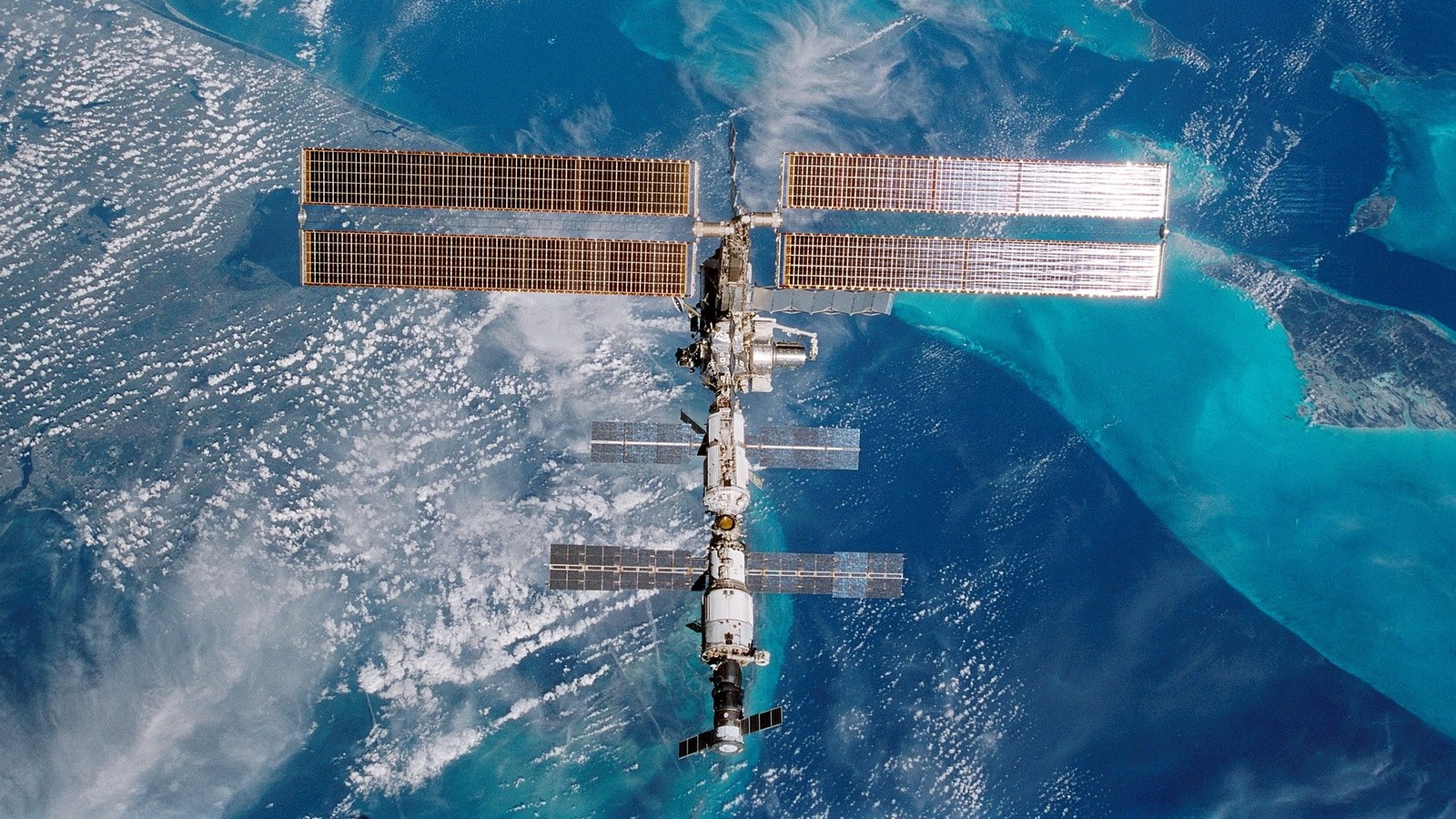
Researchers recently mounted moss spores on the exterior of the International Space Station during the Tanpopo 4 mission for 283 days (roughly nine months). The goal was to figure out if Earth-based life could survive the harsh ravages of space, and the survival of “Physcomitrium patens” suggests that it certainly can.

Moss goes through several changes in its life cycle, but the researchers specifically chose moss still encased in their sporophyte structures, since they were the most resilient in this stage. These encapsulated spores were as much as 1,000 times more resistant to UV radiation than the moss’ brood cells. In lab simulations, the spores maintained an 80% germination rate after 30 days at -80 degrees Celsius (-112 degrees Fahrenheit), and a 36% rate after 30 days at 55 degrees Celsius (131 degrees Fahrenheit). 

The sporophyte’s outer cell layers act as a protective barrier against drying out, radiation, and temperature extremes. Mosses are known to be among the earliest terrestrial plants, but leaving a water-rich environment to come onto land means adapting to the lack of ready water. This adaptation showcases evolution that helped bryophytes colonize land environments.

The little moss that could

After a nine-month stint attached to the exterior of the ISS, the moss spores showed an 86% germination rate (compared to 97% for the control moss kept on Earth). These results demonstrated how resilient the moss was, coping with the most extreme conditions in space.

Among all the things that could damage the moss, researchers highlighted UV radiation as the most significant threat. Surprisingly, extremes in temperature and the vacuum of space had little effect on germination rates. However, UV radiation caused an 11% drop compared to the control specimens. All samples, whether exposed to UV or not, showed roughly 20% chlorophyll degradation. 

Even samples protected by UV filters showed similar degradation, suggesting that it was space’s intense visible and infrared light (unfiltered by any atmosphere) to blame. The findings highlight how photosensitive these plants are in non-terrestrial environments. Additionally, this experiment marks the first time scientists have confirmed bryophyte survival after actual space exposure and Earth return.

Space agriculture may be possible

Using the nine-month window and extrapolating, researchers developed a model that suggests the moss could survive for around 5,600 days in space, but this model has its own flaws. It’s based on just two data points (pre-exposure and nine-months post-exposure), meaning that much more research needs to be done before they can have a realistic estimate.

The findings have practical implications for potential Moon and Mars missions. Mosses are “pioneer” species, meaning they’re the early organisms that help to develop the soil for later, more complex lifeforms, like how peat moss operates back on Earth. Scientists have highlighted bryophytes like these as good candidates for bio-regenerative life support systems on space stations or planetary bases. Mosses offer a lot of benefits over traditional crops or other simple plants like algae. Their ability to survive and even thrive in low-light environments makes them ideal for space stations or colonies situated far from the sun. Their ability to produce oxygen while fixing carbon dioxide deals with two environmental concerns at the same time.

The experiment moves space agriculture from just another theory to something we may actually see happen. Addressing food security off-planet, one of the most important failure points in long-term space settlement, just became a little more realistic.



Sign Up For Daily Newsletter

Be keep up! Get the latest breaking news delivered straight to your inbox.
By signing up, you agree to our Terms of Use and acknowledge the data practices in our Privacy Policy. You may unsubscribe at any time.
Share This Article
Facebook Twitter Email Print
Share
What do you think?
Love0
Sad0
Happy0
Sleepy0
Angry0
Dead0
Wink0
Previous Article Hollow Knight: Silksong’s Simplified Chinese translation draws heavy criticism · TechNode Hollow Knight: Silksong’s Simplified Chinese translation draws heavy criticism · TechNode
Next Article MediaTek denies  billion acquisition by NVIDIA · TechNode MediaTek denies $73 billion acquisition by NVIDIA · TechNode
Leave a comment

Leave a Reply Cancel reply

Your email address will not be published. Required fields are marked *

Stay Connected

248.1k Like
69.1k Follow
134k Pin
54.3k Follow

Latest News

Why Online Soccer Games Are Becoming a Top Choice for Gamers
Gadget
The humanities must have a role in overseeing AI ‘censorship’
Software
Woot’s Best Deals of Cyber Week: The Fourth-Gen Apple iPad Pro Is 0 Off
Woot’s Best Deals of Cyber Week: The Fourth-Gen Apple iPad Pro Is $100 Off
News
These four Apple products could launch as soon as next month – 9to5Mac
News

You Might also Like

Woot’s Best Deals of Cyber Week: The Fourth-Gen Apple iPad Pro Is 0 Off
News

Woot’s Best Deals of Cyber Week: The Fourth-Gen Apple iPad Pro Is $100 Off

33 Min Read
These four Apple products could launch as soon as next month – 9to5Mac
News

These four Apple products could launch as soon as next month – 9to5Mac

4 Min Read
You Can Turn Your Old PC Into A TV Gaming Console With This One Trick – BGR
News

You Can Turn Your Old PC Into A TV Gaming Console With This One Trick – BGR

5 Min Read
Save 60% Off JBL Tune Flex Earbuds With This Sweet Cyber Week Deal
News

Save 60% Off JBL Tune Flex Earbuds With This Sweet Cyber Week Deal

4 Min Read
//

World of Software is your one-stop website for the latest tech news and updates, follow us now to get the news that matters to you.

Quick Link

  • Privacy Policy
  • Terms of use
  • Advertise
  • Contact

Topics

  • Computing
  • Software
  • Press Release
  • Trending

Sign Up for Our Newsletter

Subscribe to our newsletter to get our newest articles instantly!

World of SoftwareWorld of Software
Follow US
Copyright © All Rights Reserved. World of Software.
Welcome Back!

Sign in to your account

Lost your password?