By using this site, you agree to the Privacy Policy and Terms of Use.
Accept
World of SoftwareWorld of SoftwareWorld of Software
  • News
  • Software
  • Mobile
  • Computing
  • Gaming
  • Videos
  • More
    • Gadget
    • Web Stories
    • Trending
    • Press Release
Search
  • Privacy
  • Terms
  • Advertise
  • Contact
Copyright © All Rights Reserved. World of Software.
Reading: Sharks Do Bite Undersea Internet Cables – Just Not As Often As You Think – BGR
Share
Sign In
Notification Show More
Font ResizerAa
World of SoftwareWorld of Software
Font ResizerAa
  • Software
  • Mobile
  • Computing
  • Gadget
  • Gaming
  • Videos
Search
  • News
  • Software
  • Mobile
  • Computing
  • Gaming
  • Videos
  • More
    • Gadget
    • Web Stories
    • Trending
    • Press Release
Have an existing account? Sign In
Follow US
  • Privacy
  • Terms
  • Advertise
  • Contact
Copyright © All Rights Reserved. World of Software.
World of Software > News > Sharks Do Bite Undersea Internet Cables – Just Not As Often As You Think – BGR
News

Sharks Do Bite Undersea Internet Cables – Just Not As Often As You Think – BGR

News Room
Last updated: 2026/04/05 at 1:25 PM
News Room Published 5 April 2026
Share
Sharks Do Bite Undersea Internet Cables – Just Not As Often As You Think – BGR
SHARE


frantisekhojdysz/Shutterstock

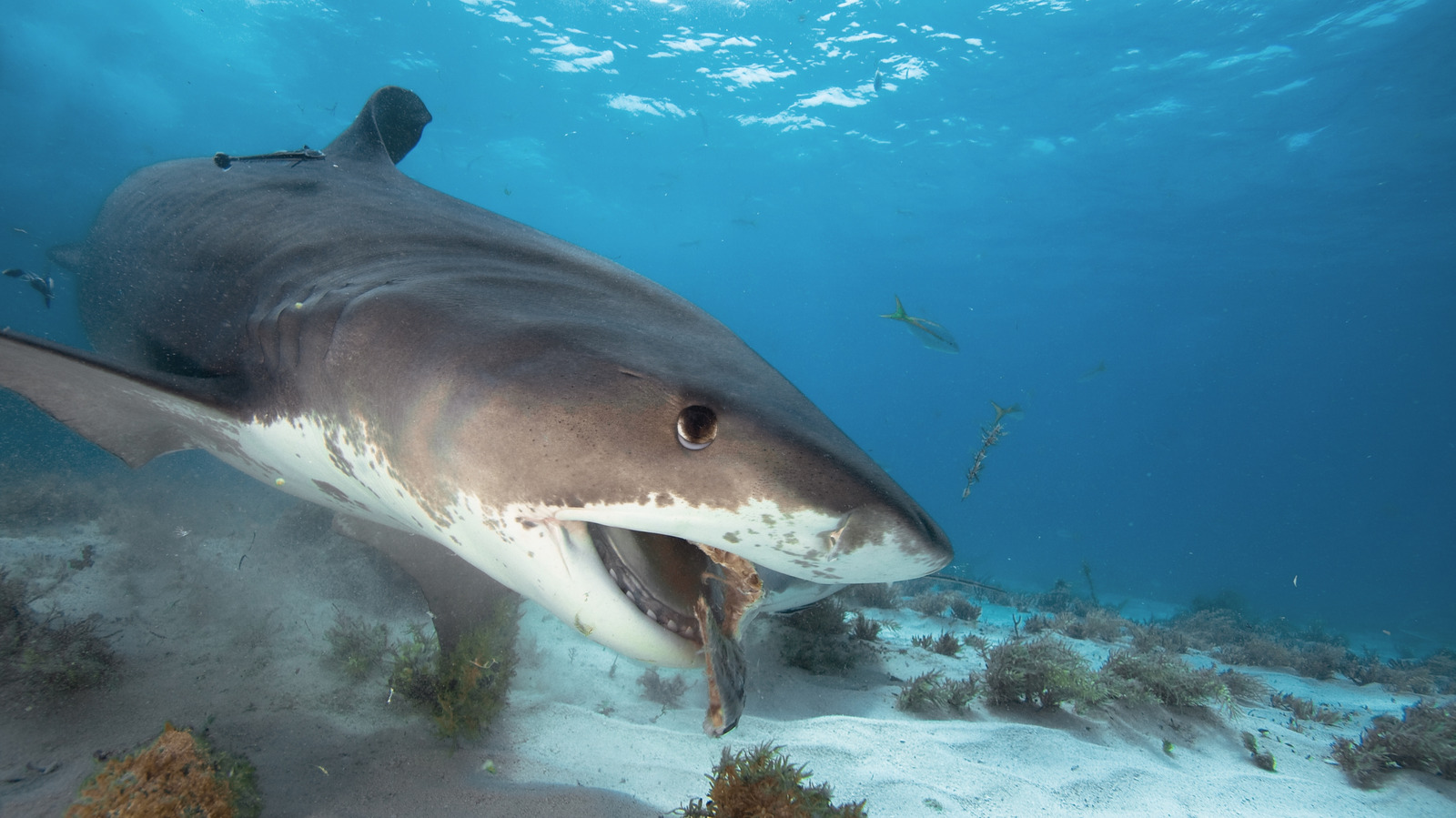
You may or may not know this, but about 99% of international internet traffic is made possible and flows through undersea cables. Basically, advanced fiber-optic cables make it possible to send and receive data from various countries around the globe. But like any type of wire, they can be damaged. One of the most common ways they’re severed is attributed to maritime activities or specifically ship anchors. Anchors can sometimes make direct impact with the cables, are dragged along the seafloor and the cables themselves, or accidentally deployed around a cable. Believe it or not, intentional deployments happen, too, usually due to adverse weather. But there’s another way those cables can be damaged that you probably wouldn’t expect — shark bites.

There are reports of sharks biting, or rather chewing on, undersea cables stretching as far back as the late 1980’s. Scientists don’t actually know why this is. They suspect it’s because the cables emit electromagnetic fields, which could make them appear as live prey to the underwater predators. It doesn’t happen often compared to some of the other ways the cables are damaged. Only 1% of overall damage to deep-sea cables up until 2006 was because of sharks versus natural disasters, earthquakes, or even sabotage. From 2007 to 2014, no recorded cable faults were proven to be from sharks.

But even so, Google wrapped its trans-Pacific cables in a Kevlar-like protective sheath. That should, hopefully, protect against any future fish chomps or, potentially, other common forms of damage. It may not happen often, but Google felt it warranted the extra protection.

Why protect against sharks and other undersea mishaps?


Undersea cables are extremely expensive for several reasons, including complex manufacturing techniques, specialized installation processes, and, of course, the nature of the deep-sea environment, which can be quite harsh. Some of the cable designs can cost over $400 per foot. Meanwhile, faults or damage can cost upwards of $116 million to repair annually. Needless to say, that’s a lot of money, and to make it worse, “faults” are much more common than you might expect. That helps to explain why, despite shark bites being a remarkably small percentage of those faults, Google opted to protect its trans-Pacific cables with tough, Kevlar-like material.

It’s not actually Kevlar, but a similar protective yarn and steel wire armor makeup that’s designed to protect the cables from cuts, bites, and other potential breakage.

Ultimately, the cables are so expensive, with some of the materials recoverable, that projects are underway to safely pull up old cables for recycling. In fact, the very first transatlantic fiber-optic internet cable is being removed by hand for that very purpose. Sure, you can buy a Wi-Fi router that keeps you online during power outages, but when the connection goes down because of a damaged undersea cable, there’s nothing you can do but wait until it’s fixed, although the primary lines are often rerouted through backups to prevent this.




Sign Up For Daily Newsletter

Be keep up! Get the latest breaking news delivered straight to your inbox.
By signing up, you agree to our Terms of Use and acknowledge the data practices in our Privacy Policy. You may unsubscribe at any time.
Share This Article
Facebook Twitter Email Print
Share
What do you think?
Love0
Sad0
Happy0
Sleepy0
Angry0
Dead0
Wink0
Previous Article Linux 7.1 Expected To Begin Removing i486 CPU Support Linux 7.1 Expected To Begin Removing i486 CPU Support
Next Article The Next Layer-1 Wars Won’t Be Won in the Codebase – They’ll Be Won in the Governance Layer | HackerNoon The Next Layer-1 Wars Won’t Be Won in the Codebase – They’ll Be Won in the Governance Layer | HackerNoon
Leave a comment

Leave a Reply Cancel reply

Your email address will not be published. Required fields are marked *

Stay Connected

248.1k Like
69.1k Follow
134k Pin
54.3k Follow

Latest News

Vivo launches robotics lab, focuses on AI and vision for home robots · TechNode
Computing
Today's NYT Strands Hints, Answer and Help for April 6 #764 – CNET
News
How to Take Gorgeous Instagram Photos with Your Phone
Computing
Android and iPhone users warned by FBI that certain apps are a security risk
News

You Might also Like

Today's NYT Strands Hints, Answer and Help for April 6 #764 – CNET
News

Today's NYT Strands Hints, Answer and Help for April 6 #764 – CNET

3 Min Read
Android and iPhone users warned by FBI that certain apps are a security risk
News

Android and iPhone users warned by FBI that certain apps are a security risk

5 Min Read
The Best Monitors We’ve Tested for 2026
News

The Best Monitors We’ve Tested for 2026

62 Min Read
The Most Accurate Pilot Movie Ever, According To A Former Fighter Pilot – BGR
News

The Most Accurate Pilot Movie Ever, According To A Former Fighter Pilot – BGR

5 Min Read
//

World of Software is your one-stop website for the latest tech news and updates, follow us now to get the news that matters to you.

Quick Link

  • Privacy Policy
  • Terms of use
  • Advertise
  • Contact

Topics

  • Computing
  • Software
  • Press Release
  • Trending

Sign Up for Our Newsletter

Subscribe to our newsletter to get our newest articles instantly!

World of SoftwareWorld of Software
Follow US
Copyright © All Rights Reserved. World of Software.
Welcome Back!

Sign in to your account

Lost your password?