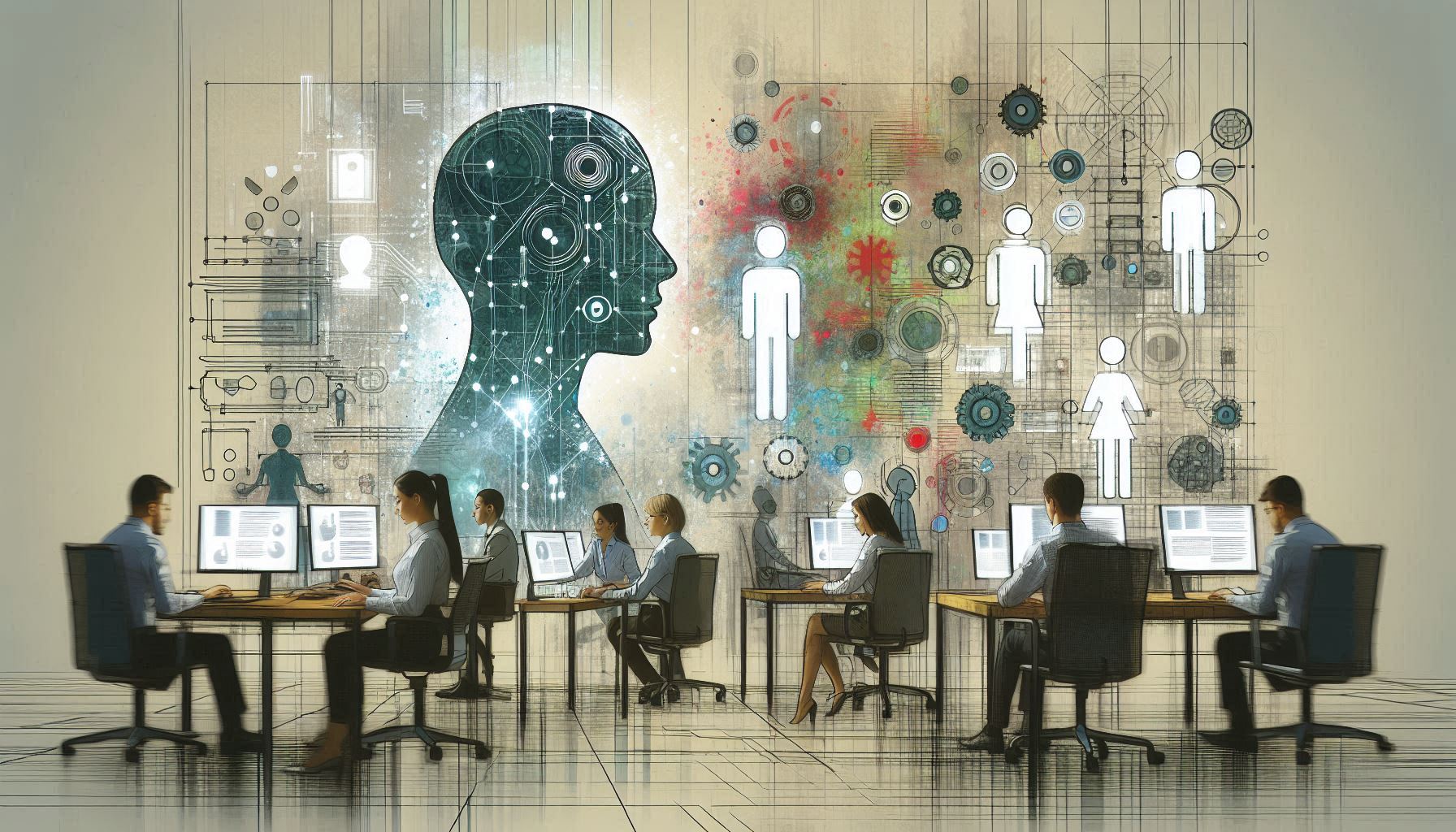
Ask a room full of chief information officers how far along they are with artificial intelligence and you will hear the same story repeatedly: Many proofs of concept, a handful of production deployments, and a few impressive wins. Most enterprises treat AI as a series of projects rather than fundamental shift in how work gets done.
The winners over the next decade will be the organizations that stop treating AI as a feature and rebuild their architectures, operating models and governance around six deep technology curves that are quietly rewriting how information technology operates. The fact that all six are moving at once makes this task tricky, but there is great opportunity for technology leaders who make the shift.
- Autonomous agents as digital coworkers
Autonomous agents can monitor signals across systems, apply policies, decide what to do next and trigger actions in real time. They are essentially digital coworkers. IT and operations leaders must manage a blended workforce, deciding how responsibilities are divided between humans and agents and who defines an agent’s scope of authority. - AI-native applications
Most enterprise systems were designed for a time when humans were the primary decision-makers. In an AI-native world, value comes from how effectively an application leverages models, orchestrates agents and plugs into data and process ecosystems. Product teams must consider training data, feedback loops, the model lifecycle and release and security practices when building AI-native applications. - Enterprise memory as connective tissue
AI needs reliable, accessible context to operate at scale. That is driving a shift from traditional analytics platforms toward “memory-first” data foundations designed to feed AI in real time. That means unifying structured and unstructured information, supporting semantic and vector search and minimizing latency. It also demands rigorous governance around quality and lineage. Without that, AI will confidently amplify flawed or incomplete data, creating new risks rather than insights. - Interaction that matches how people actually work
Employees and customers increasingly expect to converse with systems in natural language or through multimodal inputs. This is more than a new user experience; it can reduce cognitive load, accelerate decision-making and change how teams collaborate. Executives will interrogate “decision cockpits” that blend live metrics with scenario narratives. IT leaders must measure success using metrics such as time-to-decision, confidence in decision-making and cross-functional alignment, not just clicks and logins. - Trust, integrity and resilience under pressure
As AI systems generate more content, recommendations and code, trust becomes a central design requirement. Enterprises need a richer notion of integrity that encompasses provenance, explainability, access control and resilience against manipulation. That requires new oversight structures. Technology, risk, compliance and business leaders must be accountable for where AI is used, what data it depends on and how it is monitored. Policies for model usage, escalation paths when something goes wrong and audit trails need to be defined and tested. - Simulation as a standard change practice
Simulation is moving from specialized use cases to a broader role in organizational transformation. Digital twins and accessible modeling platforms let organizations test new processes, agent behaviors and system designs in virtual replicas before flipping the switch into production. IT and business leaders can explore “what if” scenarios safely. The goal is not a perfectly accurate model of reality, but enough fidelity to de-risk significant changes and learn faster.
One of the most critical considerations for CIOs is how to manage the intersection of these curves. Treat any curve in isolation, and you risk creating new bottlenecks. The real challenge is to orchestrate these shifts so they reinforce one another rather than pulling the enterprise in different directions.
Get ahead of the curves
Four practical moves can help turn this complexity into an advantage:
- Develop an AgentOps discipline
Treat agents as a managed digital workforce, not one-off automation scripts. Define who designs, approves, deploys and monitors them. Establish performance metrics, escalation rules and clear boundaries for what agents can and cannot do. - Build an AI-ready enterprise memory layer
Re-architect data environments so they function as an always-on knowledge layer for AI. Invest in unified governance across structured and unstructured content, low-latency access and semantic retrieval. Make quality and provenance visible so teams can understand and improve the foundations on which their AI depends. - Reimagine workflows for AI-first interaction
Identify the decision points and workflows where improved interaction would have the greatest impact. Redesign those experiences around AI-native patterns — such as co-pilots that work alongside people or workspaces that assemble context on demand — and measure the results. - Govern trust, risk and simulation together
Create governance constructs that span AI integrity and simulation. Define how models are validated before deployment, how digital twins are used to test new designs, and what evidence is required to move from simulation to production. Make simulated “rehearsal” a routine step for large-scale changes, especially in sensitive domains.
By treating agents, AI-native apps, enterprise memory, interaction, integrity and simulation as parts of a single system, CIOs can move beyond incremental optimization. They can build an architecture and an operating model that absorb ongoing disruption while still delivering against today’s priorities.
Kiran Minnasandram is vice president of the Technology Transformation and Advisory Group at Wipro Ltd. He wrote this article for News.
Image: Microsoft Designer/ News
Support our mission to keep content open and free by engaging with theCUBE community. Join theCUBE’s Alumni Trust Network, where technology leaders connect, share intelligence and create opportunities.
- 15M+ viewers of theCUBE videos, powering conversations across AI, cloud, cybersecurity and more
- 11.4k+ theCUBE alumni — Connect with more than 11,400 tech and business leaders shaping the future through a unique trusted-based network.
About News Media
Founded by tech visionaries John Furrier and Dave Vellante, News Media has built a dynamic ecosystem of industry-leading digital media brands that reach 15+ million elite tech professionals. Our new proprietary theCUBE AI Video Cloud is breaking ground in audience interaction, leveraging theCUBEai.com neural network to help technology companies make data-driven decisions and stay at the forefront of industry conversations.