TCL this month showcased its latest AI applications at the 2025 TCL Global Technology Innovation Conference, outlining how the Chinese electronics maker is deploying AI across intelligent manufacturing, consumer devices and green technologies to drive tangible commercial value.
The company said the focus of the event was on moving AI beyond conceptual development and embedding it directly into products and industrial processes to improve efficiency and user experience.
TCL founder Li Dongsheng said the company’s “AI for Real” strategy aims to ensure AI delivers measurable results across its businesses, rather than remaining a theoretical innovation. TCL expects its AI-related applications to generate more than $140 million in economic benefits by 2025, which reflects the company’s positioning of AI as a core productivity engine rather than an auxiliary technology.
On the manufacturing side, TCL CSOT (China Star Optoelectronics Technology) unveiled X-Intelligence 3.0, a domain-specific large language model developed for the display industry. As TCL’s first vertical AI model with reasoning capabilities, the system has delivered measurable gains, improving product issue analysis efficiency by 20% and materials development efficiency by 30%, according to the company.
TCL has also advanced inkjet-printed OLED technology from laboratory research to large-scale commercial production, supporting the shift toward more efficient and environmentally sustainable display manufacturing.

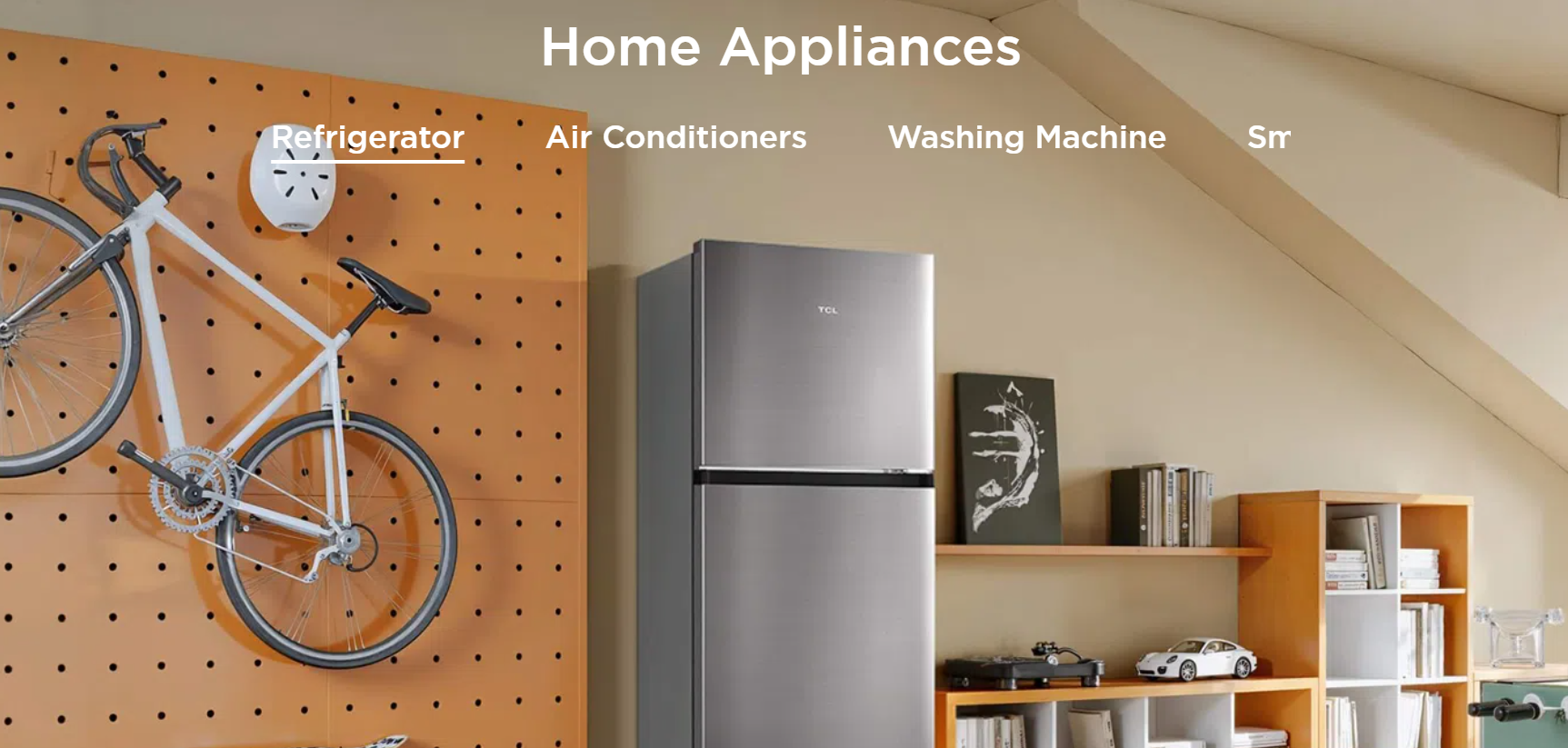
On the consumer side, TCL is integrating AI across a wide range of household scenarios. Its FreshIN air conditioners use AI to reduce nighttime energy consumption, while AI-enabled refrigerators offer precise temperature control and washing machines automatically identify fabric types and load conditions to optimize wash cycles. TCL’s televisions also apply AI to optimize picture quality and sound in real time for immersive viewing experiences.
Beyond the home, TCL is extending AI into wearables and companion devices. RayNeo AR glasses support real-time translation and visual interaction, lowering barriers to cross-language communication, while the modular AI companion robot AiMe offers emotional recognition and natural interaction.

Backed by sustained investment in research and development and a global collaboration network, TCL is pushing deeper integration between AI and green development. By upgrading intelligence across the entire value chain—from materials and manufacturing to end products—the company is positioning AI as a driver of greater efficiency and long-term sustainability.