We may receive a commission on purchases made from links.
Flagship smartphones from big brands like Samsung, Google, and Apple have matured into a phase of incremental, and some might argue, boring yearly upgrades. On the flip side, the budget segment is becoming a bit of a hotbed for genuine innovation. For example, the Nothing Phone 3A stands out with its unique design and glyph interface, while phones like the Xiaomi Poco F7 give the iPhone 17e a run for its money.
As budget phone makers compete more aggressively for better performance, battery life, and hardware, there are plenty of great budget phones for gamers. With traditional powerhouses like the ASUS ROG Phone facing an uncertain future, quite a few budget gaming phones are trying to steal the thunder.
However, for gamers on a budget, just looking at a spec sheet isn’t enough. You need reliable performance for consistent frame rates, great battery life, and a bright, responsive screen to truly enjoy the experience. With that in mind, we’ve curated a diverse list of budget gaming phones here that play your favorite games without the gargantuan price tag.
RedMagic 11 Air
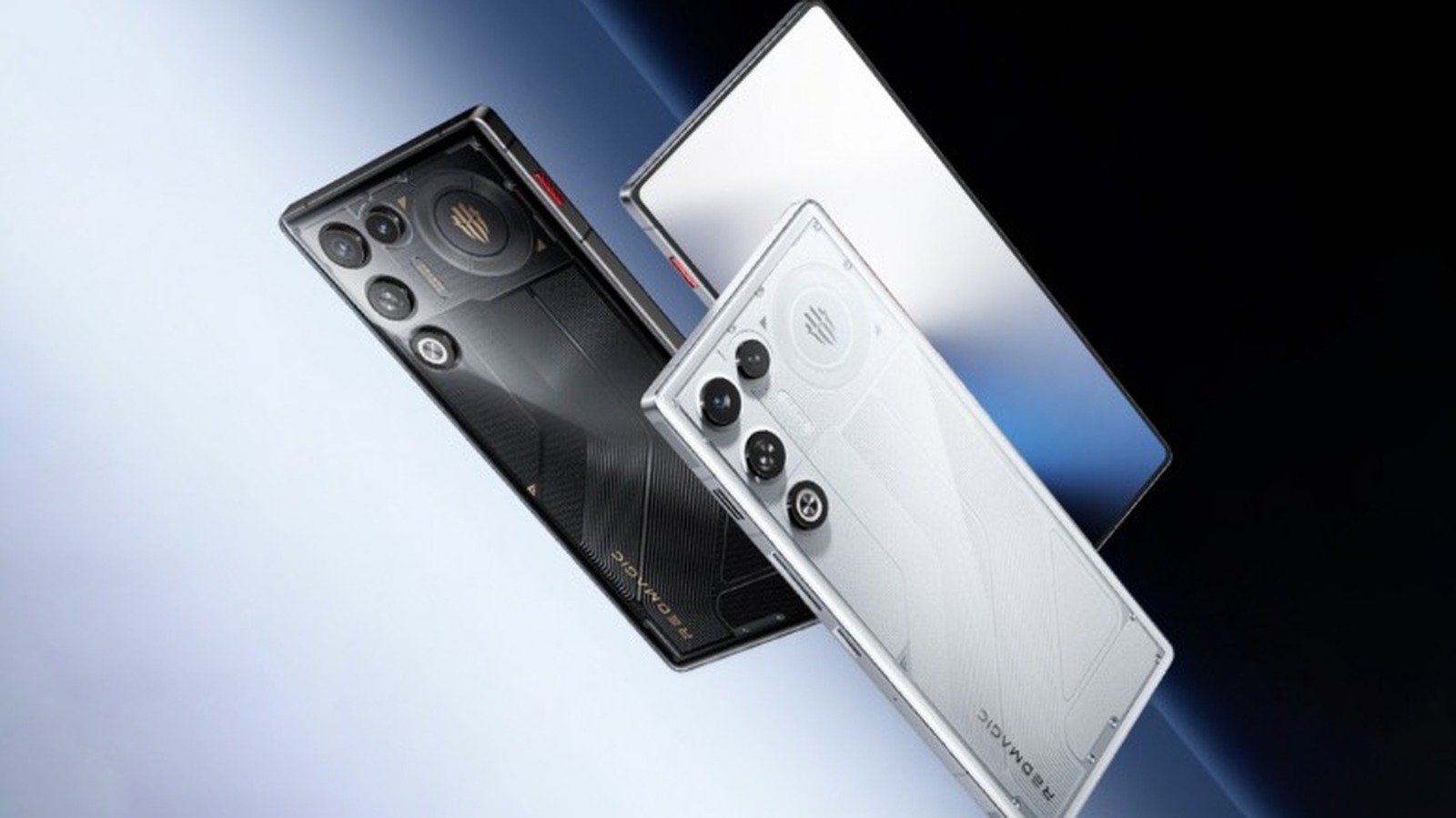
Many budget or mid-range phones have a plastic build (Pixel 9A, for example), which is why the RedMagic 11 Air stands out with its premium design. It features a transparent back glass, aluminum rails, and a relatively thin profile for a gaming phone. Beneath that beautiful exterior, it houses an active cooling fan and capacitive shoulder triggers that sit on the right edge of the phone. You can map these buttons for in-game actions for various games. This feature is particularly useful for aiming and shooting in games like “Call of Duty: Mobile”.
With this phone, you get a 6.85-inch 144Hz OLED panel that’s great for gaming. The bezels are thin, and because of the selfie camera tucked under the display, you get an edge-to-edge gaming experience. It also features a massive 7,000 mAh battery that can provide a day’s worth of gaming. When you do need to charge, the 80W fast charging will fill that gigantic battery within an hour.
Powering the RedMagic 11 Air is the Snapdragon 8 Elite Gen 5 — Qualcomm’s flagship chipset at the time of writing. That’s the best thing about this phone: the $500 price is very compelling for such powerful hardware. However, you only get two major Android updates and three years of security updates. For longer software support, budget phones from Xiaomi or Samsung will fare better.
Xiaomi Poco F7
The Xiaomi Poco F7 features an elegant two-tone design, one that’s more subtle in white and more futuristic in silver. This phone features flat sides, a glass back, and aluminum side rails, making it feel premium. The 6.83-inch AMOLED display supports HDR and Dolby Vision certification, delivering a stellar media experience. Thanks to the 120Hz refresh rate, both daily use and gaming feel highly responsive.
At the heart of the Poco F7, the Snapdragon 8s Gen 4 provides enough performance to beat competitors like the Samsung Galaxy A56. Despite the 8s Gen 4 being a tier lower than the Snapdragon 8 Elite, it’s still capable of playing graphically intensive games with ease. The 6,500 mAh battery will easily power you through the day, even with a couple of gaming hours throughout. When plugged in, the 90W fast charging will get you to 100% within 45 minutes.
One major caveat with this phone is that supported carriers are limited to T-Mobile, Mint, and Tello in the U.S. However, Xiaomi promises four major Android updates and six years of security updates for the Poco F7. This is much better than its main competitor, the Redmagic 11 Air, which only promises two major Android updates.
Samsung Galaxy S24 FE
If you care for a more polished software experience, reliable network compatibility, and good cameras, the Galaxy S24 FE is the more sensible pick compared to newer, budget Chinese phones. While this is an older phone, the S24 FE has aged into a fantastic value bracket, currently under $600. And despite its age, the 6.7-inch 120Hz AMOLED panel is still bright and responsive, making it great for gaming.
Under the hood, the Exynos 2400e chipset remains a capable performer, easily handling graphically intensive titles like “Genshin Impact” at high settings. The 4,700 mAh battery provides solid endurance for daily use, and while it can handle a couple of hours of gaming, it does lag behind the 6,500 mAh+ silicon-carbon battery found in its Chinese competitors.
But the strongest argument for the Galaxy S24 FE here is longevity. Samsung has committed to supporting this device with seven years of OS and security updates, keeping it current until 2031. This is a level of support that you don’t get from the likes of Xiaomi or RedMagic. Simply put, the Galaxy S24 FE is firstly a solid all-rounder, but one that also manages to be a great budget option for gaming because of its lower price these days.
OnePlus 13R
It is very rare in the smartphone world that the predecessor is better than its successor, but that’s exactly the case with the OnePlus 13R. As pointed out by Android Central, the OnePlus 13R has better cameras, a more interesting design, and a brighter display than the newer OnePlus 15R. And because the 13R is older, you can get it for a lower price, making the choice obvious.
Despite the older Snapdragon 8 Gen 3 chip, the OnePlus 13R is a beastly performer. It plays graphically intensive games with ease, and doesn’t feel noticeably slower than the newer 15R in daily use. This phone features a 6,000 mAh battery that easily lasts all day, and the 55W fast charging takes you from 0% to 100% within an hour.
As for the display, you’re getting a 6.78-inch 120Hz AMOLED panel that hits peak brightness of up to 4,500 nits. It’s incredible for gaming, outdoor use, and watching videos. The 13R also features a 50MP telephoto lens with 2x optical zoom, a feature missing on the 15R. To drive the point home, the 15R currently costs $700, while the 13R is $100 cheaper. If you can find it even cheaper during sales, it’s an even better deal.
Motorola Moto G Stylus (2025)
The Moto G Stylus (2025) is an affordable phone that doesn’t compromise on quality. The back of the phone features vegan leather, and Motorola offers various fun and vibrant color options. This design already makes the G Stylus stand out from plastic- or glass-backed phones, but the addition of the stylus, microSD card slot, and headphone jack makes it even more of an oddity compared to modern flagships that ditch these features.
For a $400 device, the 6.7-inch 120Hz AMOLED display is a stellar screen for gaming, boasting better peak brightness and sharpness than even the more expensive Samsung Galaxy A56. Under the hood, the Snapdragon 6 Gen 3 delivers reliable everyday performance, and while more intensive titles will run at lower settings, you’ll still get a consistent framerate in something like Genshin Impact. It features a solid 5,000 mAh battery for all-day use, and the 68W fast charging is a great addition at this price.
This cheaper phone isn’t necessarily for gamers who want the best graphics, but for those more into emulation and casual gaming. However, the downside here is the limited commitment to software updates. Motorola only promises two Android updates and three years of security updates, which puts it behind the competition. Even Xiaomi offers better support in this regard today.
Samsung Galaxy A36
Like most of Samsung’s Galaxy A-series, the Galaxy A36 is a phone that feels very safe, for better or for worse. It features a respectable Snapdragon 6 Gen 3 chipset, 6GB of RAM (with 8GB and 12GB options in various regions), and a 5,000 mAh battery that provides all-day endurance. It even supports 45W fast charging, so it’s certainly a reliable phone that ticks all the boxes for most people.
But that’s not the reason you should buy it. See, competitors like Motorola, Xiaomi, and even Nothing may often offer better hardware, but not better software support. With the Galaxy A36, you get six years of software updates, meaning the phone will still be getting updates in 2031. If you’re not someone who upgrades every two to three years, this is worth considering.
Shifting back to our gaming focus, the 6.7-inch AMOLED display is a massive win here. It features a 120Hz refresh rate and high peak brightness, making it great for gaming. Performance-wise, the A36 handles most intensive games at medium settings at a solid 60FPS. The A36 may be missing an exciting design and fun features like capacitive shoulder buttons, but it’s a logical, long-term investment.
Methodology
For this list of budget gaming phones, we wanted all our options to deliver reliable, everyday gaming performance. Each phone selected features at least a 120Hz AMOLED display, as the higher refresh rate and vibrant colors of these panels make them great for gaming. Battery life and fast charging are also important, as gamers are more likely to drain their batteries faster. Each phone delivers at least all-day battery life. Some people game even longer, so all our phones have fast charging (45W or above) to quickly top up when you need to.
As for the price, we ensured the ceiling was $600, so all phones are under that budget, with a handful around the $400 mark. Software support is often a challenge, and while brands like Xiaomi and Motorola still struggle with this, we made sure to select phones with at least 3 years of support for security updates. This ensures that all your apps work even into your third year of owning the phone.