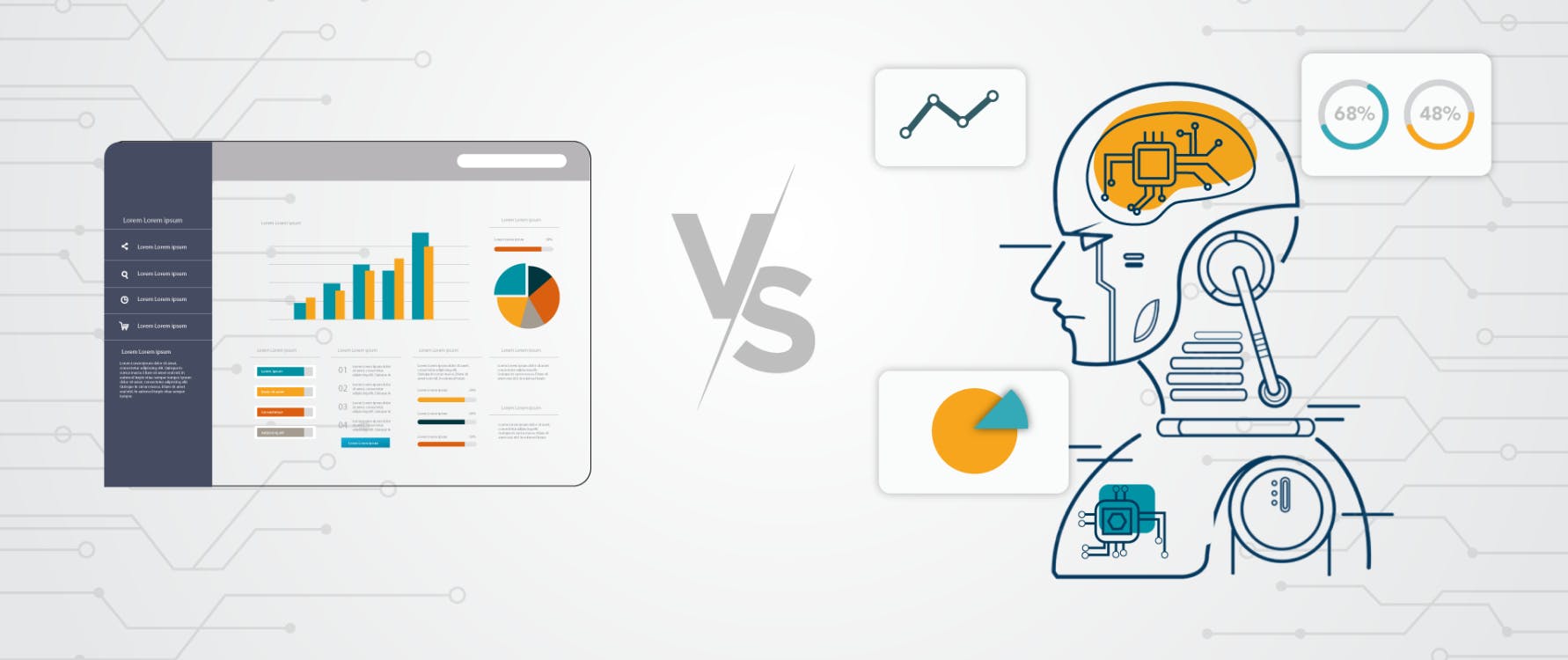
A Conceptual Scenario Based on Emerging Patterns in Enterprise Analytics.
Prologue – The Future Awakens
In the emerging future of analytics, dashboards will not be simply “opened”.
They will be activated – instantly, conversationally, and continuously updated by autonomous BI agents that anticipate user needs long before any interaction occurs.
These agents will run insights proactively: optimizing visuals, analyzing patterns, and firing background queries without explicit human action.
This shift introduces a challenge: BI systems were never architected for something this active.
As autonomous agents begin interacting with semantic models at scale, a new form of architectural stress emerges – one that traditional BI governance cannot contain.
The following is a conceptual future scenario, constructed from patterns already visible in modern BI ecosystems, showing how agents might overwhelm BI systems unless new architectural components are introduced.
Act I – When BI Agents Become Overachievers
The analytics experiences of this future world give rise to countless micro-agents, each operating quietly behind the scenes to perform its tasks.
The system analyzes historical data, predicts future trends, and generates automatic insights without waiting for a prompt. It shifts visualizations on the fly, checks data lineage for added context, updates metrics in real time, and runs diagnostics -sometimes all at once. Everything happens without pause. The system acts with complete autonomy because, simply put, it doesn’t recognize boundaries.
A user interface category selection initiates multiple operations that extend beyond basic filtering functions. The system generates multiple micro-queries at once while running scenario simulations and anomaly checks, and reorders insights and starts loading additional questions before users think about them. The system operates as a predictive system that transforms itself automatically while making predictions about user behavior.
The research discovery shows how environmental feedback systems create conflicts between local system optimization and global system instability in autonomous systems. – Emerging Perspectives in Human–AI Collaboration.
BI will face this exact problem in its future unless developers develop new architectural solutions to address it.
Act II – The Architecture Starts to Quiver
Although the BI stack continues to evolve, its fundamental components remain recognizable: semantic layers, data models, lakehouses and warehouses, caching engines, and both visual and conversational interfaces. The architecture looks familiar on the surface, shaped by years of predictable human-driven usage.
What changes is not the structure but the workload dynamic that runs through it. Human-driven BI creates steady, understandable query patterns – the kind of load the ecosystem was built to absorb. Agent-driven BI, however, generates something far more turbulent. Its queries arrive in bursts, branch unpredictably, and interact with the system in ways no traditional BI platform was ever designed to manage.
In a conceptual future scenario, agents overwhelm systems by:
1. Flooding concurrency pools: Dozens or even hundreds of small queries fire simultaneously.
2. Treating the semantic model as a sandbox: Agents explore relationships unprompted.
3. Causing latency spikes: Not because data is slow, but because the system is overloaded by “help.”
4. Inflating compute silently: Agent workloads accumulate without explicit human intent.
5. Obscuring lineage: It becomes unclear which agent triggered which action.
Governance gaps widen as autonomy scales. n A forthcoming idea in analytics governance summarizes this risk:
“Systems designed for human-triggered workloads will fail under machine-triggered concurrency unless new layers of control are introduced.” – Journal of Decision Systems, Conceptual Directions in AI Governance
This architectural pressure demands a new form of discipline.
Act III – The Question of Agent Suitability
Selecting which AI agents can operate inside BI will become a governance responsibility as significant as data quality or privacy.
To support this need, emerging research introduces a conceptual framework called the Decision-Agent Fit (DAF) Framework, which evaluates the readiness of agents for BI ecosystems.
DAF categorizes agents across four dimensions:
1. Decision Quality (Q): Can the agent produce accurate, explainable, reproducible insights?
2. Timeliness (T): Does the agent enhance decision speed or overwhelm SLAs?
3. Governance Alignment (G): Does the agent maintain necessary lineage, transparency and compliance metadata?
4. Cost Efficiency (C): Can the agent operate without generating wasteful or runaway compute?
DAF serves as a screening mechanism to assess whether an agent belongs in BI at all.
But admission alone is insufficient. Even the most qualified agent requires something the future BI stack currently lacks.
Act IV – The Agents That Stabilize the System
Some future agents will not overwhelm systems; they will stabilize them.
These responsible agents will be designed to:
- Throttle their own requests
- Sense resource pressure
- Understand lineage fragility
- Predict the cost of their actions
- Delay or batch workloads based on system state
- Operate within behavioral constraints
Their ability to do this depends on one conceptual addition to the BI architecture.
Act V – The Missing Future Layer: The Context Layer
Advanced discourse in AI architecture argues that autonomous systems require meta-layers that inform agents how to behave within constrained environments.
As one analysis notes:
“Intelligent agents require interpretable context to make decisions aligned with system stability rather than internal heuristics.” – AI Systems Architecture Research Collective
In BI, this proposed meta-layer is the Context Layer.
The Context Layer – A Future Governance Intelligence Layer
Its purpose: To provide agents with environmental, operational and policy context in real time.
Capabilities of the Context Layer
1. Environmental Awareness
Agents understand:
- Active refresh cycles
- Compute strain
- Concurrency saturation
- Cache staleness
- High-risk operations
2. Behavioral Guardrails
Agents are bounded by:
- Throttling rules
- Cost ceilings
- Approved model access
- Priority interrupts
- Safe operation modes
3. Mandatory Intent Declaration
Every agent action includes a purpose tag:
- “Performing exploratory insight generation.”
- “Preparing forecast variants.”
- “Checking for deviation patterns.”
Unclear purpose = denied.
4. Lineage Sensitivity
Agents become aware of downstream impacts.
5. Temporal Intelligence
Agents adjust behavior during:
- Peak traffic periods
- Data freeze windows
- Heavy usage cycles
The Context Layer transforms agents from autonomous optimizers into governed collaborators.
Act VI – The Combined Model: DAF + Context Layer
Future BI stability depends on combining two conceptual advances:
1. Decision-Agent Fit (DAF)
Evaluates which agents should operate in BI.
2. The Context Layer
Determines how they must behave once admitted.
Together, they create a new operational paradigm: Safe-Service BI
A future in which:
- Agents behave responsibly
- Workloads remain stable
- Governance is continuous
- Costs stay controlled
- Insights become richer without becoming chaotic
This is the architecture BI requires in an agent-dominated future.
Act VII – Future Predictions for Agent-Driven BI
1. Agent governance will surpass data governance in complexity.
2. Semantic models will become negotiation endpoints rather than passive stores.
3. Workload intent logging will be mandatory.
4. Cost anomalies will shift from human behavior to agent behavior.
5. Frameworks like DAF will become foundational to BI architecture.
A conceptual governance review captures the shift succinctly:
“Future decision infrastructure will not revolve around controlling data. It will revolve around controlling autonomous decision agents.” n –Computational Governance & Systems Thinking Review
Conclusion – BI Will Evolve Because Autonomy Leaves It No Choice
No dashboard will collapse under the weight of data alone.
No semantic model will buckle simply because a metric grew too large.
The force that reshapes BI will come from within: autonomous agents accelerating beyond the limits of the architecture meant to contain them.
In that future, the real danger is not failure – it is misalignment.
Agents will act with conviction, speed and internal logic so precise that the system around them begins to fracture in slow, invisible ways. A model hesitates. A thread pool saturates. A lineage path becomes tangled. Nothing catastrophic at first… just a quiet, relentless pressure building inside the stack.
And once that pressure becomes visible, it is already too late.
The only path forward requires BI to evolve in ways it was never asked to evolve before:
- Agents must be evaluated as rigorously as data itself
- Their behavior must be shaped by contextual governance, not guesswork
- System awareness must be continuous, not reactive
- Meta-layer intelligence must mediate every interaction between agents and architecture
- Entire discipline must shift from “self-service” to something far more responsible: Safe-service
This is not speculation for effect. This is the natural trajectory of any analytical environment that invites autonomy without preparing for what autonomy truly does.
And it is important to say this explicitly:
This conceptual scenario reflects my own view of where BI is heading – a future in which the greatest threat and the greatest opportunity both come from the same place: intelligent systems acting faster than the frameworks built to guide them.
If BI is to remain stable, trustworthy, and governed in this emerging landscape, it must redesign itself for a world where intelligence is no longer passive. It moves. It reacts. It decides. And it does so at speeds that demand an architecture capable of matching its urgency.
Only then will BI survive – not in spite of autonomous agents, but because it finally learned how to work alongside them.
About the Author
Rupesh Ghosh works as a Lead Business Intelligence Engineer at Total Wine & More while pursuing his Executive PhD in Business at the University of Cumberlands. His research interests include data governance, decision intelligence, project management and cost-effective BI analytics.
n