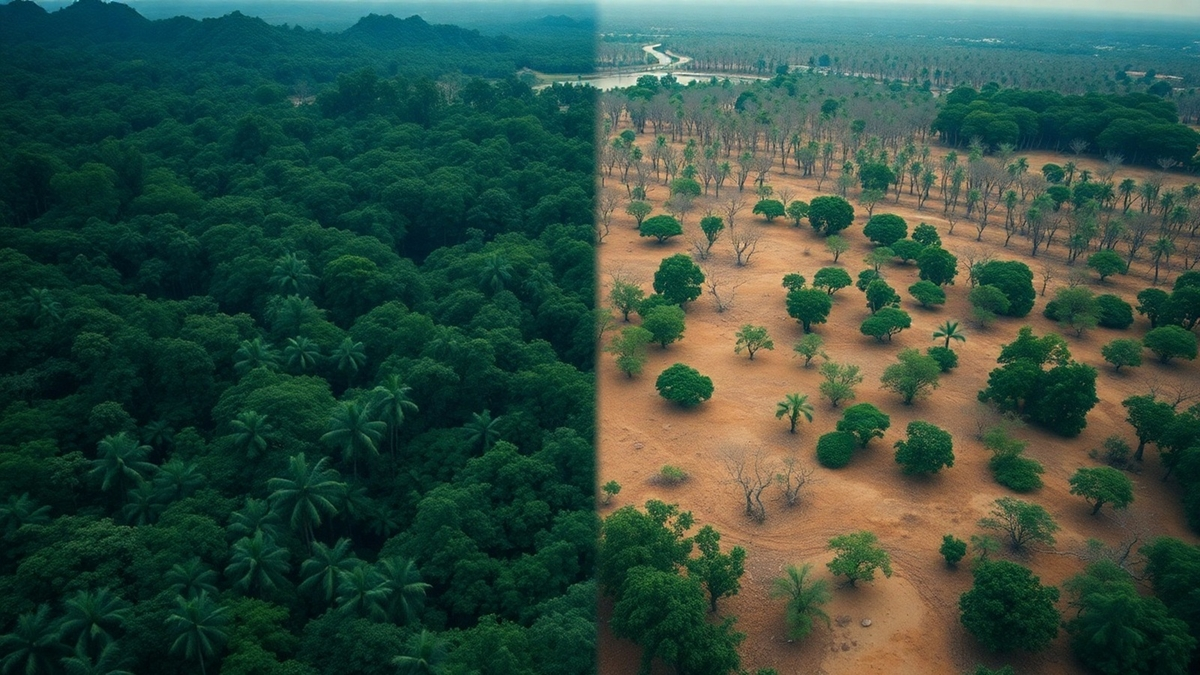
The alert is maximum. A shocking study, carried out by researchers from Potsdam Institute for Climate Impact Research (PIK) and published in the journal Naturecompletely redraws the risk map for the largest tropical forest in the world.
By integrating the factor of deforestationso far underestimated in global models, scientists have discovered that the Amazon’s resilience threshold is dramatically lower than expected.
The ax could fall much sooner, turning a vital ecosystem into a carbon bomb, with a tipping point for the Amazon from 1.5°C of warming…even though we already know that we won’t be able to hold it.
Why is the Amazon now threatened with such rapid collapse?
The threat of collapse is accelerated because deforestation lowers the forest’s tolerance threshold for warming. The PIK study demonstrates that with a forest loss of 22%global warming of just 1.5°C is enough to trigger a dieback (large-scale dieback) massive.
Without deforestation, this critical threshold was located around +3.7°C. It’s a chilling readjustment of our certainties. Previously, climate models focused almost exclusively on rising temperatures.
But the reality on the ground is different. Next to 18 % of the immense forest ofAmazon has already been razed, mainly for breeding. This direct destruction weakens the entire biome, making it extremely vulnerable to one global warming even moderate, a threshold that the planet could cross before the end of this decade.
How does deforestation actually accelerate this process?
Deforestation sabotages the vital mechanism of moisture recycling of the forest. The Amazon generates up to 50% of its own rain thanks toevapotranspiration (process by which trees release water into the atmosphere).
By cutting down trees, we dry out the air and weaken this cycle, creating a devastating domino effect. A deforested area deprives neighboring leeward areas of rain, which in turn dry up and die.


This phenomenon is a self-sustaining infernal mechanics. Researchers speak of “ atmospheric rivers » which transport humidity from the Atlantic. The crucial role of deforestation is to break this chain.
A small surge in global warming is then enough to tip the system over. Each tree cut down is one less piece in a house of cards ready to collapse, risking reaching a tipping point irreversible.
What would be the concrete consequences of this shift?
A large-scale collapse would transform up to 77% of the rainforest becomes a savannah or a degraded ecosystem. This transition would release colossal amounts of carbon, equivalent to several years of global emissions.
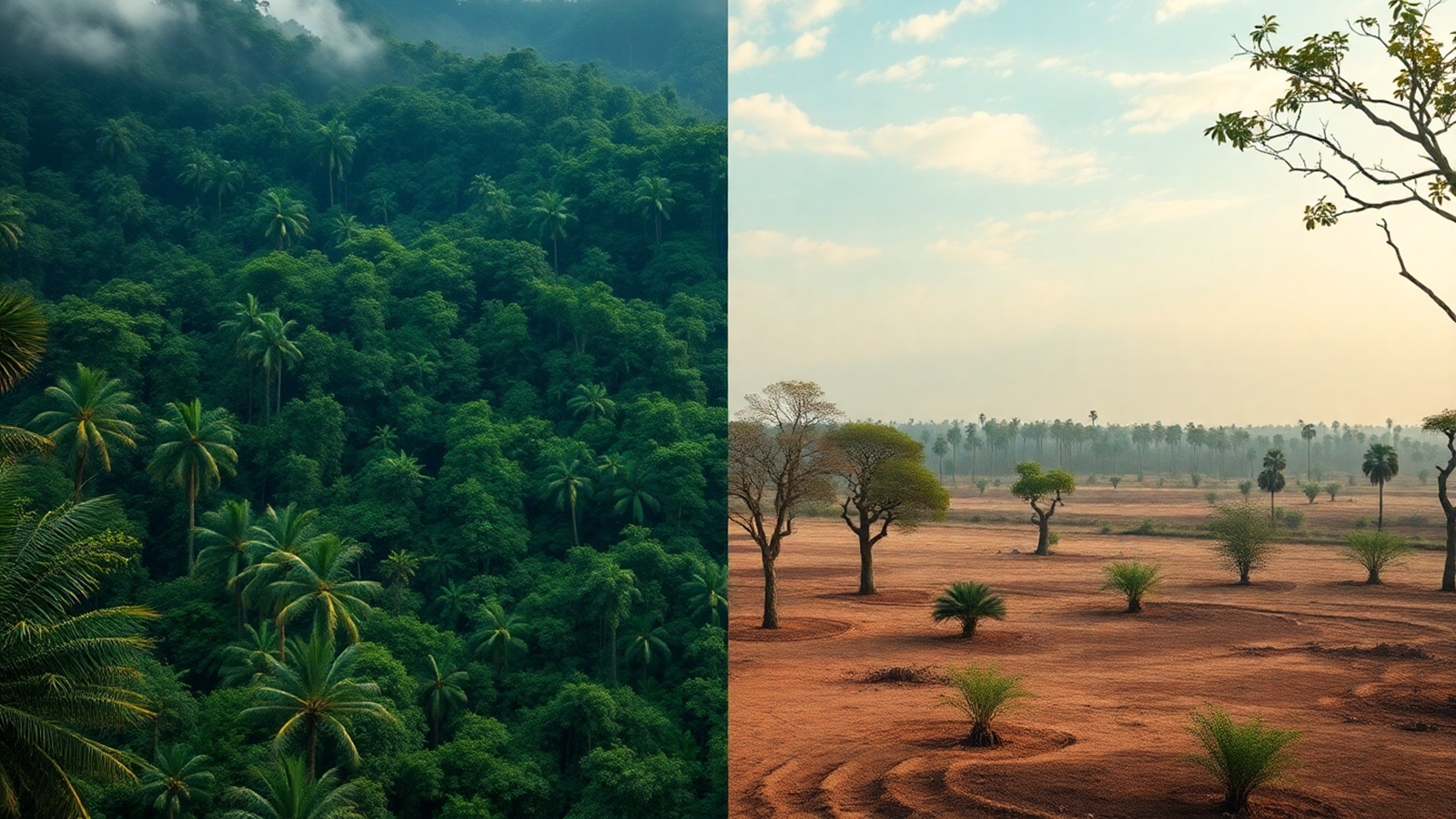
The “lung of the planet” would then become a gigantic carbon emittercapable of warming the globe by an additional 0.2°C alone.
Beyond the climate impact, it would be a ecological and human disaster unprecedented. The entire Amazon is home to the largest terrestrial biodiversity reserve in the world.
Its disappearance would lead to mass extinction and destabilize rain patterns across South America, threatening the agriculture and water security of millions of people.
Is this disaster scenario still avoidable?
It is still possible but the window for action is closing at dizzying speed. The PIK model is based on a scenario of intense deforestation. If current policies, such as Brazilian President Lula da Silva’s commitment to stopping the deforestation by 2030, are held, the tipping point could still be avoided.
Recent efforts have also made it possible to reduce the rate of forest destruction by half. However, optimism remains measured. Other threats, such as forest firesare gaining momentum.
Once rare, they now spread easily in a warmer, drier forest, amplified by phenomena like The Child. The study could even underestimate the real vulnerability of the ecosystem.
The conclusion of the study is simple: each hectare of forest preserved is life insurance against climate chaos. We must move back from this threshold, not approach it because the future is literally happening now before crossing this tipping point.