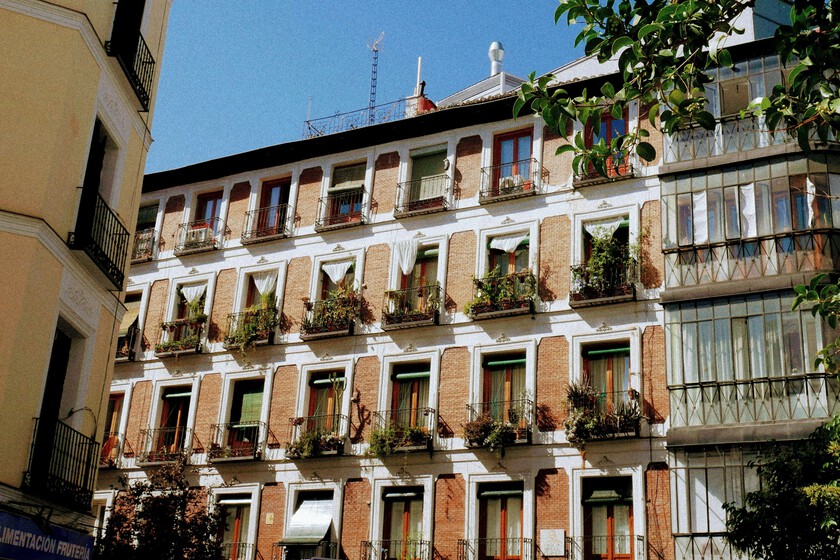
Unknowns may loom on Spain’s horizon, but one thing is certain: the country is aging. If the latest INE projections are right, by mid-century almost a third of the population (30.5%) will have blown out all 65 candles. The problem is that many of our buildings are not prepared to accommodate older people due to their architectural barriers or accessibility deficiencies. Thus, an interesting question remains: What happens if at a given moment a neighbor in a block demands a ramp or an elevator to get to their home?
The Horizontal Property Law is clear on this matter.
What has happened? That on Spain’s horizon there is a ticking time bomb that will affect thousands of buildings in the country. The reason: although Spanish society is increasingly older (something that happens in many other nations, inside and outside Europe), a good part of its residential stock is not prepared to accommodate people with mobility problems. The challenge is better understood when two recent studies are reviewed: the demographic forecasts of the INE and the report on “accessible mobility” launched in 2024 by Ilunion and Otis.

And what do they say? The first (INE) reveals that in a matter of a few decades the percentage of septuagenarians, octogenarians and nonagenarians will grow considerably. If right now 20.4% of Spaniards are 65 or older, in 2055 that footprint will have expanded to around 30.5%. The second (the Ilunion report) warns that 34.3% of the main homes (6.45 million) are located in buildings without easy access, in the opinion of their residents. In fact, only 20.8% are prepared for the aging of their tenants.
It is not surprising if you take into account that in our country there are five million people who live in buildings of three or more heights that do not have an elevator, so they have no choice but to go up and down stairs every time they want to go outside. This was suggested by at least one analysis published two years ago by elDiario.es and which is based on microdata from the Survey of Essential Population and Housing Characteristics, a survey by the INE.
What if someone asks for an elevator? That is the question that hovers over many communities of neighbors in Spain and was recently answered by our colleagues at Decoesfera. What happens if suddenly an owner proposes installing a ramp or an elevator in the building, a structure that guarantees accessibility to all homes? Do you need board approval? And if the work is carried out, are all residents obliged to bear its cost, including those who live on the ground floor and will not use the elevator?
Are there any circumstances in which an owner can require infrastructure that guarantees accessibility? As is usually the case in building issues, the answer is in the legal “bible” of neighborhood coexistence: the Horizontal Property Law (LPH). More specifically in article 10.
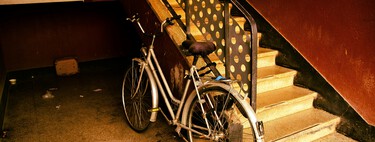
What does the law say? That if the request comes from owners with reduced mobility or of advanced age (those who a priori have more difficulties getting around) the works must be carried out no matter what. Without the need for prior agreement from the Board of Owners, although there are advisories that advise that the issue be addressed in meetings to seek agreements. Especially due to the cost that usually involves installing ramps, elevators or stair lifts.
In its article 10.1, the LPH clarifies that “the “works necessary to guarantee reasonable adjustments in terms of universal accessibility and, in any case, those required at the request of the owners in whose home or premises in whose home or premises people with disabilities or people over 70 live, work or provide voluntary services” will be mandatory and will not require prior agreement from the board.
And in case there are any doubts, the law emphasizes that the objective is to ensure their mobility, which may involve the installation of ramps or elevators.
Does it say anything about costs? Yes. Although the LPH makes clear the right of older and disabled owners to demand ramps and elevators, it also establishes certain limits as far as costs are concerned: neighbors must contribute “provided that the amount passed on annually from them, once subsidies or public aid has been deducted, does not exceed 12 ordinary monthly payments of common expenses.” From Alapont they clarify that the rule refers to the fixed contributions that each neighbor contributes to help with ordinary expenses.
What if there are subsidies? If the cost of the work exceeds these 12 ordinary monthly payments, the difference must be paid by the owners interested in having the elevator or ramp installed. The LPH adds that in any case the rest of the neighbors will have to assume their part of the spill. “It will also be mandatory to carry out these works when the public aid to which the community can have access reaches 75% of their amount,” he specifies.
The key is that the law does not talk about works related to the aesthetics of the property, but about something much more basic: universal accessibility, that all its residents can enter and exit, free of barriers. When the elevator is claimed by a neighbor who does not meet the requirements set out in the LPH (under 70 years of age and without functional diversity), the proposal must receive the endorsement of a simple majority in the board. If the measure goes ahead and receives the green light, all neighbors must participate, clarifies Alapont, including those who reside on the ground floor.
Images | Diego Marín (Unsplash) and Elio E. López Vega (Unsplash)
Via | Decosphere
In WorldOfSoftware | Spain is filling up with buildings with pets. The Horizontal Property Law clarifies what to do when they cause nuisance