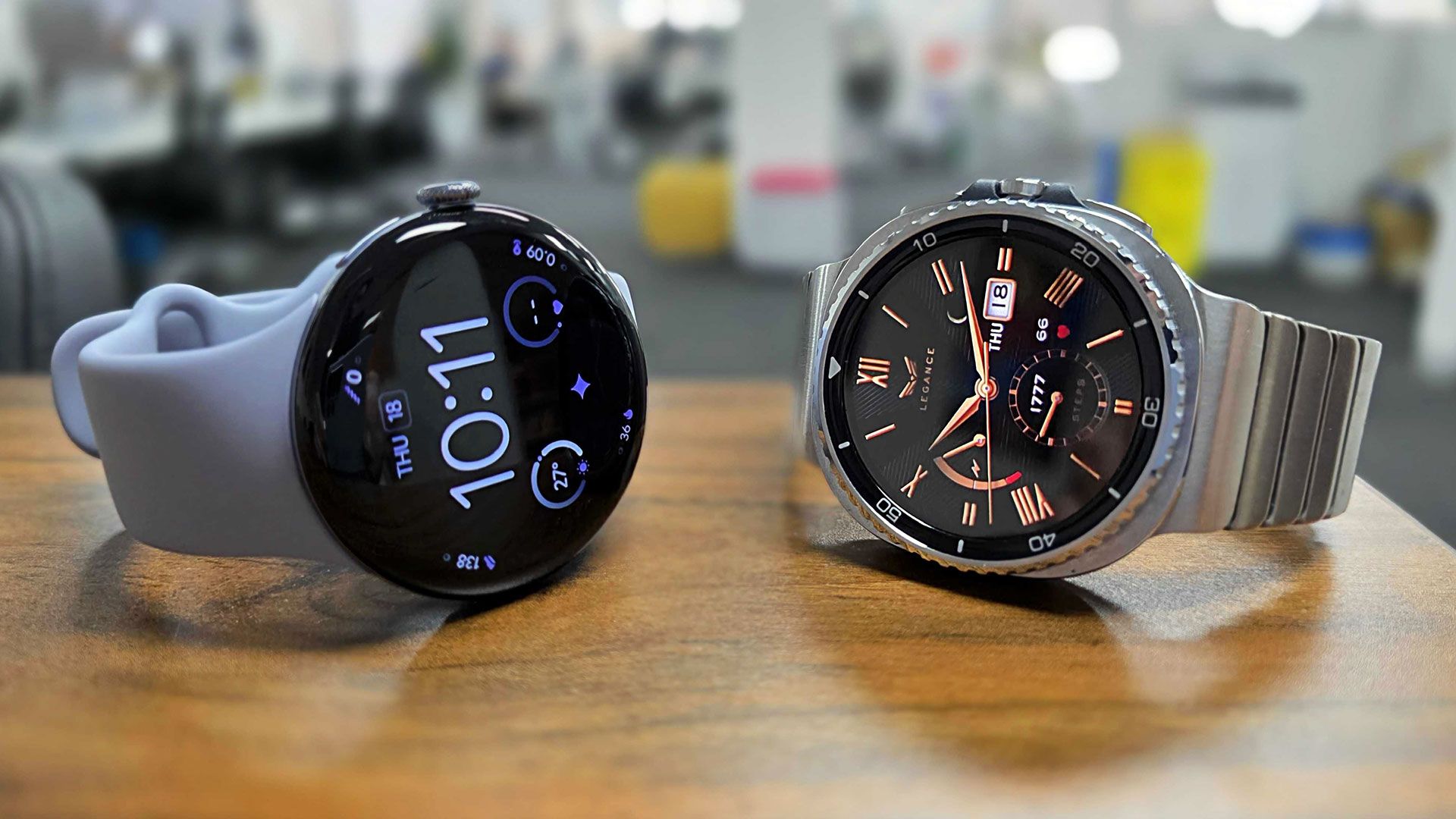
Thanks to the Samsung Galaxy Watch 8 Classic, I recently rediscovered the benefits of smartwatches after a long break, allowing me to stay on top of my health. Though I tried to use the Samsung Galaxy Ring as a smartwatch replacement, it couldn’t compete with the Galaxy Watch 8’s more comprehensive feature set, cementing it as an essential part of my everyday tech. In other words, it’s a device I consider a permanent fixture in my life.
However, as I’m always switching phones for work, I ran into a real problem: I just couldn’t get the Galaxy Watch 8 Classic to pair with the Google Pixel 10 Pro XL — I must have tried around 20 times without any luck.
Fitness first
On paper, the Pixel Watch 4 is the clear winner for fitness tracking — and rightly so when you consider Google’s exclusive FitBit integration. If you’re training for a marathon, its heart rate accuracy is unmatched. Its “Cardio Load” feature (courtesy of FitBit) is especially impressive for athletes chasing more granular fitness tracking, providing users with increased insight into how much physical strain your cardiovascular system is under during intense exercise.
But I’m not someone who runs very much or does frequent intense training — I’m simply trying to understand my overall health on a day-to-day basis. It’s the reason I appreciate the Galaxy Watch 8’s “Energy Score” feature, which essentially uses my passive data and AI to predict how much energy I’m going to have throughout the day when I wake up in the morning.
Sensor-ship
The Pixel Watch 4 is undeniably equipped with superior sensors, featuring what many consider the best multi-path heart rate tracking and continuous stress detection available in a smartwatch (as of late 2025). That accuracy is further enhanced by the integration of FitBit’s advanced algorithms, which are widely respected, especially for their precision in tracking sleep stages.
Due to the aforementioned FitBit integration, the Pixel Watch 4 features a cEDA (continuous ElectroDermal Activity) sensor that effectively estimates stress by monitoring subtle shifts in sweat gland activity, allowing it to measure the stress response of the wearer’s autonomic nervous system.

The cEDA sensor, while not new to Google’s smartwatches (it’s been around since Pixel Watch 2), has been significantly enhanced for Pixel Watch 4. A key improvement is the upgraded “Body Response” — a Fitbit algorithm that’s now much better at distinguishing between physical stress (from exercise) and mental stress. Its quicker Snapdragon W5 Gen 2 processor not only brings increased power efficiency, but also contributes to more accurate tracking.
While the Samsung Galaxy Watch 8 can track stress, it lacks the Pixel Watch 4’s cEDA sensor, relying instead on Samsung’s “BioActive” sensor and its ability to measure Heart Rate Variability (HRV). This means that while the Galaxy Watch 8 is effective for day-long stress monitoring, the Pixel Watch 4’s cEDA sensor and Body Response algorithms offer a distinct advantage: the ability to provide proactive alerts upon detecting sudden physiological changes.
BioActivity
Of course, that’s not to take anything away from the Galaxy Watch 8’s BioActive sensor — it may not be quite as accurate when it comes to heart rate or stress monitoring, but it offers additional tracking capabilities that the Pixel Watch 4’s sensors aren’t capable of, thanks to its unique a 3-in-1 stack of sensors.
That means access to Bioelectrical Impedance Analysis (BIA) for estimating body composition, and blood pressure measurement via its Optical Heart Rate sensor (currently awaiting FDA approval in the US). The latter is achieved using a photoplethysmogram (PPG) sensor, which measures changes in blood volume which are then compared against baseline data established through monthly calibration using a traditional upper arm cuff. Admittedly, the Galaxy Watch 8’s blood pressure monitoring provides an estimation rather than a medically accurate measurement, but I still find it quite helpful as someone .

Samsung’s BioActive sensor employs multi-spectrum LEDs capable of detecting “autofluorescence” — light reflecting off proteins in the skin, which is key to measuring metabolic AGEs (indicators of biological aging and sugar consumption). Essentially, it offers insight into the chemical impact of diet and lifestyle by looking inside your cells.
Additionally, the Galaxy Watch 8 offers Sleep Apnea Detection, which is FDA-approved and is said to detect signs of moderate to severe Obstructive Sleep Apnea (OSA). Granted, I don’t have sleep apnea, but it’s nice to know that it’ll alert me should it develop.
Safety dance
Of course, the Pixel Watch 4’s “Loss of Pulse Detection” feature (first introduced with the Pixel Watch 3) seems like an invaluable safety feature — particularly for older users or those with heart or respiratory conditions.
If the watch detects that your heart has stopped beating and you fail to respond to its check-in alerts, this feature will automatically contact emergency services and share your current location.
While Samsung’s Galaxy Watch 8 does provide “Hard Fall Detection”, there’s no denying that Google’s Pixel Watch 4 takes this concept much further, potentially providing life-saving functionality. That said, as someone who doesn’t suffer from any severe health conditions, the Galaxy Watch 8’s emergency features are more than sufficient for me.
Time to choose
Obviously, both smart watches have their own strengths and weaknesses, and it would be easy for me to recommend both of them depending on what kind of features you’re after. Hardcore fitness fanatics and those involved in intense training will undoubtedly be the ones who most appreciate the Pixel Watch 4’s key features. However, a normie like me isn’t looking for that kind of data. The wellness info I’m generally interested in is of the passive variety, with the ability to also monitor my vitals in real time.
Now that I’ve used both watches extensively, there’s one feature on my Galaxy Watch 8 Classic that the Pixel Watch 4 simply cannot beat: the price of its health data — while Google locks its deepest sleep insights and long-term trends behind the Fitbit Premium paywall, Samsung hands me everything — from my Energy Score to the aforementioned metabolic AGEs index — for free. This is where, in my opinion, the Galaxy Watch 8 Classic quietly wins the war.