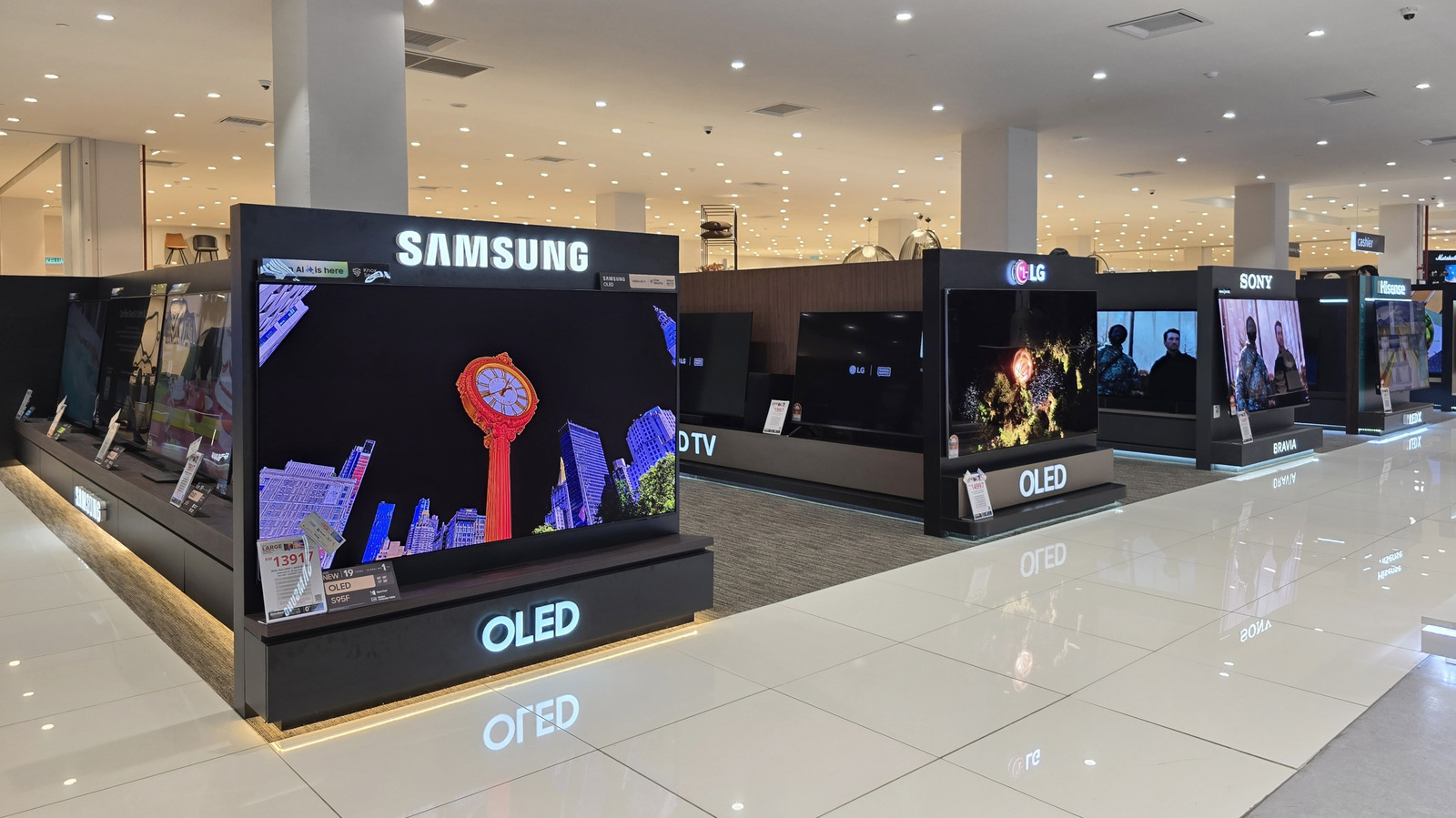
You’ve seen plenty of deals for OLED TVs during the Black Friday and Super Bowl shopping seasons, but you’re yet to pull the trigger. The OLED TV models are still more expensive than LCD options. Also, the larger the display size, the more expensive the OLED TV. If you were wondering why TV vendors charge so much for OLED TV models, there’s a good reason. Manufacturing OLED panels is a complex process that requires precision equipment. Any errors can compromise an OLED screen and render it useless.
For example, a 65-inch OLED panel alone would cost about $1,000 to make in 2020. By 2024, the cost dropped to about $600. By contrast, you can purchase a 65-inch LCD TV for under $500 as of this writing. Yield rate, or the percentage of good OLED panels from an entire batch, is one reason why OLED TV prices are higher. Samsung’s QD-OLED yield was at 68% in 2022 (via FlatpanelsHD), improving to 84% in 2023. This supported a 30% price reduction for 65-inch QD-OLED panels. As for LG Display, another top OLED TV vendor, the company saw costs drop by 30% after improving yields (via TechRadar). Still, one of its OLED TV factories ran at only 50% of capacity as of 2022, but LG still had to pay for the same fixed costs.
Then there’s the OLED panel size. The larger the display, the larger the production risks. A Gen 8.5 Line sheet lets vendors make six 55-inch panels or three 65-inch screens. Larger TVs, like a 77-inch OLED TV cost $20,000 in 2016 due to using more material. A 97-inch OLED screen still costs $25,000 due to how many can be produced on a sheet. Comparatively, 98-inch quantum-dot LCD TVs will set you back about $2,200.
Why OLED TVs are better than LCD TVs
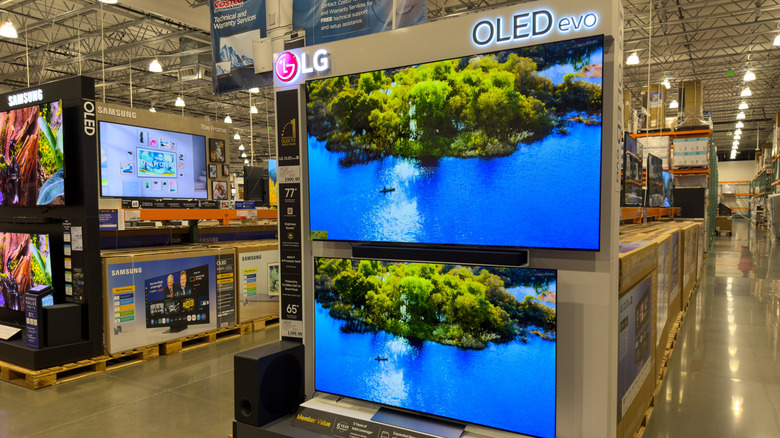
OLED screens have a significantly improved contrast ratio compared to LCDs, as each pixel can be turned on and off. It’s often labeled as infinite contrast compared to the ratings you may receive from LCD panels, where the back panel lights up in its entirety. Since the pixels of an OLED TV can be turned on and off, the screen offers deeper black (true black). OLED displays also cover a wider color gamut than LCD screens. OLED panels may also be more energy efficient, depending on the content they display, as the screens do not consume energy while displaying black. An LCD TV uses an LED backlight that is on at all times, shining the light through pixel filters to deliver the image. A 65-inch OLED TV may use up to 150 W during typical viewing compared to 200 W for an LCD panel of a similar size.
Movie fans, sports enthusiasts, and gamers may also appreciate OLED panels over LCD alternatives because of their faster response times. OLED pixels can change colors as fast as 0.1 milliseconda, responding in almost real-time to fast motion. LCD screens may take about 3-5 milliseconds, if not longer, which can lead to blurry images. Newer OLED screen models, like the WOLED with MLA (Micro Lens Array) screens that LG manufactures for its TVs, also offer improved brightness (1,300 to 1,500 nits) compared to OLED TVs launched between 2016 and 2020. That allowed OLED TV makers to catch up with LCD TVs, which already support higher brightness.
That said, other display technologies exist, including mini-LED and MicroLED panels. The latter are even more expensive than OLED screens, with 89-inch screens expected to cost $80,000.
It’s not just about picture quality with OLED
A 55-inch OLED TV may retail for $1,800 (LG) and $1,200 (Samsung), while the LCD versions may cost under $500. Choosing an OLED TV panel over an LCD option isn’t just about image quality or your budget. It’s also about specific needs, like TV screen size, room, and purpose. If you need TVs smaller than 55 inches, you’ll need to choose an LCD model, as OLED screens are rare in this size. If you want larger OLED TVs, you may want to limit yourself to the 55-inch to 65-inch bracket, which is more affordable ($1,000 to $3,000) than the 75-inch to 85-inch tier ($3,000 to $8,000). A large-screen LCD TV may be cheaper. You’d pay under $1,000 for a 75-inch model and up to $3,000 for 85-inch versions. The costs can go significantly higher for even larger screens.
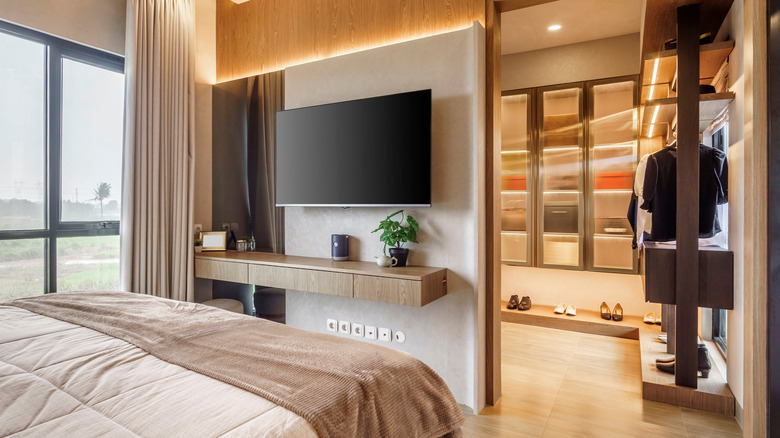
If you buy a TV for your bedroom, where you’ll use it for a few minutes every day, OLED might not be worth it. Instead, you may want to place an OLED TV in your living room, especially if you can also control the environmental light. OLED panels may offer a better experience for movies and games in such settings, considering they support much wider viewing angles. Placing the TV outdoors or in brightly lit environments, like watching sports with friends, makes LCD a better alternative than OLED. LCD may be the safer choice if the TV stays on for multiple hours on the same channel, as it can reduce the risk of burn-in.