By using this site, you agree to the Privacy Policy and Terms of Use.
Accept
World of SoftwareWorld of SoftwareWorld of Software
  • News
  • Software
  • Mobile
  • Computing
  • Gaming
  • Videos
  • More
    • Gadget
    • Web Stories
    • Trending
    • Press Release
Search
  • Privacy
  • Terms
  • Advertise
  • Contact
Copyright © All Rights Reserved. World of Software.
Reading: The rise of emotion AI: how emotion recognition algorithms are moving into wearables and industry applications · TechNode
Share
Sign In
Notification Show More
Font ResizerAa
World of SoftwareWorld of Software
Font ResizerAa
  • Software
  • Mobile
  • Computing
  • Gadget
  • Gaming
  • Videos
Search
  • News
  • Software
  • Mobile
  • Computing
  • Gaming
  • Videos
  • More
    • Gadget
    • Web Stories
    • Trending
    • Press Release
Have an existing account? Sign In
Follow US
  • Privacy
  • Terms
  • Advertise
  • Contact
Copyright © All Rights Reserved. World of Software.
World of Software > Computing > The rise of emotion AI: how emotion recognition algorithms are moving into wearables and industry applications · TechNode
Computing

The rise of emotion AI: how emotion recognition algorithms are moving into wearables and industry applications · TechNode

News Room
Last updated: 2026/02/27 at 3:07 AM
News Room Published 27 February 2026
Share
The rise of emotion AI: how emotion recognition algorithms are moving into wearables and industry applications · TechNode
SHARE

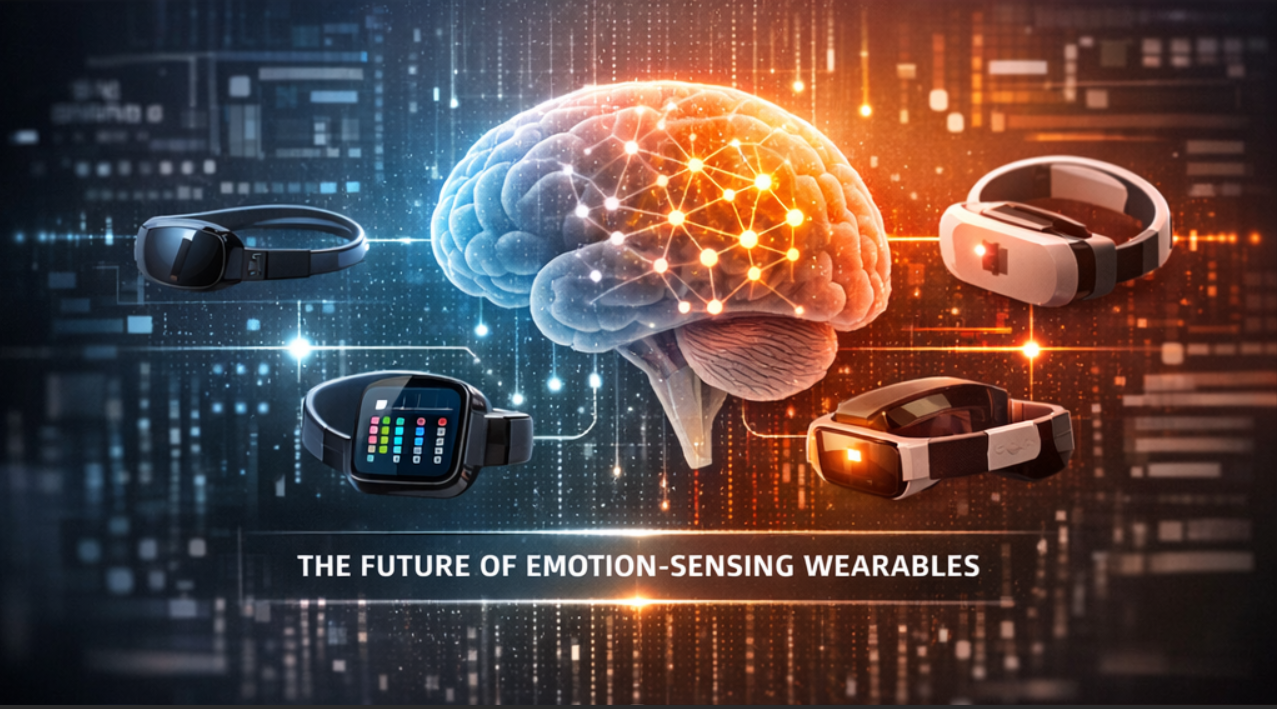
Shenzhen Bi’an Mind Technology, founded in 2021, develops emotion recognition algorithms and smart wearable tech. The company combines physiological signals with AI to bring emotion-sensing capabilities directly into devices, while also exploring uses in healthcare, education, and high-risk industries.

At its core, the approach is straightforward: use physiological data to continuously track and analyze people’s emotional states.

Credit: Chatgpt

Core technology: emotion recognition based on autonomic nervous signals

The core technology of Bi’an Mind lies in its self-developed AI emotion recognition algorithm. The approach is based on the principles of sympathetic and parasympathetic nervous system activity.

By collecting physiological signals such as heart rate variability (RRI) and breathing rate, and combining them with the Valence-Arousal model, the algorithm can classify and assess basic emotional states such as anger, sadness, anxiety, and happiness.

Compared with emotion recognition methods that rely on facial expressions or voice features, this approach emphasizes physiological data, which in theory can reduce interference caused by cultural differences or deliberate control of expressions.

It allows for more discreet and continuous monitoring. However, its accuracy, generalizability, and adaptability across different populations still need to be validated in large-scale real-world scenarios.

Product forms — combining algorithms and hardware

Building on its algorithm capabilities, the company has launched several hardware and system products. The smart emotion watch features an RRI monitoring module that tracks emotional states, stress, and energy levels around the clock to generate visual reports.

It also integrates tools such as mindfulness exercises and psychological assessments, creating a closed loop of monitoring, intervention, and feedback. Key challenges for these products include the long-term stability of emotion data, users’ willingness to consistently engage with their psychological data, and the ability to quantify the effectiveness of interventions.

The emotion screening and early warning system, which targets healthcare institutions, educational organizations, and high-risk industries, offers tools for group-level emotion analysis. It generates metrics such as stress indices and autonomic nervous system balance reports and provides real-time alerts when abnormal fluctuations occur.

In practice, these systems function more as decision-support tools, with their value depending on compliant data collection, privacy safeguards, and the ability of administrators to interpret and act on the insights.

Emotional AI aims to detect and understand emotions in real time to support wellbeing, productivity, and personalized interaction.

Industry applications and implementation scenarios

Bi’an Mind has taken its emotion recognition technology into several specialized fields. In early childhood education and general teaching, wearable devices monitor teachers’ emotional fluctuations, which can inform training programs and help optimize job assignments.

For high-risk industries such as nuclear power and mining, the technology tracks workers’ fatigue and stress levels, providing additional data to support safety management decisions.

In healthcare and mental health, the company partners with psychological service platforms to offer long-term data tracking for patients with depression and anxiety, helping clinicians assess treatment outcomes.

Because emotion data is highly sensitive in both healthcare and safety settings, these applications relies on carefully balancing algorithm performance, regulatory compliance, and ethical considerations.

From supportive feature to core human-computer interaction

Looking at broader technology trends, emotion recognition is shifting from a purely supportive function to a central element of human-computer interaction. Bi’an Mind’s approach, which leverages physiological data modeling, highlights this evolution.

The ultimate impact of such systems will depend not only on algorithm accuracy but also on how industries collectively understand the value of emotional data and the limits of its use.
Related

Sign Up For Daily Newsletter

Be keep up! Get the latest breaking news delivered straight to your inbox.
By signing up, you agree to our Terms of Use and acknowledge the data practices in our Privacy Policy. You may unsubscribe at any time.
Share This Article
Facebook Twitter Email Print
Share
What do you think?
Love0
Sad0
Happy0
Sleepy0
Angry0
Dead0
Wink0
Previous Article Spotify Just Released A New Feature Apple Music Users Wish AutoMix Could Do – BGR Spotify Just Released A New Feature Apple Music Users Wish AutoMix Could Do – BGR
Next Article Braze Xbox test message spams phones: What we know Braze Xbox test message spams phones: What we know
Leave a comment

Leave a Reply Cancel reply

Your email address will not be published. Required fields are marked *

Stay Connected

248.1k Like
69.1k Follow
134k Pin
54.3k Follow

Latest News

Burger King cooks up AI chatbot to spot if employees say ‘please’ and ‘thank you’
News
ChatGPT’s New Erotica Mode May Be Called ‘Naughty Chats’
News
Best mini PC deals: Save up to  on a mini PC to run OpenClaw
Best mini PC deals: Save up to $30 on a mini PC to run OpenClaw
News
After Years Operating in Silence, iPayr – iPayr International Announces 2026 Public Licensing Launch of Its Proprietary Multi-Market Software
Gadget

You Might also Like

659 MTN Nigeria employees now earn ₦2.4 million monthly
Computing

659 MTN Nigeria employees now earn ₦2.4 million monthly

5 Min Read
Meta Files Lawsuits Against Brazil, China, Vietnam Advertisers Over Celeb-Bait Scams
Computing

Meta Files Lawsuits Against Brazil, China, Vietnam Advertisers Over Celeb-Bait Scams

9 Min Read
NCC develops new portal to curb SIM recycling fraud
Computing

NCC develops new portal to curb SIM recycling fraud

7 Min Read
Quick Fire 🔥 with Uche Ukonu Jnr |
Computing

Quick Fire 🔥 with Uche Ukonu Jnr |

6 Min Read
//

World of Software is your one-stop website for the latest tech news and updates, follow us now to get the news that matters to you.

Quick Link

  • Privacy Policy
  • Terms of use
  • Advertise
  • Contact

Topics

  • Computing
  • Software
  • Press Release
  • Trending

Sign Up for Our Newsletter

Subscribe to our newsletter to get our newest articles instantly!

World of SoftwareWorld of Software
Follow US
Copyright © All Rights Reserved. World of Software.
Welcome Back!

Sign in to your account

Lost your password?