

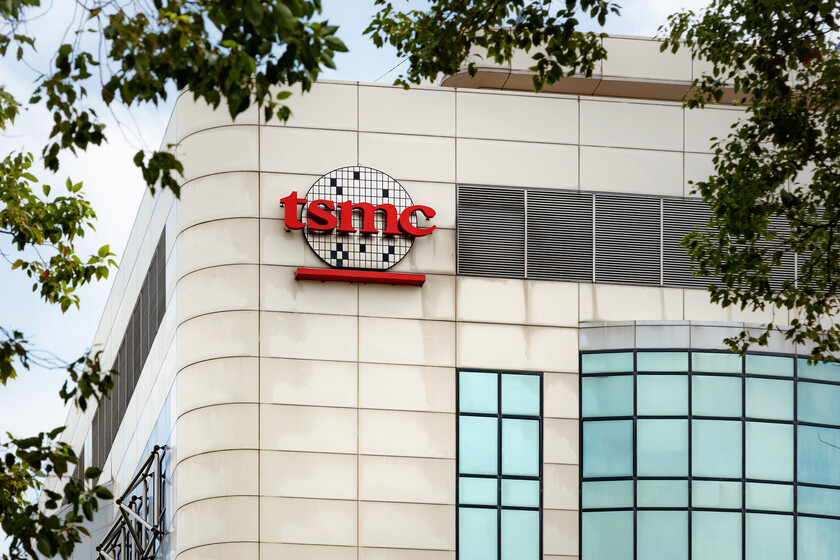
TSMC, the world’s largest semiconductor maker, has long been pushing for unprecedented expansion outside Taiwan. The initiative includes large projects in the United States, Japan and Germany, but does not respond to market demand, but rather to geopolitical pressure and a chip war that wants to try to “repatriate” this type of process. It’s a terrible idea.
Morris Chang knows it’s a mistake. Despite the political urgency, the economic viability of these overseas factories has been questioned by TSMC founder Dr. Morris Chang. He already had the previous experience with the WafertTech factory in the US in 1996, and has described the Arizona initiative as “a very expensive exercise in futility.”
Everything one hour away. Chang’s skepticism is based on the belief that TSMC’s operations and profitability are intrinsically dependent on its ecosystem, which is entirely concentrated in Taiwan. The Hsinchu Science Park “cluster” allows hundreds of technology partners to operate within a “one-hour” radius, facilitating problem resolution and providing ultra-fast logistics and unparalleled coordination.
TSMC is still 90% Taiwanese. Despite that global expansion, TSMC remains deeply Taiwanese, with more than 90% of its manufacturing capacity and nearly 90% of its employees on the island. That’s where your massive, highly trained and qualified engineering talent base is. That is again a key factor in its competitive advantage, and in fact the company has already warned its employees in the US that they should comply with the work culture of the Taiwanese company.
Arizona produces, but it is more expensive. That attempt to replicate Taiwanese efficiency in Arizona has revealed something important: although TSMC has achieved competitive performance in its first production runs with 4nm photolithography, the cost of the wafers is significantly higher. The local supply of raw materials and equipment remains insufficient, making the factory dependent on Asia and is a bottleneck for the efficiency of the production cycle. Skilled labor shortages and permitting and bureaucracy, which further slow things down, add considerable operational costs.
Japan and Germany, next objectives. TSMC has two major expansion projects in Japan (JASM) and Germany (ESMC). These locations will focus on much less advanced photolithographic nodes (28/16 nm) and will focus on meeting the demand of some specialized customers such as Sony for image sensors in Japan or Bosch in Europe. The scale of these investments is less than that of Arizona, which aims to be the world’s largest advanced chip factory… if planned future phases are completed.
A double edged sword. TSMC’s expansion has two sides. On the one hand, TSMC consolidates its technological leadership and its strategic role as a “silicon shield” against China. On the other hand, it generates internal anxiety about the possible “leakage” of advanced technology and talent that could weaken national sovereignty in the long term. US pressure even extended to vetoing the possibility of establishing a TSMC factory in the United Arab Emirates.
TSMC does not expand by pleasure, but by pressure. Traditionally, TSMC only builds new factories in response to real demand from its customers. Here the reason has been very different, and geopolitical pressure has forced moves that the company would probably never have made otherwise. Here the different subsidy programs (CHIPS Act in the US, European Chip Law) try to repatriate part of the manufacturing and thus mitigate Asian dependence, but it is not at all clear that they will achieve this.
Imagen | TSMC
In WorldOfSoftware | Japan is rapidly reconquering the chip industry. It has just successfully manufactured its first 2nm transistor


