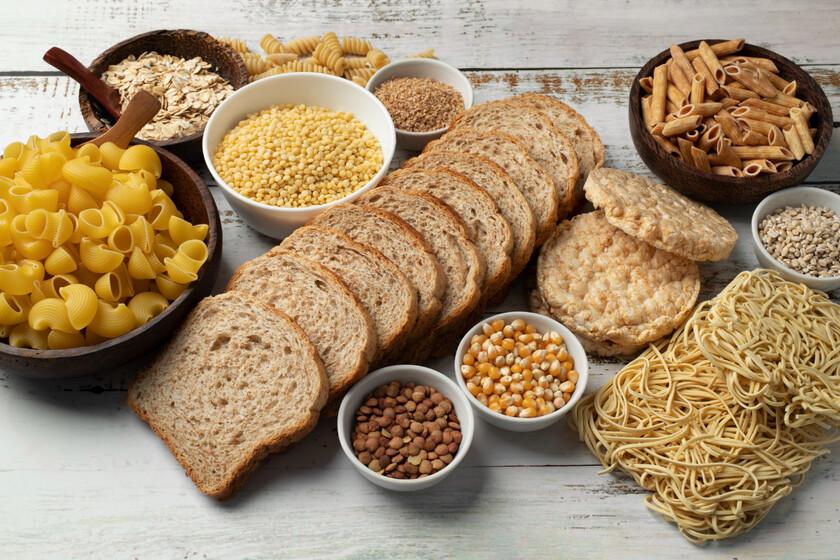
For those who live with celiac disease, the moment of sitting down at the table outside the home is usually accompanied by a shadow of worry about knowing if they will be able to eat something safely. Today, the only and universal treatment is to have a strict gluten-free diet for life; However, avoiding traces and cross-contamination in the real world is a daunting task. Now, a team of Spanish researchers has taken a giant step to change this panorama with a new molecule: celiacase.
With Spanish signature. Here the discovery was made by the Institute of Molecular Biology of Barcelona and other institutions that have proposed the use of an enzyme that is capable of destroying gluten in the stomach, as occurs, for example, with lactase supplementation in lactose intolerant people.
But the most interesting of all is that this enzyme has been inspired by the digestive juices of a carnivorous plant.
The stomach barrier. To understand why celiacase is so special, we must first understand why gluten is so problematic, and that is that when we ingest gluten, for example, from a cereal, the digestive system is unable to completely break it down. The result is that large and resistant fragments remain floating, called immunogenic gluten peptides, among which a particularly toxic one called 33-mer stands out.
Upon reaching the small intestine of a person with celiac disease, this intact fragment triggers a massive autoimmune response that destroys the intestinal villi and causes severe inflammation. That is why the goal here was to try to get a drug that would degrade these toxic fragments before they reach the intestine, but the problem is that the stomach and its acid were a big problem to have an enzyme that did its job well. And this is where botany comes into play.
A carnivorous plant. In 2022, the CSIC had already focused on neprosin, which is a natural enzyme present in the digestive fluid of carnivorous plants of the genus Nepenthes. These are plants that use neprosin to digest insects that fall into their traps, operating in high acidity conditions.
In this way, taking neprosin as a base, researchers have redesigned and genetically perfected it in the laboratory to create “celiac disease.” Here the results indicate that the new molecule is stable and displays its maximum effectiveness when it comes to degrading gluten in the acidic pH of the stomach. In a matter of minutes, celiacase acts like a molecular scissors that cuts the GIPs and the lethal 33-mer, neutralizing gluten before gastric emptying into the intestine.
What has been seen? The detailed study shows that the molecule works at very low doses in mice, and points out that when gluten is given there is less atrophy of the villi of the small intestine.
In addition, a significant decrease in the levels of inflammation and antibodies typical of the disease was observed. But the most interesting thing is that it respects the natural composition of the microbiome in the intestine.
Cautiously. In biomedicine we are already accustomed to everything going too slowly, although for the sake of our own safety. In this case we are talking about a treatment in the preclinical phase that does not seek to replace the gluten-free diet or allow the patient to have a pizza with wheat flour, but rather it is an aid especially when exposed to places where there may be traces such as restaurants. As an extra security system.
But for now this is something that must wait and undergo human study before it finally hits the market in the coming years.
Images | freepik
In | How to deduct celiac disease expenses in 2025 income: in which communities it is possible and how to do it in the 2026 declaration