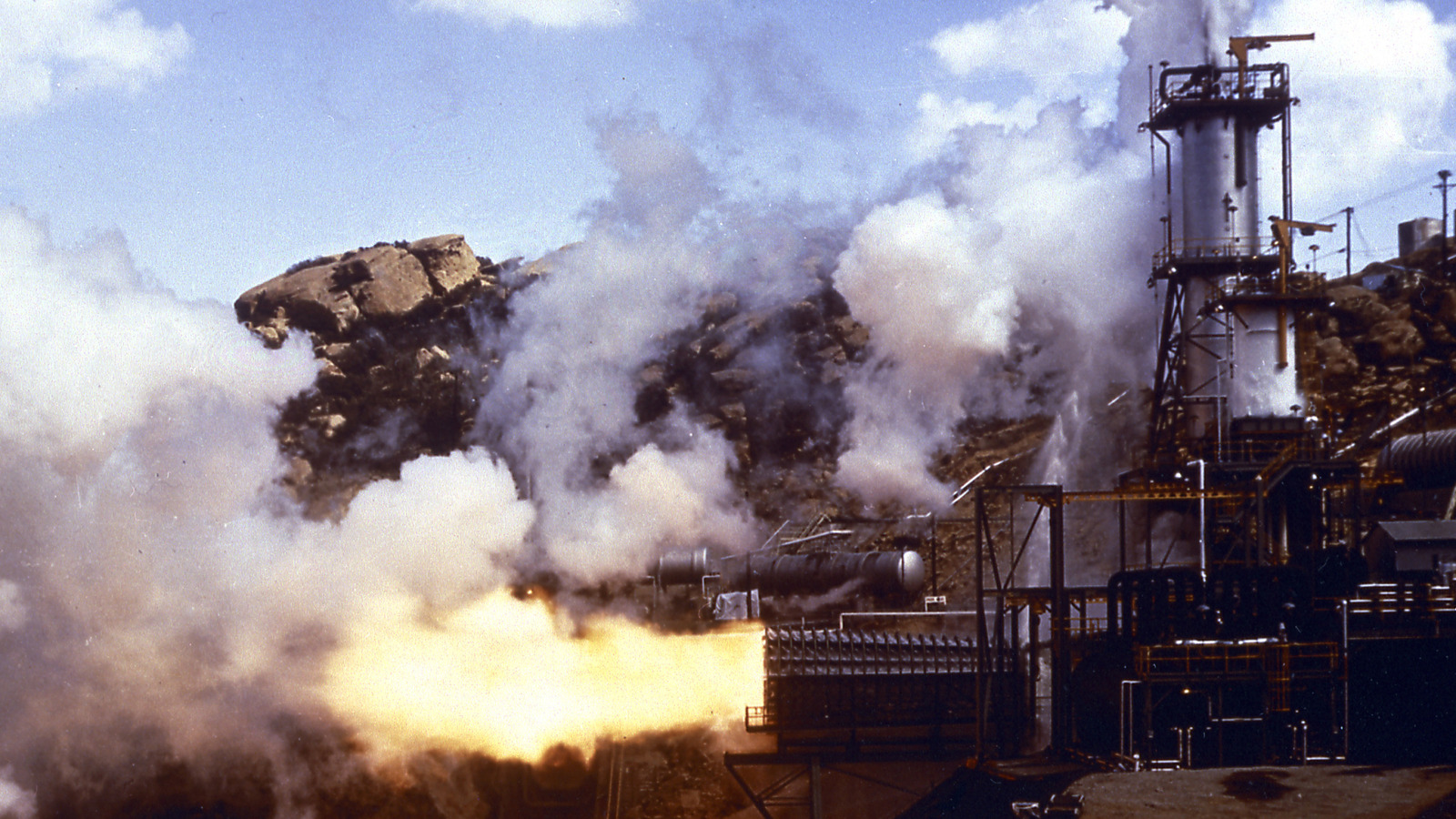
When you picture nuclear disasters, you probably envision Chernobyl and Fukushima, but the worst nuclear accident in American history actually occurred in the hills outside Los Angeles in the summer of 1959. An experiment caused a meltdown at the nuclear reactors at the Santa Susana Field Laboratory, spewing up to 300 times the radiation as the famed Three Mile Island incident. Six decades later, the environmental and political fallout of the Santa Susana disaster continues to plague the region.
The Santa Susana Field Laboratory (SSFL), formerly known as Rocketdyne, is a testament to the innovation that defined America’s post-war period. Even after the 1959 disaster, the plant continued to operate until 2006. Despite these operations, clean up has been severely lacking. Environmental advocates have pointed to the field’s pollution as a prime example of the government’s inability to protect communities. The field’s new corporate owners, however, have largely brushed off these worries as overblown, and are looking to transform the former nuclear site into a nature reserve. Activists argue, however, that the move actually does more to ease the company’s cleanup burden due to lower decontamination requirements, thus preserving the site’s toxic pollutants rather than removing them.
The disaster is a key example of the pitfalls plaguing America’s growing nuclear energy sector. Featuring clandestine military research, blatant cover-ups, and a cleanup process languishing in bureaucratic limbo, this story reads like a movie script. In fact, the disaster spurred an award winning documentary, “In the Dark of the Valley.” Sixty years after the meltdown, Santa Susana poses critical questions regarding government transparency, corporate accountability, and environmental protection laws, particularly as the United States continues to explore the efficacy of next-generation nuclear power.
The Santa Susana meltdown was an epic disaster
On Monday, July 13, 1959, workers in the infamous Area IV section of the SSFL noticed the reactor was experiencing extremely high temperatures. Fearing a runaway reaction, the scientists undertook extreme cooling measures, plunging the reactor’s control rods into the core and venting radioactive gas to alleviate the chance of explosion. Once temperatures cooled, the team brought the reactor back to life, unaware that it was still undergoing a mini-meltdown. Lacking modern containment structures, plant scientists diluted the fission products with outside air before filtering them through a ventilation system, ultimately releasing an estimated 130–13,000 curies of iodine-131 and 260–2,600 curies of cesium-137 into the atmosphere. For reference, Three Mile Island only released 17 curies of iodine-131, making Santa Susana potentially one of the country’s most contaminated nuclear locations. Critically, the wide range of these estimates underscores the lack of clarity scientists still have regarding the accident’s scale and impact.
Unbelievably, news of the disaster didn’t reach the public until 20 years later, when UCLA student Michael Rose discovered the Atomic Energy Commission’s records, and subsequent cover up, of the accident. Over the next 50 years, at least three additional incidents occurred across is 10 nuclear reactors. The lab also emitted contaminants through its hot lab, a disposal facility where the country’s nuclear fuel and reactor components were disassembled. Similarly, advocates later discovered the lab’s plutonium fuel fabrication facility illegally burned contaminated reactor components in open air pits, releasing contaminants into the ever-nearing local community. The lab’s tens of thousands of rocket tests caused millions of gallons of toxic chemicals to percolate into the site’s soil and water, which stormwater runoff, wind, and other environmental factors have carried into the surrounding community.
Addressing contamination at Santa Susana
Scientists are split on the degree to which the site’s toxins have negatively impacted local communities. For instance, a 1997 UCLA study found SSFL workers experienced severely elevated rates of radiation-related cancers and death, but was quickly contradicted eight years later by a Boeing-funded survey which found no significant linkage. Two years later, however, researchers at the University of Michigan discovered a 60% increase in certain cancers within two miles of the lab, while researchers at USC’s Keck School of Medicine found no measurable evidence supporting the claim in 2014.
To address potential contamination, California’s EPA struck deals with NASA and the Department of Energy to cleanup the facility by 2017. Boeing, which now owns the site, declined to sign a similar agreement, and the state’s deadline passed without decontamination efforts breaking ground. A year later, a nearly 100,000-acre wild fire which began at the lab site unearthed toxic waste in the field’s soil, blanketing surrounding communities with radioactive smoke and spreading contamination over nine miles away. Meanwhile, advocates have criticized the public authority tasked with holding the site’s owners accountable for its cleanup, California’s Department of Toxic Substance Controls, for enabling much of the site’s toxic chemicals to remain.
In 2022, CalEPA imposed stricter cleanup requirements for Boeing. In December 2025, the LA Water Board took steps toward holding Boeing accountable for these standards, seeking to fine Boeing nearly $600,000 over the site’s contaminated stormwater runoff. The action comes shortly after an LA Superior Court ruled against the Boeing in its lawsuit challenging stricter contamination requirements for the site. Whether such measures spur a mass cleanup as the field transitions to a nature reserve remains to be seen.