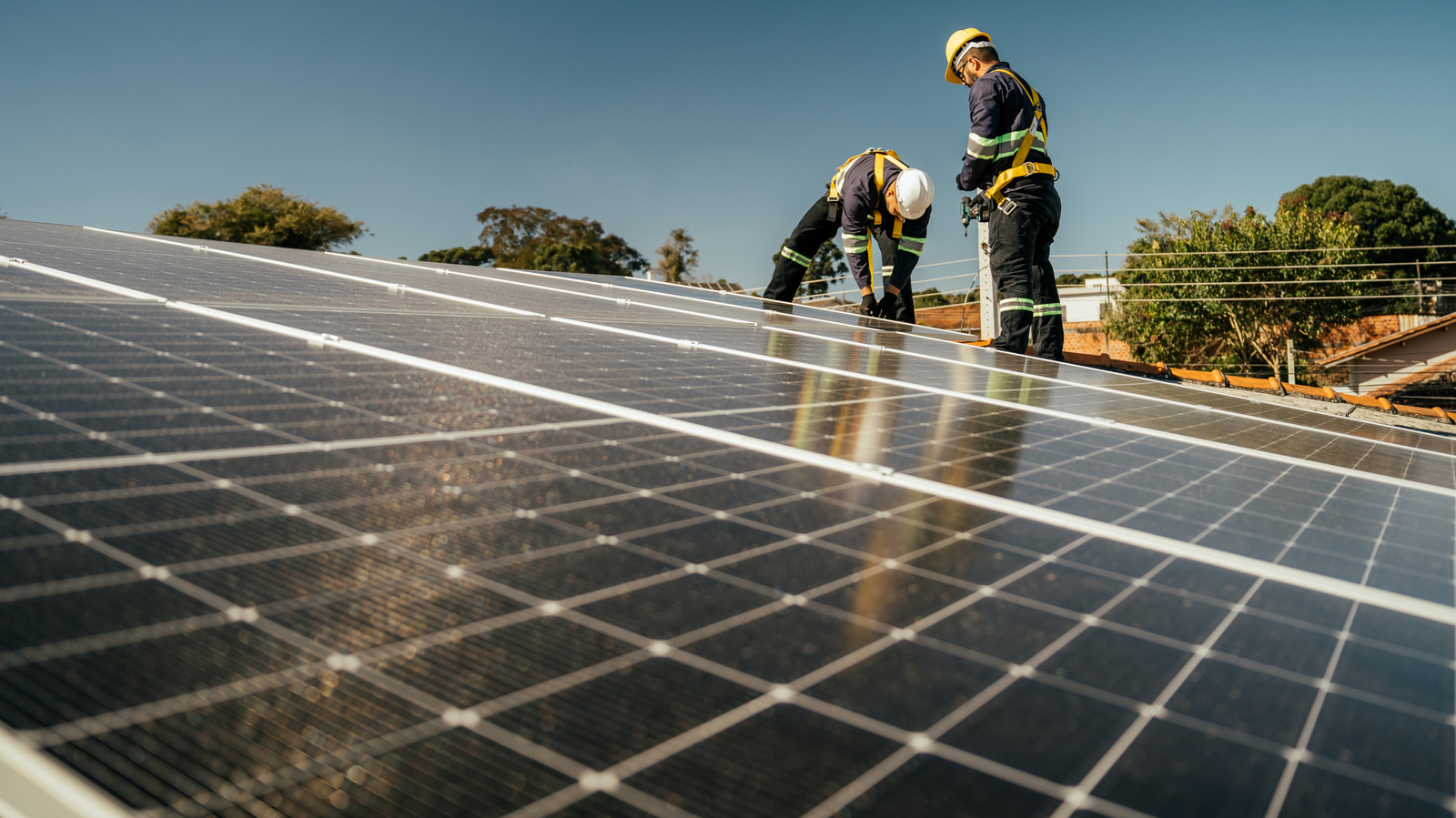
Electricity is an essential part of modern life and each method of producing it comes with pros and cons. Fortunately, there’s a giant ball of energy — the sun — just waiting to have its energy harvested for this purpose. To do so, we employ photovoltaic cells, also known as solar panels, which can save lives in the process of turning sunlight into usable electricity. If you’re thinking about installing solar panels for your home, you might wonder whether the visible white grid lines on those panels serve any purpose. The quick answer is, they do.
A solar panel is created by joining multiple solar cells, each of which is typically made from thin sheets of silicon that incorporates boron and phosphorus held between conductor panels. On the surface of these cells, there are two kinds of solar cell grid lines, differentiated by thickness. Called fingers and busbars, they are an integral part of any solar panel and are are used to transfer energy from the panel to your home.
The purpose of solar panel fingers and busbars
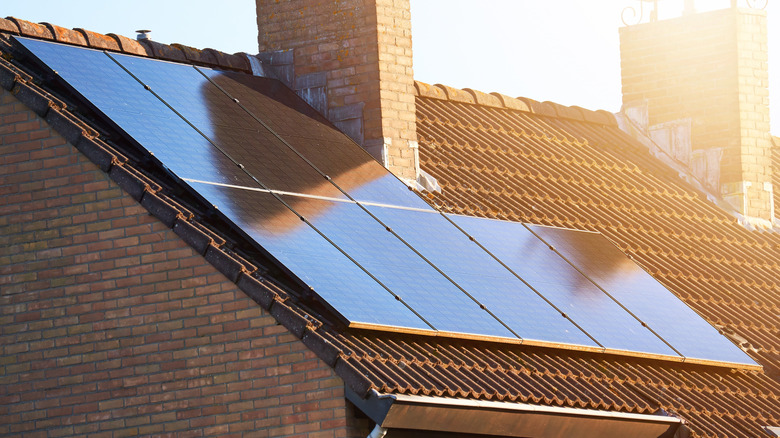
When sunlight hits the silicon sheet in solar cells, photons are absorbed by the panel, resulting in the photovoltaic effect, which causes energy to be produced in the form of an electric current. This energy, produced by solar panels — even in the snow, travels through the solar cell lines, with each type serving a specific purpose. The thinner grid lines are called fingers, and they function as pathways for electrons. These electrons travel through the fingers in the form of a direct current until they reach solar cell busbars.
These thicker grid lines collect the energy that is ultimately passed through an inverter to generate alternating current for use in the home. Only then can solar energy be used in electronic appliances, as homes are not designed to work with direct current. You may also see what appear to be thicker lines on your solar panels, but these are typically just gaps between solar cells within a panel.