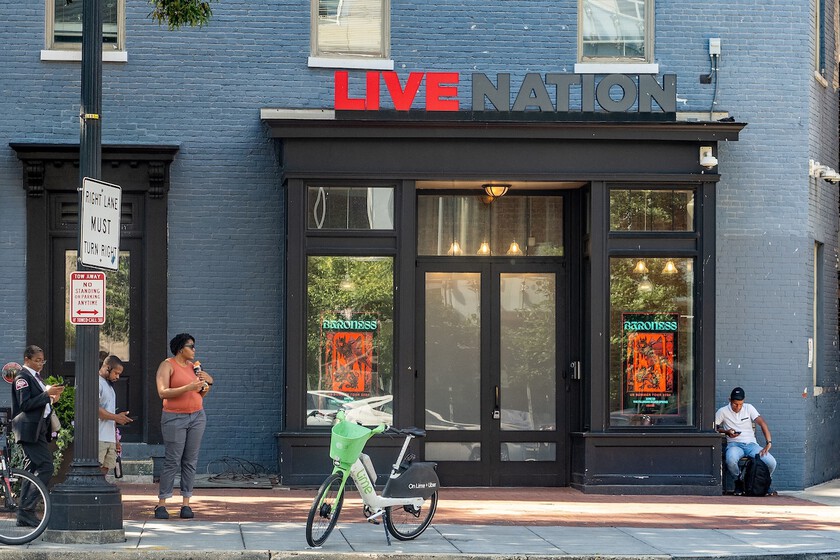
Slack messages exchanged in 2022 between two regional directors of Live Nation (declassified this past March 12 in the midst of the antitrust trial) describe their own clients as “idiots” from whom they are “robbing hands full.” These are not mere private outbursts: they are involuntary testimony to how a company that controls 80% of the primary ticket sales market in the US works. It is no surprise to those who have been paying parking fees of $250 for a Kid Rock concert for years. But seeing it in writing has a special weight.
What they said. Ben Baker, then regional director of ticketing for Live Nation venues in Florida and Jeff Weinhold, senior director in the Virginia area, had been exchanging views on their work for months. In one conversation, Baker boasted about what he was doing with the add-ons that raised the base Price of a Kid Rock concert in Tampa Bay. Baker wrote that the customers were “stupid” and that he almost felt sorry for taking advantage of them. Weinhold responded that he had VIP parking for $250. Baker’s retort: They were “robbing them hand over fist, baby, that’s how we do it.”
And there are more details: Baker speaks of income of $124,790 in upsells (upgraded tickets, VIP tickets, or better seats) for a Dead & Co. concert, followed by Weinhold’s suggestion to dynamically raise prices before sending the marketing email. “LOL. I’m evil,” Weinhold wrote. Baker used the internal term “dyn up” to refer to raising prices through dynamic pricing. There are also conversations about designing the purchasing interface so that artist names appear next to the upsellsa technique that Baker himself admitted to having “stolen” from the competition.
Beyond the anecdote. Live Nation tried to keep the messages from reaching the jury. Their lawyers downplayed them, and when they became public, the company issued a statement attributing them to “a junior employee talking to a friend.” It is not clear which of the two regional directors with responsibility for pricing are referred to as “junior.”
Lawyers for the plaintiff states argued precisely that they are not irrelevant messages: artists have no interest in milking their fans, but Live Nation can do it because artists have nowhere else to go. The giant controls approximately 80% of the ticketing in large US venues and 60% of concert promotion, according to data cited during the trial.
The construction of the empire. This vertical concentration was not built overnight. The merger between Live Nation and Ticketmaster was approved in 2010 and created a model in which the same company promotes the tour, manages the venue and sells tickets. Later, Ticketmaster also began to charge commissions for resale among fans, which was especially noticeable during the pre-sale of Taylor Swift’s ‘Eras Tour’ in 2022, when the collapse of the system led to an investigation by the Department of Justice and hearings in Congress. And the dynamic pricing model has already been exported with (pecuniary) success around the world.
The agreement. On March 9, the DOJ and Live Nation agreed to a surprise settlement that ended federal involvement in the trial without the judge being informed until the last minute. The terms required the company to limit its service fees to 15%, cut exclusive contracts with venues to four years, divest from 13 amphitheaters and open its marketplace to competitors like SeatGeek. The agreed payment amounts to between 280 and 300 million dollars for the states that accept the agreement. What the pact does not contemplate is the separation of Live Nation and Ticketmaster.
And now. More than 27 states, including New York, California and Illinois, rejected the federal settlement and decided to pursue the lawsuit on their own, since the crucial monopoly issue had not been addressed. Furthermore, the case is not exclusively American. In September 2024, the European Commission launched an investigation into Ticketmaster following the Oasis pricing scandal in the United Kingdom, where tickets went from £135 to £350 in a matter of minutes during the sale.
The Live Nation model is neither an accident nor a deviation. Baker and Weinhold’s chats reveal, and this is the truly uncomfortable part, that company policy has been exactly what it seemed to be for years.
In WorldOfSoftware | Spotify killed the record and the industry pivoted to concerts. Netflix killed cinema and the industry was left with a “space crisis”