X stats that matter in 2026
Best plays on X in 2026
X works best when brands treat it as a live conversation feed.
- Commenting on trending topics and industry news in real time
- Sharing short opinions, insights, or reactions instead of long explanations
- Actively replying to users to build relationships and show responsiveness
- Using threads to encourage discussion rather than broadcast announcements
Content that wins on X
High-performing content on X is usually short, timely, and interaction-driven.
- Concise text posts with a clear hook
- Quote tweets that add context, humor, or commentary to existing posts
- Replies that acknowledge feedback, complaints, or jokes publicly
- Threads designed to start conversations (“Hot take,” “Be honest,” “What do you think?”)
- Polls that invite quick participation and surface opinions
What to track
- Replies per post and thread depth
- Quote tweets and reposts
- Profile visits during active posting periods
- Poll participation and response volume
Brand example: Wendy’s on X
Wendy’s humor starts immediately from the profile itself. Even their bio plays into internet culture, with the location set to “Sir This Is A” and the link labeled “Wendy’s”, referencing a long-running meme.
On the content side, Wendy’s mixes funny text posts, images, and short videos, but a big part of their strategy lives in interactions. They regularly quote tweet other posts to add their own humorous take, reply directly to users to address complaints or joke back, and jump into ongoing conversations to stay visible.
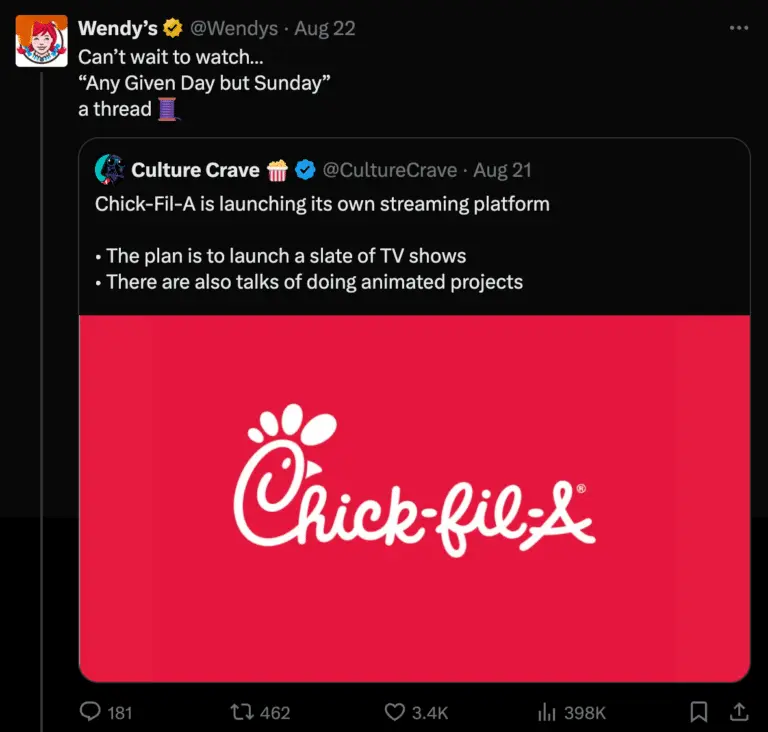
Wendy’s also uses threads and polls to encourage responses and spark discussion, turning their account into an active social hub rather than a one-way feed. This constant interaction is what keeps their content circulating beyond their follower base.
How to apply it as a smaller team
- Define a clear tone of voice and stick to it consistently
- Prioritize replies and quote tweets alongside original posts
- Use polls to lower the barrier to engagement
- Focus on conversations your target market already cares about
YouTube
Use YouTube when you want long-term visibility, trust, and authority.
YouTube plays a different role than most social media platforms. Content doesn’t disappear after a day or two. Well-made videos can keep driving views, traffic, and leads for months or even years. For businesses willing to invest in in-depth video content, YouTube can become a core pillar of a sustainable social media strategy.
YouTube stats that matter in 2026
- YouTube has over 2.5 billion active users.
- Over half (50.6%) of YouTube’s user base is made up of Gen Z and Millennials.
- In the first half of 2025, YouTube generated $18.72 billion in advertising revenue. Under the YouTube Partner Program, creators receive 55% of that ad revenue, while YouTube retains the remaining 45%.
Best plays on YouTube in 2026
YouTube works best when brands treat it as a content library and discovery engine, not just another posting channel.
- Publishing long-form videos that answer specific questions or tell complete stories
- Using Shorts to increase reach and pull viewers into longer content
- Building repeatable video formats (series instead of one-offs)
- Supporting other social media channels by repurposing clips and highlights
Content that wins on YouTube
High-performing YouTube content tends to be structured, useful, and easy to recognize.
- Tutorials and how-to videos
- Educational explainers and breakdowns
- Product walkthroughs and reviews
- Behind-the-scenes and documentary-style videos
- Shorts that tease or summarize longer videos
YouTube CEO Neal Mohan says “The first and most important thing that I would say (about building a career on YouTube) is, think about what you are really, really excited about…the power of YouTube is that it’s not just an algorithm of your favorite meme of the week…it is about your face, you as the creator, and you build that because you talk about something authentically that your fans understand.”
What to track
- Average view duration and audience retention
- Clicks from descriptions and pinned comments
- Subscriber growth tied to specific topics
- Performance differences between Shorts and long-form videos
Brand example: Red Bull on YouTube
Red Bull’s content consistently highlights top athletes and high-performance sports, with a heavy focus on Formula 1, MotoGP, biking, snowboarding, and other extreme sports and challenges. This reinforces Red Bull’s positioning as the go-to brand for extreme performance and adventure and ties directly into their long-standing message: “Red Bull gives you wings.”
Red Bull publishes both Shorts and long-form videos, using Shorts to capture attention and longer videos to tell bigger stories. Across formats, their branding is unmistakable. Red Bull’s colors and logo appear consistently in thumbnails, often paired with a still image of a high-intensity or unexpected moment from the video.
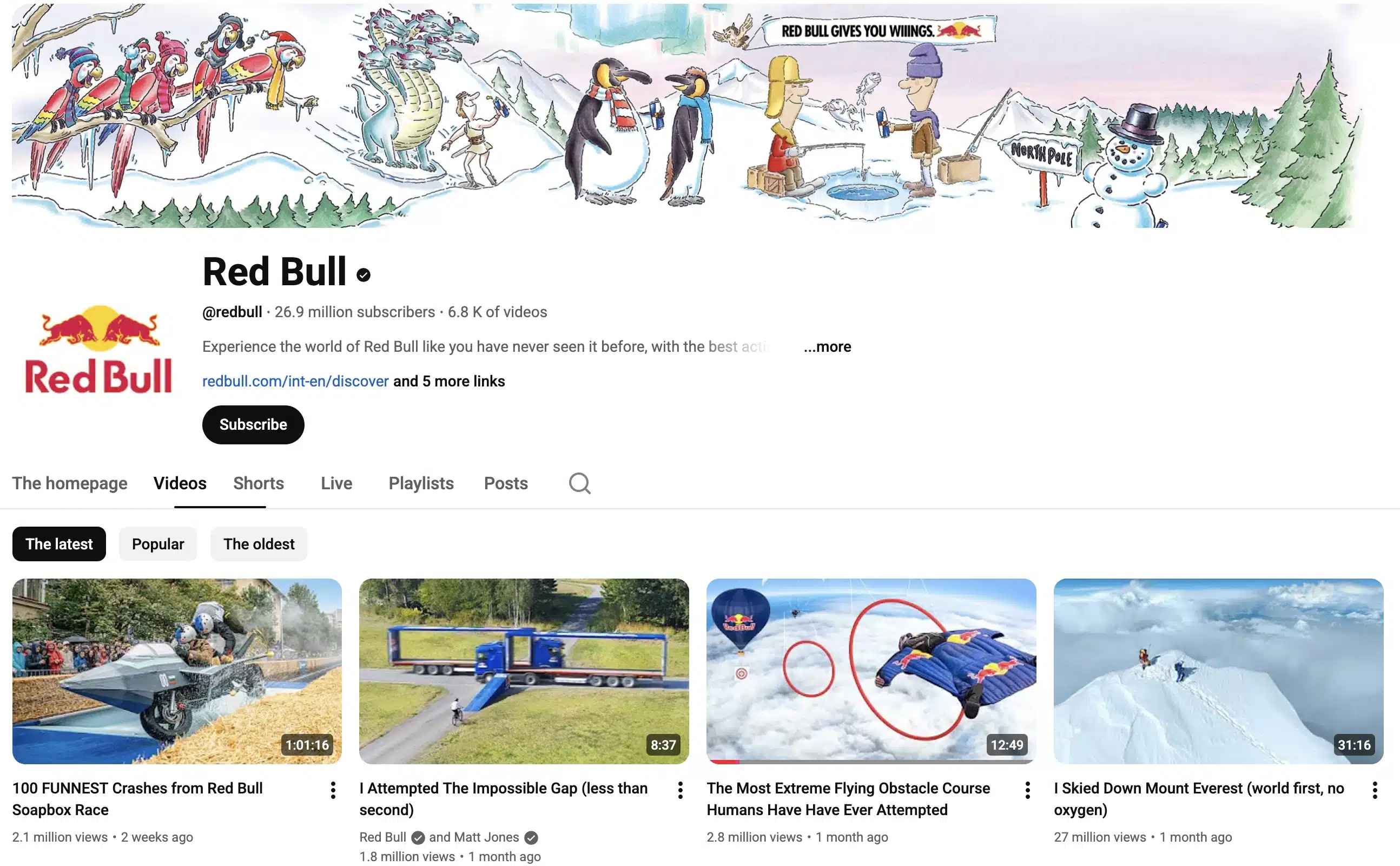
That visual consistency makes their content instantly recognizable in search results and recommendations, even before viewers read the title.
How to apply it as a smaller team:
- Pick one clear content angle you can sustain (education, expertise, behind the scenes)
- Start with one repeatable long-form format instead of many ideas
- Use Shorts to extend the reach of your best moments
- Keep thumbnails and branding consistent so viewers recognize your videos quickly
Pinterest works best when people need ideas before they need products.
Pinterest isn’t built around conversation or real-time trends. It functions more like a visual search engine. People come with intent: to plan a room, redesign a space, choose an outfit, or collect ideas for a future purchase. That’s why Pinterest content keeps working long after it’s published.
Pinterest stats that matter in 2026
Best plays on Pinterest in 2026
What works consistently:
- Boards built around specific situations (small apartments, cozy bedrooms, minimalist kitchens)
- Pins designed to answer one clear question or idea
- Evergreen content that matches what people actively search for
- Localized boards or accounts when selling in multiple markets
Content that wins on Pinterest
The strongest Pinterest content helps people imagine an outcome.
- High-quality images showing products inside real spaces
- Short videos that capture mood, layout, or transformation
- Step-by-step visuals and simple guides
- Before-and-after images that show the change clearly
- Pins with descriptive titles and captions that match search behavior
What to track
- Outbound clicks to your site
- Saves per pin (a strong signal of long-term value)
- Which boards drive the most traffic and conversions
- Performance by topic, not just individual posts
Brand example: IKEA on Pinterest
IKEA uses Pinterest exactly the way people use it: for inspiration.
Their content focuses on styled rooms and lived-in spaces, not isolated products. Furniture and decor are shown inside complete homes, creating a clear mood and aesthetic people want to recreate. The result isn’t “I want that chair,” but “I want my home to feel like this.”
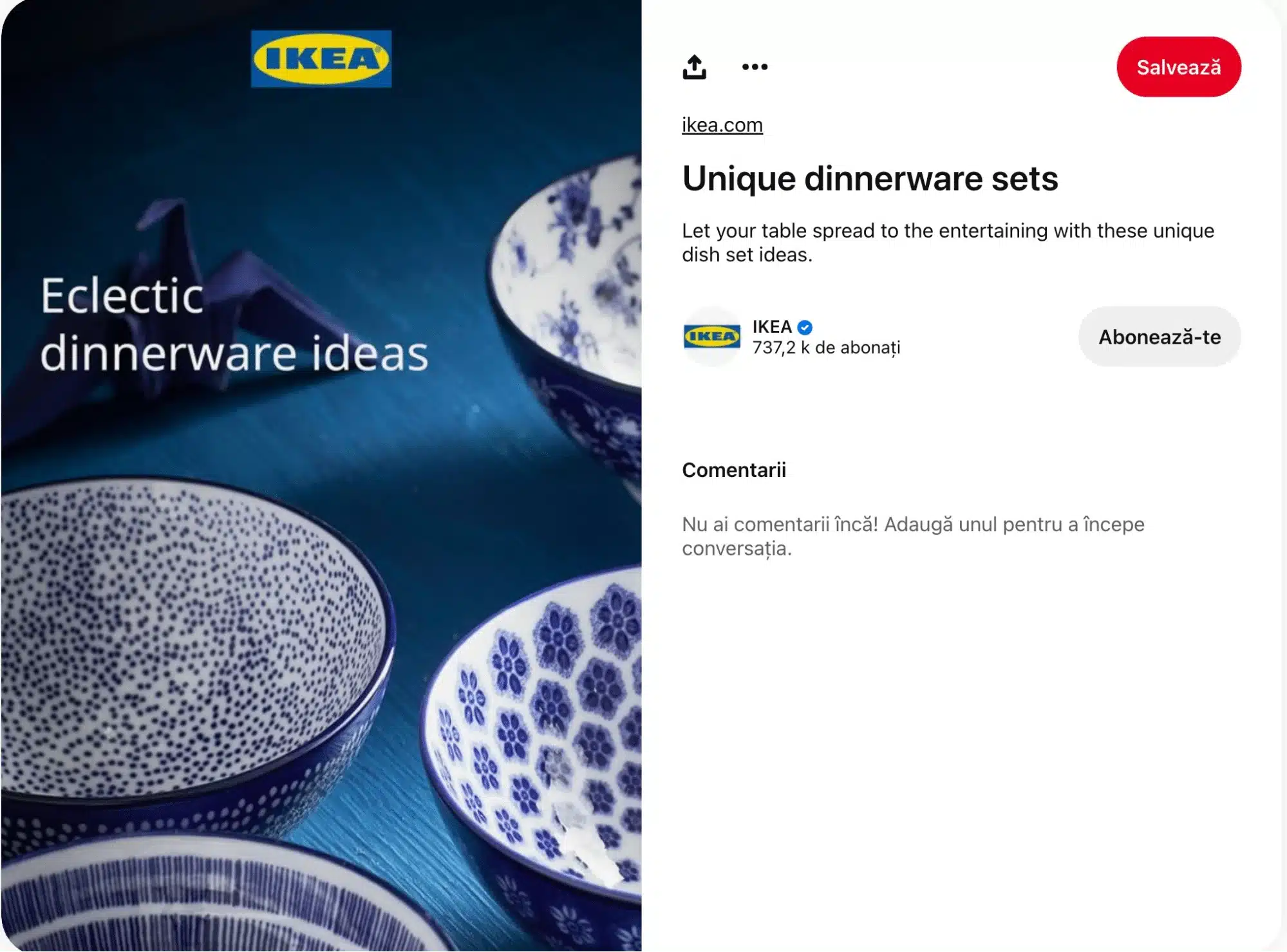
This approach works especially well for people planning a move or a redesign. By consistently showing cohesive interiors, IKEA positions itself as the natural place to shop when someone decides to act on that inspiration.
Another smart move is localization. IKEA runs separate Pinterest accounts for different countries, adjusting boards, captions, and links to local preferences and languages. Pins link directly to local IKEA websites, shortening the path from inspiration to purchase.
How to apply it as a smaller team:
- Pick one room, style, or use case and go deep
- Show products in context, not as standalone items
- Write captions for search, not social engagement; Pinterest SEO is important since Pinterest acts much like a search engine
- Link pins to pages that help people take the next step
Google Business Profile
If someone is actively searching for a place to visit, book, or buy from nearby, Google Business Profile is often the first thing they see.
Google Business Profile shows up at the exact moment of intent. People aren’t browsing. They’re deciding. That’s what makes it such a powerful tool for local businesses, events, and destinations.
Google Business Profile stats that matter in 2026
- 61% of users who click on a Google business listing will then click on the website link from there.
- 64% of users report using Google Business to find up-to-date information about a business.
- The average Google Business Profile receives 33 clicks per month.
Best plays on Google Business Profile in 2026
What matters most:
- Keeping business information accurate and up to date
- Posting regular updates (events, announcements, seasonal info)
- Actively managing and responding to reviews
- Using photos to show what people can expect before they visit
Many businesses underuse GBP by setting it up once and never touching it again.
Content that works on Google Business Profile
The content here doesn’t need to be creative; it needs to be useful.
- High-quality images of the space, exhibits, products, or location
- Clear updates about events, closures, or changes
- Customer reviews and visible responses
- Links that reduce friction (tickets, bookings, directions)
The goal is to answer questions before someone has to ask them.
What to track
- Profile views and actions (calls, website clicks, direction requests)
- Review volume and average rating
- Common questions people ask in reviews
- Traffic and conversions from GBP links
Brand example: American Museum of Natural History
The American Museum of Natural History’s Google Business Profile does a strong job of covering the basics visitors care about most.
Right away, the profile shows images, reviews, location, and opening hours, which helps people quickly decide whether a visit makes sense. There’s also a clear link to purchase tickets, making it easy to move from search to action without friction.
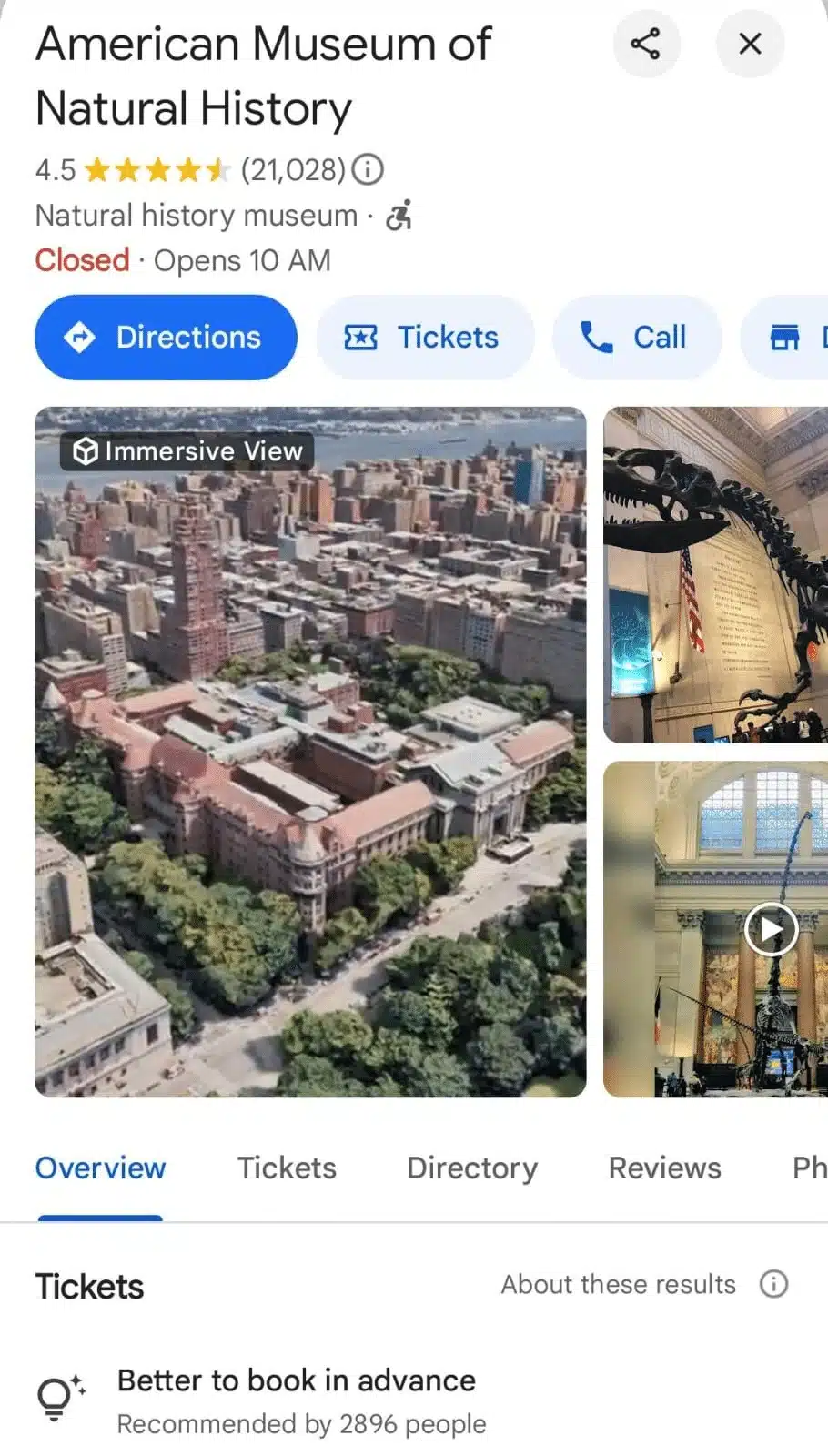
This setup works well for people planning a visit, especially tourists or families comparing options nearby. The profile answers practical questions before someone even clicks through to the website.
Where there’s room for improvement is engagement. While the museum doesn’t receive many negative reviews, responding more consistently, especially to critical feedback, would strengthen trust and show attentiveness. Even simple replies can reassure future visitors who are scanning reviews before deciding.
How to apply it as a smaller team:
- Treat your Google Business Profile like a homepage for local search
- Upload fresh photos regularly, even from your phone
- Add links that let people take action immediately
- Reply to reviews, especially the negative ones, calmly and publicly
If your audience includes decision-makers, partners, or people who care about how companies operate, LinkedIn is often the most direct way to reach them.
LinkedIn rewards clarity over creativity. Posts don’t need to be clever or trendy. They need to be relevant, useful, or grounded in real experience. That’s why LinkedIn works especially well for B2B brands, employers, and companies that want to be taken seriously.
LinkedIn stats that matter in 2026
Best plays on LinkedIn in 2026
What tends to perform:
- Clear points of view on industry changes or trends
- Context around launches, events, or partnerships (not just the announcement)
- People-first content that shows how work actually happens
- Native formats that keep users on the platform
Content that wins on LinkedIn
- Short text posts with a clear takeaway
- Carousels that break down ideas, highlights, or lessons
- Images and videos from real events, teams, or projects
- Employee-focused posts that show the human side of the business
- Polls that ask relevant, low-effort questions
As Ty Heath, director of market engagement at The B2B Institute at LinkedIn, explained in the Content Marketing Institute’s B2B Content Marketing Trends Research: The brands that win are those brave enough to challenge conventional wisdom with research-backed insights leaders can trust and act on. The most effective thought leadership supports decision-making with memorable mental models and frameworks.
What to track
- Comments and discussion quality
- Saves and shares (strong signals of value)
- Profile visits after posting
- Follower growth tied to specific content themes
Brand example: Uber on LinkedIn
Uber uses LinkedIn as a storytelling and visibility channel.
Their profile summary immediately explains who they are, how they started, and what they’re building, which gives context before anyone scrolls. That matters on LinkedIn, where people often check the company page before engaging.
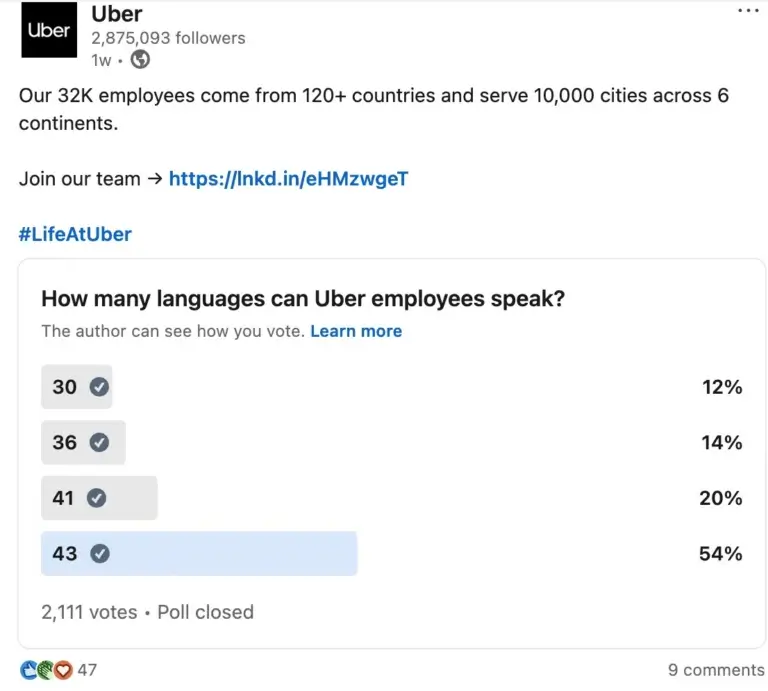
On the feed, Uber mixes product-related posts, event participation, and company updates with content that highlights people and culture. They regularly post images, videos, and carousels featuring moments from Uber and Uber Eats, alongside employee spotlights and seasonal content.
Uber also uses LinkedIn tools like polls to increase interaction and invite opinions, rather than relying solely on broadcast-style posts. This keeps their content conversational and helps posts travel beyond their immediate follower base.
How to apply it as a smaller team:
- Write a company bio that clearly explains what you do and why it exists
- Rotate between perspective, people, and progress updates
- Use carousels and polls to encourage interaction without overposting
- Add context to announcements so they’re worth engaging with
Bluesky
Bluesky is still small compared to most social media platforms, but it attracts people who care about ideas, context, and conversation, and who are actively looking for alternatives to algorithm-heavy feeds.
For brands in media, tech, research, and culture, that makes it worth paying attention to.
Bluesky feels closer to an open forum than a performance-driven feed. Posts travel through follows, reposts, and discussion rather than aggressive recommendation systems. That changes what works and how brands show up.
Bluesky stats that matter in 2026
Best plays on Bluesky in 2026
What tends to work well:
- Sharing clear, well-written updates without clickbait
- Adding context to news, research, or announcements
- Reposting and amplifying voices within your organization
- Participating in conversations instead of broadcasting links
Content that wins on Bluesky
Posts that perform well on Bluesky are usually straightforward and useful.
- Short explanations of complex topics
- Thoughtful summaries of longer content
- Reposts that highlight other voices or perspectives
- Calm, factual commentary on breaking news or trends
The tone matters more than the format. Overly promotional language stands out quickly, and not in a good way.
What to track
- Replies and reposts (not follower count)
- Who engages with your posts over time
- Mentions from other respected accounts
- Click-throughs from posts that include summaries
Brand example: The Washington Post on Bluesky
The Washington Post uses Bluesky as an extension of its newsroom, not just a distribution channel.
Their posts focus on clear, concise summaries of the news, helping readers stay informed without feeling overwhelmed. Whether they’re covering breaking news, investigative reporting, or deeper analysis, their captions get straight to the point while still preserving the details that matter.
A smart part of their approach is how often they reshare posts from individual journalists. This gives readers direct access to a wider network of reporters and writers they can choose to follow, rather than forcing everything through a single brand voice.
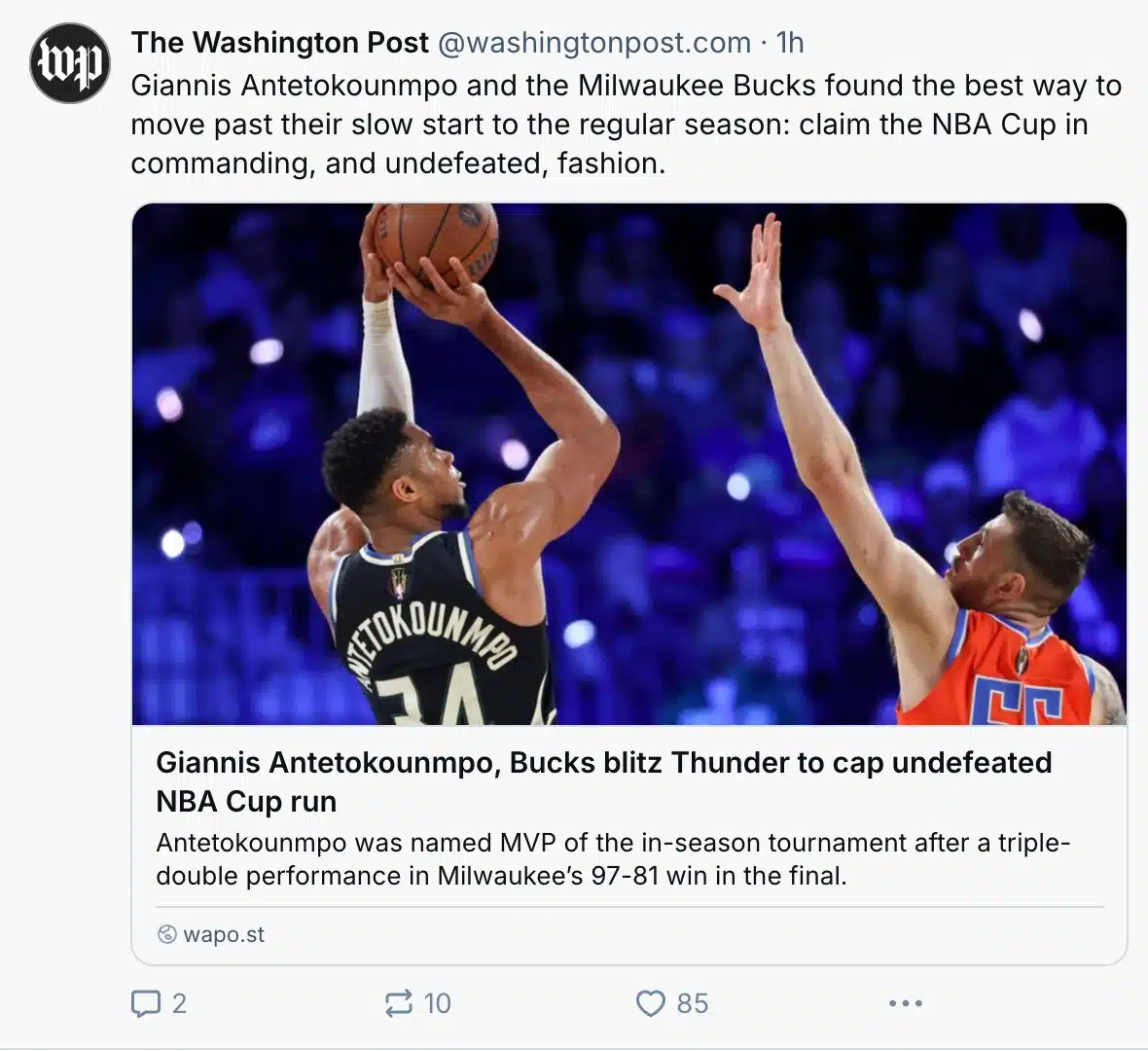
Those reshares also add context. Instead of dropping links with headlines, The Washington Post often uses Bluesky captions as mini article previews, making it easy to understand what a story is about and decide whether it’s worth reading.
This approach fits the platform well. It respects the audience’s attention, avoids hype, and positions the brand as a reliable guide rather than a loud publisher.
How to apply it as a smaller team:
- Write posts that explain, not tease
- Summarize your content instead of overselling it
- Highlight individual voices within your team
- Treat Bluesky as a relationship-building channel, not a traffic machine