:::info
Disclosure: This post focuses on WIN Reality, a Meta Quest app that trains baseball hitters in virtual reality. The author worked there as a product designer.
:::
You open the Mixpanel dashboard for the hundredth time and look at the conversion funnel numbers. They aren’t great; the product is stagnating. What do we usually do in this situation? Our instinct is to add. Maybe we need to explain better how the product works in the video? Maybe we need to show them that cool analytics dashboard upfront? Maybe we need to add that testimonial carousel? Maybe we need to show them all the personalization options? Let’s just add one more screen, showing all the cool things we built since the last update.
I played this game, literally. I was a product designer at a VR sports tech startup that trains baseball hitters. I needed to convince 9-to-13-year-olds and their parents that skills learned in VR actually transfer to the real world.
We had everything we thought we needed: a video explaining the motion-capture technology, testimonials from pro players who trained with us, a walkthrough of our various training modes, detailed stats showing average improvement percentages, and the partnership logos.
We thought: if they just understood everything we built, they’d convert. If we just showed them one more thing, explained one more feature, they’d get it.
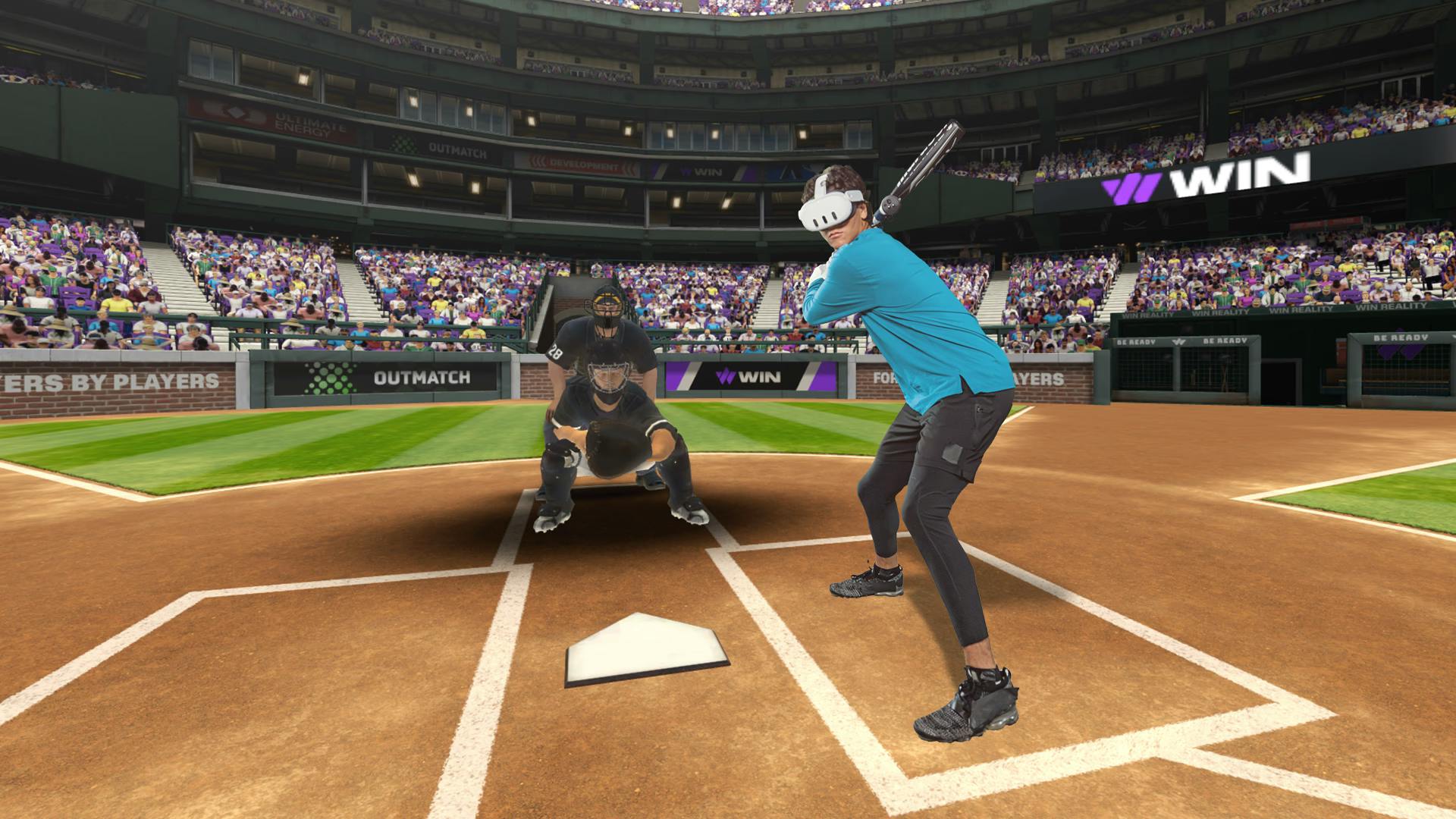
But they didn’t. Because the actual product’s “aha moment” — the thing that made people go holy s***, this is real — was when they loaded onto a virtual baseball field and faced their first pitch. They saw and heard the stadium around them, the pitcher winding up, a 90mph fastball coming at them, they swung…
That’s the moment users were sold. Not when we were explaining it.
The 11 Steps We Made Users Suffer Through
We had 11 steps before the users reached the “aha moment”:
- Watch the intro video (They need to understand the motion technology before they’ll pay for it. They need to know that pros use our product.)
- Enter first name (If they don’t convert now, we’ll have them in the database, and we can send them personalized emails.)
- Enter last name (We need the full name for leaderboards and to make achievement badges look and feel official.)
- Enter email (We definitely need the email for the marketing email campaign, convincing them to convert, explaining all the features once again.)
- Enter password (They’re already creating an account, might as well get it done now. Plus, it’s a standard practice. Every app requires signup before you use it.)
- Choose a subscription plan to start a trial (This is when they have the highest intent to buy because they want to try the product. It’s also a good place to show all the features again in bullet points next to each plan.)
- Welcome screen (We want to confirm that the subscription plan was successful and make them feel like they’re part of something big, part of a team.)
- Select sport (10% of our users play softball, so we need to make sure they know we have softball as well.)
- Select level (We can’t throw pro-speed pitches at a 12-year-old. The app was originally developed for pros, so we need to make sure users understand that it’s actually suitable for all ages and levels.)
- Select batting hand (We need to know whether they’re a rightie or a leftie, because when we load them on the field, they need to appear on the right side of the home plate and in the correct batter’s box.)
- Select training mode (We have 8 modes! They need to see the depth of the product. Some were developed with pro baseball players and actually improved pitch recognition and reaction speed.)
We cut it to 2 steps and increased purchase conversions by 25%. Because real innovation isn’t adding. It’s removing.
The Principles Behind This
Nir Eyal, author of Hooked — one of the most influential books on product design — put it this way:
Once the series of tasks from intention to outcome is understood, simply start removing steps until you reach the simplest possible process.
Dylan Field, Figma’s CEO:
I think it is important to get someone into a product and very quickly have them experience something special… You go into Figma Design, you see a blank canvas — how do we get you to create something as fast as possible?
He is obsessed with what he calls “time to value”: shortening the time between a user opening your product and experiencing something incredible.
Evan Williams built Blogger, Twitter, and Medium on the same idea:
Take a human desire, preferably one that has been around for a really long time. Identify that desire and use modern technology to take out steps.
So this is exactly what we did: we mapped out all the steps to value and started removing them. We decided to leave only the user inputs, without which the app couldn’t function.
What We Did
We inferred instead of asking. We knew that 9 out of 10 of our users were baseball players, so we loaded everyone onto the baseball field. We focused on the core user. Instead of a difficulty selection screen, we built an algorithm that adjusted pitch speed in real-time based on performance. For the starting speed, we realized we could measure the distance from the headset to the floor, which told us the user’s height, which told us roughly their age. Our target was for users to hit 6-7 out of 10 pitches: challenging enough to feel interesting, but not so hard they’d feel defeated.
We let the experience sell itself. We removed the video explainers, the training mode walkthroughs, and the feature descriptions. Instead of telling users what the product can do, we let them feel what it does in the most popular training mode. We stopped trying to win people over with secondary features and focused on getting them to the core value as fast as possible.
We made the required friction part of the experience. We couldn’t skip asking which hand users bat with — we needed to load them into the correct place on the field, and that wasn’t something we could infer from the motion sensor’s data. So we made that selection a theatrical reveal: the user picked their batting hand, appeared in a spotlight on home plate with the whole field in the dark, and saw a floating baseball. Of course, any reasonable person’s instinct was to hit the ball. When they swung at it, the entire stadium lit up, fireworks went off, and they saw a pitcher in front of them. We made that required friction feel intentional, even delightful.
We deferred what we couldn’t delete. We moved the payment screen, pro endorsements, and testimonials to after the trial. Users saw those only after they had already experienced how the product works.
“Killing our darlings” was hard. We hid 6 features from new users: an entire sport (softball), four training modes (pitch recognition, plate discipline, exhibition, live pitch), and the detailed swing analytics dashboards. It felt like hiding our value. But these things weren’t why users bought the product in the first place. They were why they stayed.
Rick Rubin, the producer behind Johnny Cash, the Beastie Boys, and Adele, famously says:
I’m not a producer. I’m a reducer.
His entire philosophy is about removing everything that isn’t the essence of the track. When he started working with Johnny Cash in the early 90s, Cash was considered washed up. Rubin removed the backing bands and the polished “Nashville production,” and put Cash alone in a room with an acoustic guitar. Those recordings became some of the most powerful music Cash ever made.
Similarly, your product’s best sales pitch isn’t the feature list, but the shortest possible path to the moment users feel the value themselves. Everything else just gets in the way.
I formulated this to myself as a short mnemonic: “Infer. Defer. Delete.” Write down every step a new user takes before they experience what your product actually does. For each step, ask: Can we infer this? Can we defer this? Can we delete this? If you can’t delete or defer it, make it delightful.