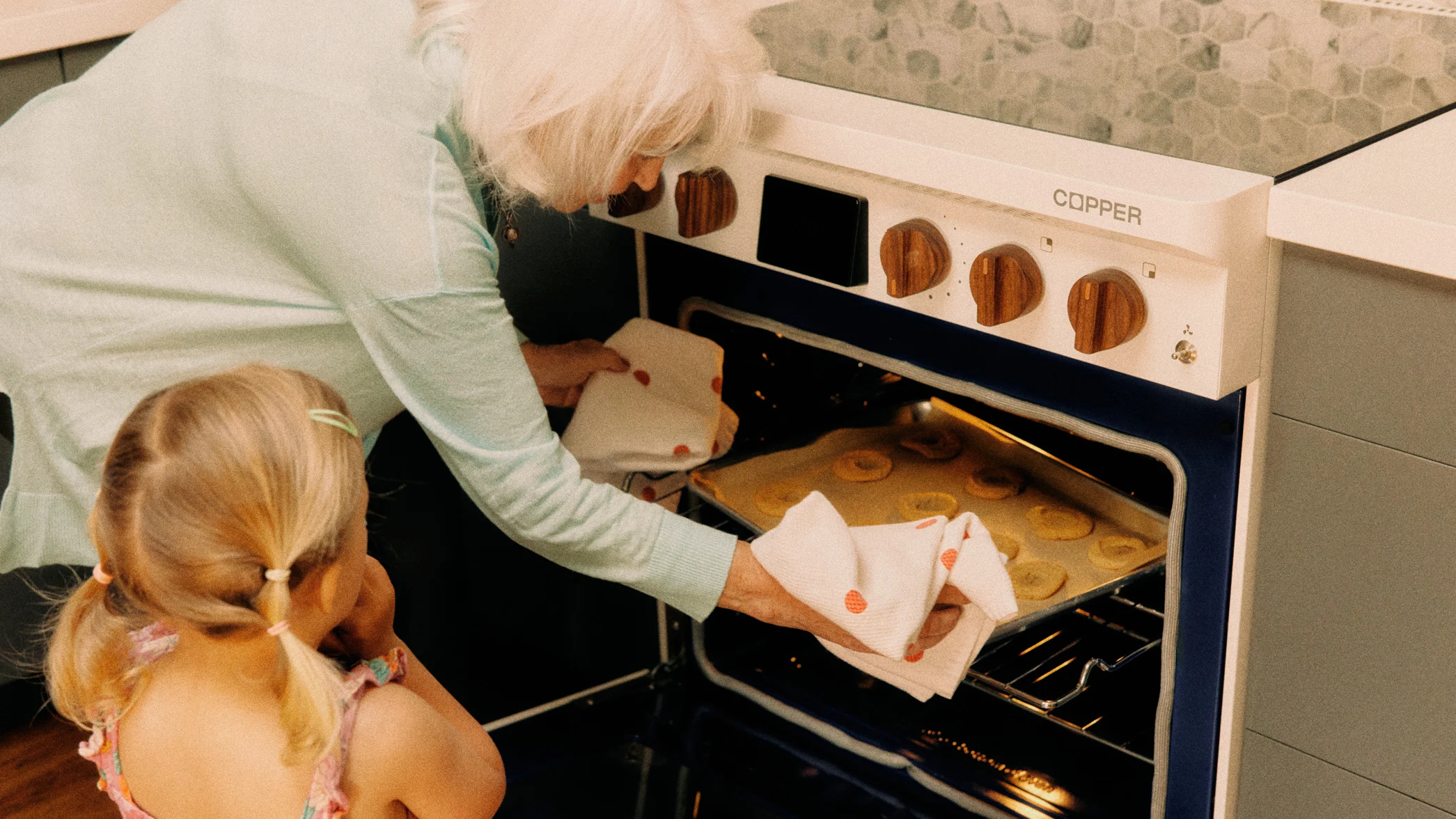
I’ll admit it: I still secretly prefer cooking on a gas stove despite knowing that I’m breathing in benzene and adding to methane emissions. What can I say, I like the tactile control of an open flame.
But recently I tested an induction range that made my gas stove seem antiquated. Charlie, from the Bay Area-based startup Copper, offers a high-end range that can do everything I expect from my current stove—and more. The appliance, which started to roll out nationally last year, has been called “the Tesla of induction stoves” by The New York Times and lauded by chefs including Christopher Kimball. I wanted to try it out as a home cook with only basic skills.
An oven that’s 30x more accurate
Like most electric ovens, Charlie’s performs better than its gas counterparts. But it also surpasses the typical electric version. It preheats to 350 degrees in about four minutes, thanks in part to a large battery hidden at the base of the stove. (More on the battery later.)
I tried baking some cookies, which browned up perfectly, and then turned the heat down to 80 degrees to test another unique feature: The oven can hold a steady low temperature, making it possible to proof bread or pastry quickly when needed.
Gas ovens tend to cycle heat more aggressively, and even the pilot light alone can push temperatures too high. Standard electric ovens are better, but also can’t reliably keep the temperature low enough. I’d brought along some chocolate croissants and tried proofing them; the oven worked like a professional proofing drawer, which meant not having to wonder how the temperature and humidity in the kitchen would affect the rise of the dough.
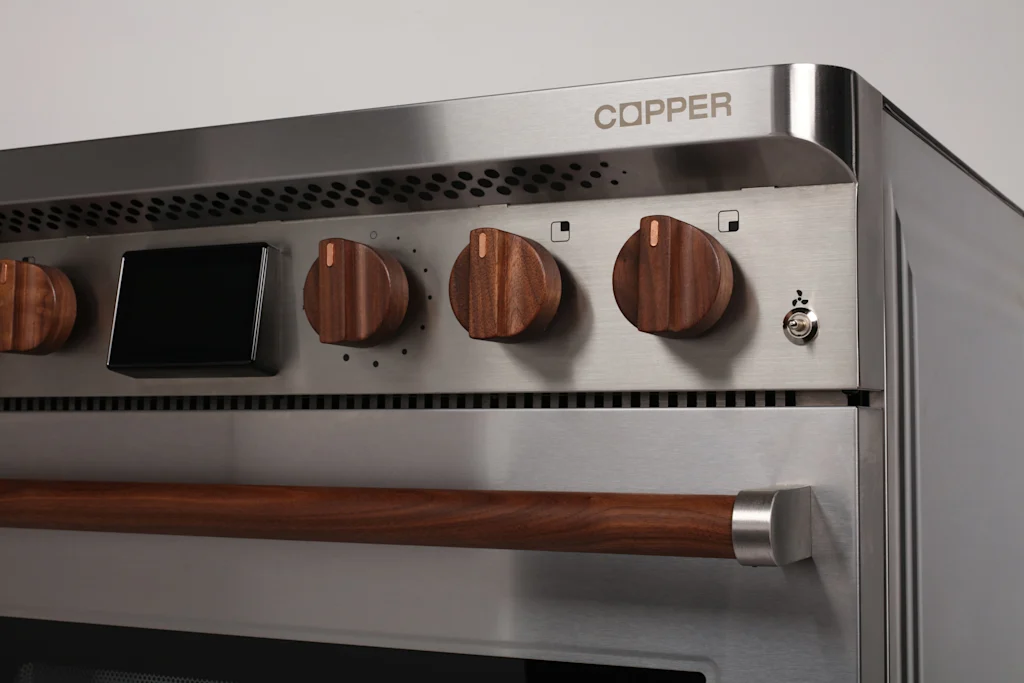
The oven is incredibly precise. Most ovens fluctuate as much as 30 degrees above or below the set temperature. But incorporating a battery enables Copper’s Charlie to use more sophisticated controls, including modern temperature sensors and actuators. Thanks to a recent firmware update, Charlie’s temperature varies no more than a single degree. Put another way, it’s 30 times more accurate than a typical oven.
The seesawing temperatures in other ovens lead to baked goods with burnt edges, soggy bottoms, or mushy middles. The software update—dubbed “Soufflé” after the notoriously finicky dish it was designed to master—makes Charlie’s baking capability even more consistent. Sure, it might take away some entertainment: Would you watch the Great British Baking Show without the suspense of unpredictable results? But in real life, it’s the kind of tool that actually makes me want to bake more often.