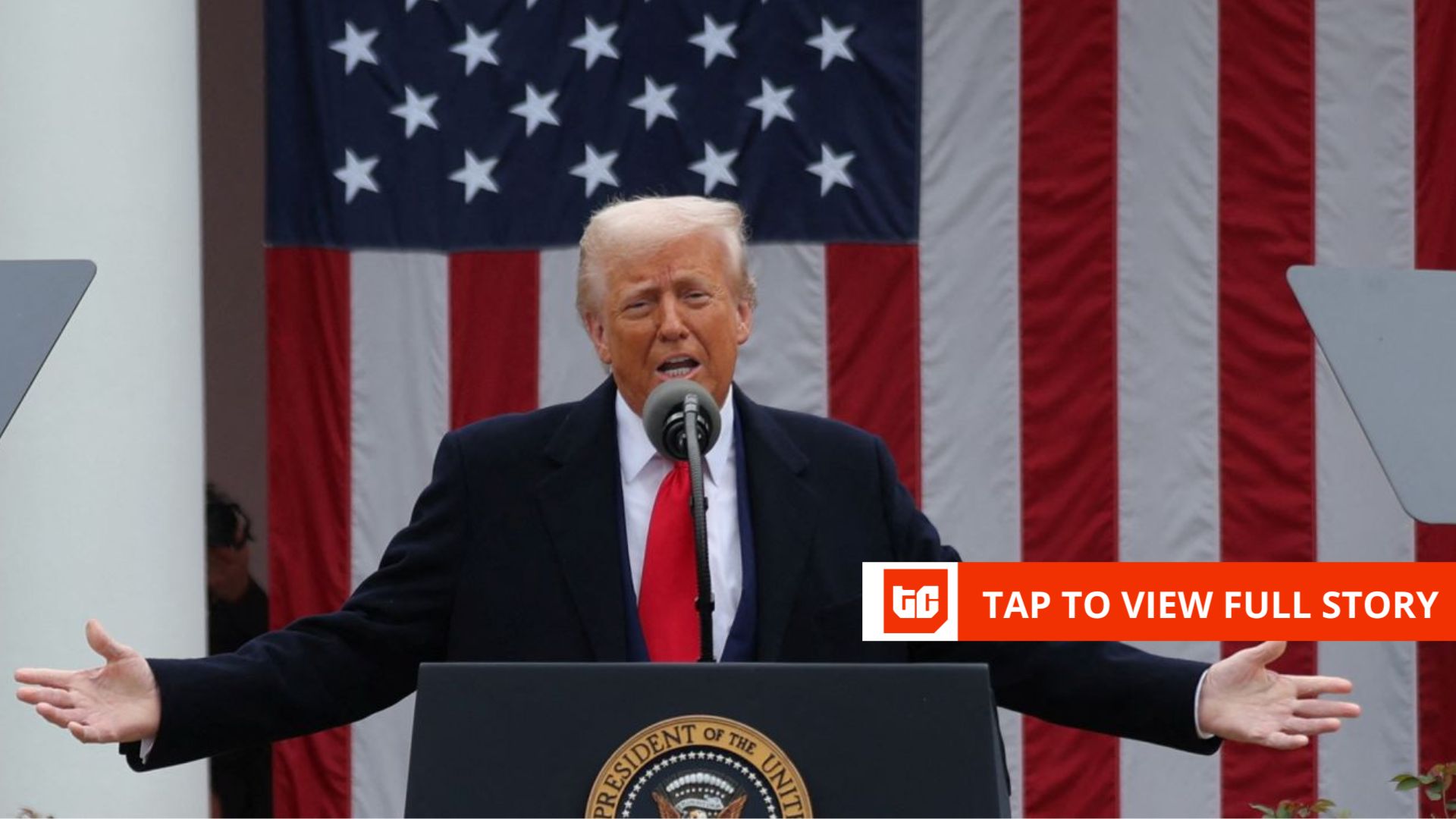
On Tuesday, December 16, US President Donald Trump expanded travel and visa restrictions on nationals from more than 30 countries, many of them in Africa, reviving and widening a policy first introduced during his first term.
The order imposes full or partial entry restrictions based on visa overstay data, terrorism risk assessments, and failures in identity management and information sharing. For Africa’s fast-growing tech ecosystem, the move creates an entry barrier to one of the most important corridors for founders and operators trying to access the US market.
Trump’s decision followed a months-long bureaucratic process rooted in legal precedent, immigration data, and national security doctrine that has already survived Supreme Court review.
What led to the blanket ban
The current expansion traces back to June 2025, when Trump restored the travel restrictions from his first term shortly after returning to office. Rather than introducing a new framework, the administration reinstated Executive Order 14161 and Proclamation 10949, relying on an earlier Supreme Court ruling that upheld the president’s authority to restrict entry on national security grounds.
This time, the administration leaned heavily on data from the Department of Homeland Security’s FY 2024 Entry and Exit Overstay Report. Countries whose citizens overstayed US visas at high rates were flagged for sanctions, ranging from partial suspensions of business and student visas to full bans on entry.
According to that report, several countries’ citizens defaulted at notable rates. F, M, and J student and exchange visa holders were flagged as compliance risks due to overstays. Cote d’Ivoire recorded a 19.09% overstay rate among students and exchange visitors, while Tanzania and Senegal posted rates of 13.97% and 13.07%, respectively.
Nigeria, one of Africa’s largest tech hubs, recorded a student and exchange visa overstay rate of 11.90%, even as business visa defaults on B-1 and B-2 visas remained just above 5%. The Gambia, Benin, and Sierra Leone stood out with the highest student visa overstay rates, each exceeding 35%, placing them among the most heavily penalised countries in the proclamation.
High overstay rates in any major category are treated as evidence of systemic non-compliance, triggering broad restrictions that hit African talent.
Several African countries now face full US entry bans, including Burkina Faso, Chad, the Republic of the Congo, Equatorial Guinea, Eritrea, Libya, Mali, Niger, Sierra Leone, Somalia, South Sudan, and Sudan. Sierra Leone was upgraded from partial to full restrictions under the new order, reflecting a sharp tightening of enforcement.
Other African countries were partially restricted. Nigeria, Senegal, Tanzania, Zambia, Zimbabwe, Angola, Benin, Burundi, Togo, Cote d’Ivoire, The Gambia, Malawi, Mauritania, and Gabon are subject to limits that primarily affect business, tourism, and student visas, while leaving some immigrant pathways technically open but more difficult to access.
Partial restrictions suspend the issuance of B-1 and B-2 visas used for business and tourism, as well as F, M, and J visas for students and exchange visitors. Some immigrant visa categories remain open, but applicants should expect slower processing and tougher reviews at US embassies.
“This is not a blanket ban on all immigrant visas,” said Oluyomi Ojo, founder of immigration consulting firm AgoraVisa. “It does not automatically shut down EB-1A and EB-2 visas. EB immigrant visas are affected at the consular level—embassies will not adjudicate or will effectively pause issuance—there will be no exceptions. EB migrations will continue as the ban does not affect approvals at the USCIS. The USCIS continues to adjudicate EB petitions inside the United States for all. The disruption happens at embassies, where visa issuance may be paused or delayed, even after approvals.”
Yet for Nigeria and several Sahel countries, the proclamation adds another complication. Trump explicitly cited the presence of groups such as Boko Haram and the Islamic State, arguing that terrorist activity “creates screening and vetting difficulties.” This could trigger enhanced security checks and reviews that slow immigration processes.
Those two factors combine to raise the burden of proof for Nigerian applicants across nearly all non-immigrant categories.
What does this mean for African tech talent?
The most immediate impact falls on global mobility. New B-1 and B-2 visas will largely stop flowing from affected countries, cutting off US access. Student and exchange routes, which were viable immigration routes into the US tech ecosystem, will also narrow sharply.
As visiting routes close, African tech talent is likely to seek out immigration pathways that remain unaffected by the proclamation. Employment-based visas such as O-1, L-1, and H-1B remain legally open, but they are far harder to obtain. These categories require employer sponsorship, exceptional-ability thresholds, or intracompany transfers that many early-stage founders and independent operators cannot meet.
“Tech workers already on O-1, L1, H-1B [visas] from [affected] countries are not impacted, and can still file for EB-1 and EB-2 in the US and get approval,” said Ojo. “Those with visas approved before January 1 face fewer issues.”
The deeper shift lies in how applications will now be judged. High overstay rates push consular interviews toward suspicion rather than validation. Immigration interviews will focus more on reasons an applicant might stay than on the purpose of the trip. African tech workers could face pressure proving they have reasons to return home, such as property ownership back home or long-term local employment, with no incentives to overstay their welcome. This creates a structural mismatch; for those without clear proof, it could weaken their ability to demonstrate ties to home countries.
Founders already inside the US system remain shielded from the executive order. But first-time entrants will face a wall built from data, security logic, and bureaucracy that hamper migration opportunities for African talent. This could encourage a shift toward alternative hubs in Europe, the Middle East, and Asia, where visa access is predictable.