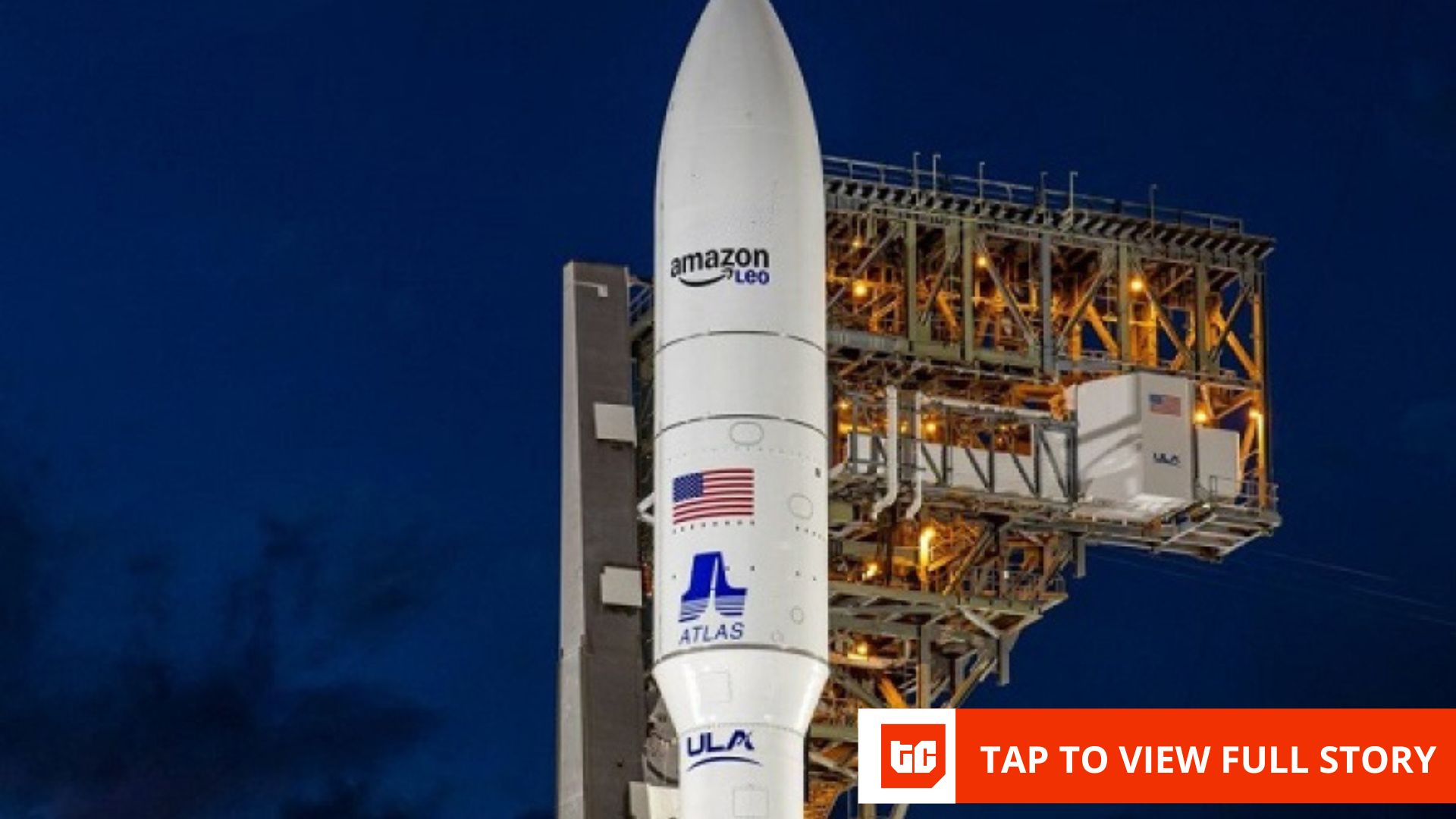
Amazon’s ambition to deliver satellite Internet in Nigeria is closer to reality, but it is not yet ready for lift-off.
While the Nigerian Communications Commission (NCC) has granted Amazon’s low-Earth-orbit (LEO) satellite project, now branded Amazon LEO (formerly Project Kuiper), a key regulatory approval, the company still requires two additional licences, an Internet Service Provider (ISP) and an International Access Gateway, before it can legally sell Internet services or scale nationwide.
Amazon currently holds a satellite landing permit, not a full operating licence. According to the NCC, the permit only allows Amazon to beam satellite coverage over Nigerian territory. It does not authorise the company to provide last-mile Internet services to consumers or enterprises.
“If they want to be an ISP or scale effectively, they will need a gateway licence,” said Umar Abdullahi, Special Adviser (Technical) in the Office of the Executive Vice Chairman of the NCC, during his presentation on satellite communications policy on January 28, 2026.
Amazon’s need for two additional licences is crucial because, without them, the company cannot legally deliver or scale its satellite Internet service in Nigeria, despite already securing permission to beam coverage into the country. The missing ISP and International Gateway licences determine whether Amazon can move from simply operating in Nigeria’s airspace to actually serving Nigerian homes and businesses, shaping competition in the broadband market, expanding connectivity options, and influencing how quickly satellite Internet becomes a real alternative for millions of users.
“We don’t have more to share on this topic at this stage, but if that changes, we’ll be sure to let you know,” an Amazon spokesperson told .
Amazon’s landing permit
Amazon LEO secured a seven-year satellite landing permit, effective from February 28, 2026, to February 28, 2033, with authorisation to use Ka-band spectrum.
The permit allows Amazon to operate its space segment over Nigeria as part of a planned constellation of up to 3,236 LEO satellites, supporting Fixed Satellite Service (FSS), Mobile Satellite Service (MSS), and Earth Stations in Motion (ESIM) across the country.
The approval places Amazon alongside other satellite operators already licensed by the NCC, including geostationary providers such as Intelsat and other space-segment players.
However, Abdullahi noted that the landing permit is only one of several licences required to function as a telecom service provider in Nigeria.
“Amazon is just one provider in the space segment,” he said. “The licence Amazon now has is a landing permit. But it’s not enough for Amazon to come into the market and provide last-mile services. It will need to acquire more categories of licences before it can go into where the likes of Starlink are.”
Securing the two licences
The ISP licence is the legal foundation for selling internet access to the public. It is a five-year individual licence that costs ₦500,000 ($357), plus a small application fee of about ₦10,000 ($7.14).
While relatively inexpensive, it comes with regulatory obligations, including quality-of-service standards, consumer protection rules, periodic reporting, and NCC approval for major corporate changes.
In practice, the ISP licence is a low-cost entry point, but it offers limited control over infrastructure. It allows an operator to sell Internet within approved technical and geographic parameters, but it does not grant wide-spectrum rights or international connectivity privileges.
That is where the Gateway licence becomes critical.
A Gateway licence, either for International Data Access or full Gateway Services, is far more powerful and expensive. The NCC currently charges ₦25 million ($17,857) for a 10-year International Data Access licence and ₦50 million ($35,714) for a 10-year Full Gateway Services licence.
This licence allows the holder to construct, own, and operate international gateway facilities, carry international voice and data traffic, and interconnect Nigerian networks directly with foreign networks.
For satellite operators, it is the licence that enables true national-scale wholesale services and deeper control over international capacity, rather than relying on third-party carriers.
“Only operational licensees with serious technical and financial capacity can get a gateway licence,” the NCC said in its licencing guidance. Applicants must already be active in the market, demonstrate robust network deployment, submit detailed technical and business plans, and show strong financial backing.
Why this matters
The distinction explains why Amazon’s entry into Nigeria is not as straightforward as public perception might suggest. Starlink, often cited as Amazon’s closest comparison, went through multiple regulatory steps before launching retail services. Amazon is still at an earlier stage.
In Nigeria, the licencing structure is deliberate. By separating space-segment authorisation from last-mile and gateway permissions, the NCC retains oversight over market competition, consumer protection, national security, and quality of service, especially as satellite broadband becomes more prominent.
It also means Amazon cannot simply “switch on” retail internet services after launching satellites. It must either apply for additional licences, partner with existing Nigerian licensees, or adopt a hybrid wholesale model that relies on local operators for last-mile delivery.
Abdullahi noted that Amazon is not entering an empty field. “It’s not only Starlink that is playing in the space segment,” he said, pointing to existing satellite operators already licenced by the NCC. Amazon, if and when it completes the licensing process, will simply become one more player in Nigeria’s satellite communications market.
For now, Amazon LEO’s landing permit is a significant first step, but it is not a licence to sell. Until the ISP and Gateway approvals are secured, Nigeria’s satellite Internet market remains open, competitive, and tightly regulated.