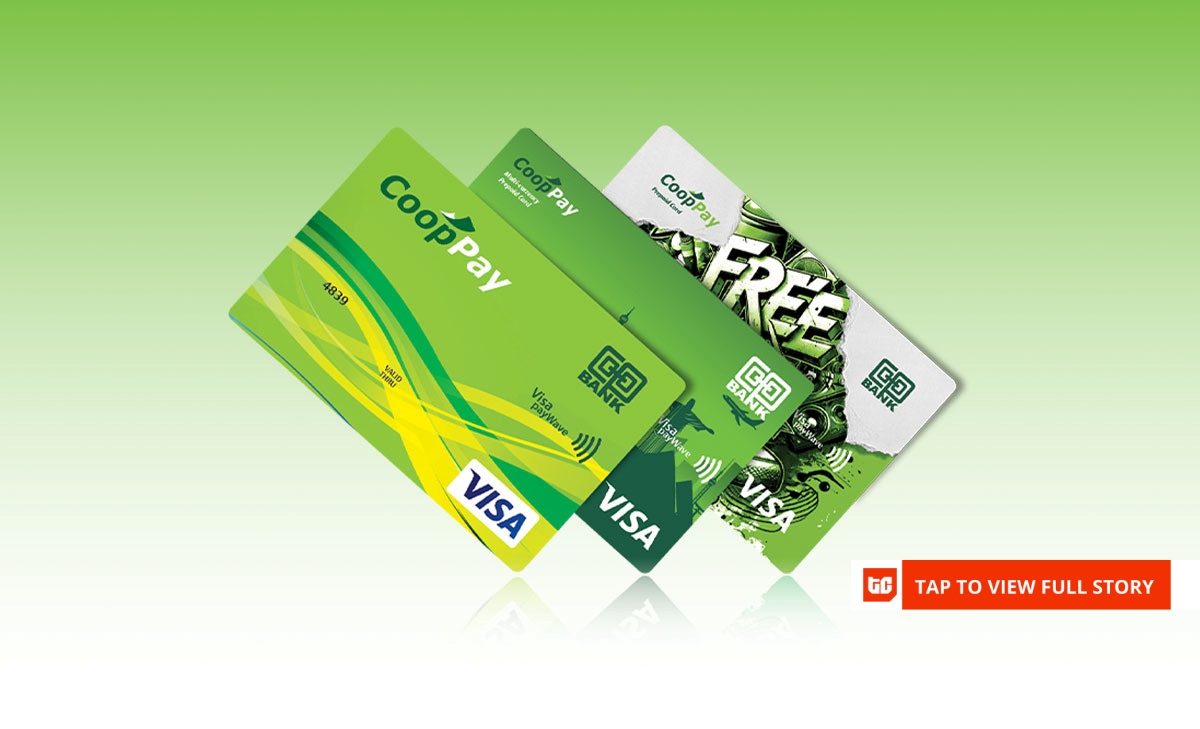
On January 23, during the centenary celebrations at Mang’u High School, one of Kenya’s oldest national schools, about 50 kilometres from Nairobi, three banking booths drew steady traffic from students and parents. Representatives from Co-operative Bank of Kenya, Equity Bank and KCB Group were issuing prepaid cards pitched as a modern way for parents to manage pocket money.
I passed through each booth where desk agents explained the mechanics and pricing. Co-operative’s CoopPay card costs KES 350 ($2.17), Equity’s student prepaid card costs KES 500 ($3.88), and KCB’s equivalent costs KES 600 ($4.65).
The products look similar on the surface, yet the presence of three rival banks in one school compound pointed to a deeper question: why are lenders investing so much effort in student pocket money, and what does it say about the business logic behind these cards?
The simple answer is that schools and other institutions are the primary growth frontier. Banks are targeting the roughly 15 million students in the Kenyan education system.
This week’s Backend examines how the product works, how banks make money from it, and whether prepaid cards solve a real problem or simply open a new battleground for customer acquisition.
Product analysis: a controlled version of digital cash
At the core, the student prepaid card is simple. Parents load money onto the card through channels such as M-PESA paybills, mobile apps or bank agents. Students spend only what has been loaded. Unlike a debit card, there is no direct link to a current account and no overdraft risk.
A Co-operative Bank agent described the product as a safer alternative to carrying cash. A lost card can be blocked, balances can be tracked, and parents receive transaction notifications. In boarding school environments where students may carry pocket money for an entire term, this control becomes the main selling point.
From a product design perspective, the prepaid card solves three specific problems. It limits overspending, reduces loss risk, and allows remote top-ups without requiring parents to travel to school. It also introduces students to card payments earlier than previous generations, who relied almost entirely on notes and coins.
Yet the product’s simplicity hides a tension. For students, the card can feel less like freedom and more like monitored spending, but it also teaches them about money management from an early age.
Small transactions, long-term value
The immediate revenue from these cards is modest. Banks earn issuance fees, replacement charges and small transaction margins. The bigger play lies elsewhere.
Prepaid cards act as a pipeline into future banking relationships. A parent onboarding a child today could translate into savings accounts, student loans, salary accounts and lending products years later. In a competitive market where digital wallets dominate daily payments, banks are looking for new entry points into customer journeys.
This strategy reflects a shift in acquisition economics. Traditional account-opening campaigns entail high marketing costs and uncertain loyalty. Schools, by contrast, offer concentrated groups of families already prepared to engage with financial products tied to daily needs.
The pricing differences among the banks suggest varied positioning. Co-operative’s lower fee at KES 350 ($2.71) signals a push for scale. Equity and KCB’s higher pricing hints at brand positioning and broader service ecosystems rather than pure cost competition.
Cards against cash versus mobile money
Kenya’s payment landscape is shaped by mobile money. For years, parents have sent pocket money instantly through phone transfers, making the prepaid card look like a late arrival.
Only 1.5% of Kenyans use Point-of-Sale (POS) or card-swapping machines for regular transactions. In the card world, debit cards are the giants. The Central Bank of Kenya’s (CBK) data shows that card payments dropped to KES 521.3 billion ($4.4 billion) in the year to June 2025, down from KES 594.2 billion ($4.6 billion) to June 2024, as the number of active cards also declined.
In the same period, mobile money transactions rose from 2.4 billion to 2.8 billion, even as total value slipped slightly to KES 8.4 trillion ($65.1 billion), suggesting a shift toward smaller, more frequent digital payments.
So, why introduce cards now?
Cards expand where mobile wallets face limits. They work at card terminals, allow online payments, and integrate into global payment networks. Banks are betting that as schools and merchants digitise further, cards will complement rather than replace mobile money.
The real rival is habit. Some parents still give cash to their children because it is accepted everywhere and trusted by students. Mobile wallets require no physical card or issuance fee, but students are not allowed to have mobile phones in Kenyan schools. The success of prepaid cards depends on whether banks can make the experience easier and more secure than existing options.
At Mang’u, the booths themselves felt like a response to this challenge. Banks are not waiting for customers to walk into branches, so they are going directly to the places where spending patterns begin.
Friction determines outcomes
The user experience sits at the centre of adoption risk.
Parents care about speed and reliability. In this case, a Cooperative Bank agent told me that the cards are processed within a day and delivered to students in schools. The sign-up process is straightforward, requiring a parent to provide the student’s name, school, admission number and birth certificate number.
I asked an Equity Bank agent whether a parent receives an alert after a top-up is made, and the agent said they do, provided the parent has opted in for SMS notifications, which cost KES 2 ($0.016) per message.
Long-term adoption will depend on how reliably the system works in everyday use rather than on promotional messaging. Even minor failures at checkout or delays in balance updates can quickly push students and parents back to cash.
There is also a cultural layer because pocket money has long been a private negotiation between parent and child. Cards formalise that relationship with fixed limits and tracking, which some families may embrace while others resist.
Schools as distribution channels
From a scaling perspective, schools are ideal environments. They aggregate thousands of potential users, create recurring spending cycles, and enable banks to market directly to parents during events like centenary celebrations.
If adoption grows, the cards could evolve into broader student financial ecosystems. Identity verification, school payments, transport and even digital learning tools could link into the same card infrastructure.
The challenge lies in diversity since not all schools have digital payment terminals. Not all parents hold bank accounts. A product designed for big schools may struggle to extend into less connected regions without significant investment.
Challenges lie in trust, cost and behavioural inertia
Issuance fees, even small ones, may discourage uptake when mobile transfers, say, to a teacher so they can pass the cash to a student, feel cheaper and easier.
Security concerns can quickly erode trust, and losing a card may inconvenience students who rely on it for daily spending.
Cash also remains familiar and requires no setup. For banks, the main risk is that without a clear daily value, prepaid cards could remain a niche product used mainly during school terms.
The scene at Mang’u High School offered a glimpse of a larger shift in Kenyan banking, as the centenary event seemed a channel to capture future customers at the moment they begin managing their money independently.
The product itself is not groundbreaking technology. However, its significance lies in positioning. Banks are trying to insert themselves into a lifecycle once dominated by cash and, more recently, mobile wallets.
If banks deliver reliability and clear value, they could turn school spending into a pipeline for long-term growth. If they fail to outperform existing habits, the cards may remain a side experiment.