




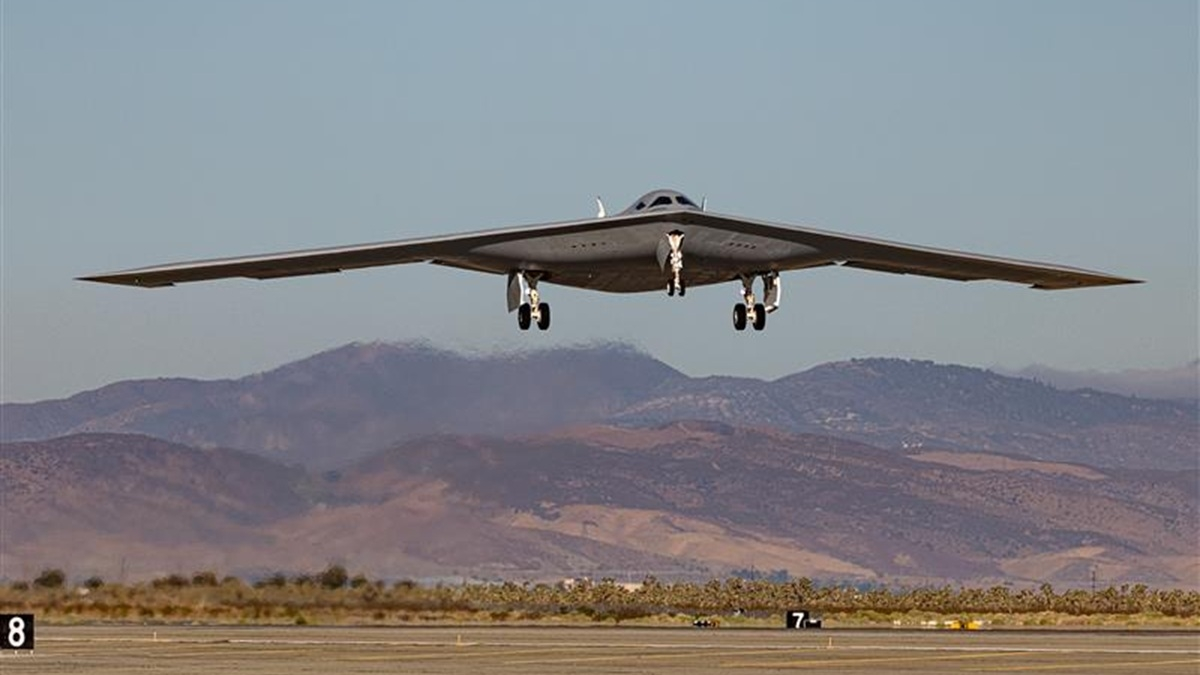
Announced with great fanfare in 2016, the project stealth bomber H-20 was to be China’s response to American air supremacy. Eight years later, the flying wing-like device, very inspired by B-2 Spiritremains a ghost on the tarmacs.
This abysmal delay reveals the extreme complexity of going from concept to a credible and operational war machine, especially when we try to skip steps.
Why is China’s H-20 stealth bomber blocked in its development?
The H-20 is trapped in a “ hellish loop of development » because China is attempting a technological quantum leap without possessing the experience accumulated by the UNITED STATES.
Mastering such a device is not just a matter of copying a flying wing shape. It is the fine integration of dozens of cutting-edge technologies that poses a colossal challenge for Beijing.
Bombardier B-2 Spirit of Georgia
The stealth is not a simple coat of black paint. It requires perfect synergy between aircraft geometry, radar absorbing materials (RAM), suppression of engine infrared signatures, and advanced electronic warfare systems.
The slightest defect in one of these areas destroys the effectiveness of the whole. Chinese engineers face challenges design challenges major factors in making this complex ecosystem function reliably and, above all, maintainable in the long term, report several specialized American media.
Why is America’s lead in stealth bombers so overwhelming?
The American advance is based on more than forty years of an iterative development cycle and, above all, on invaluable combat experience feedback. Since the F-117 Nighthawk in the 80s until the brand new B-21 Raiderpassing through the B-2 Spiritthe United States has continued to refine its concepts, tactics and materials in real conditions.
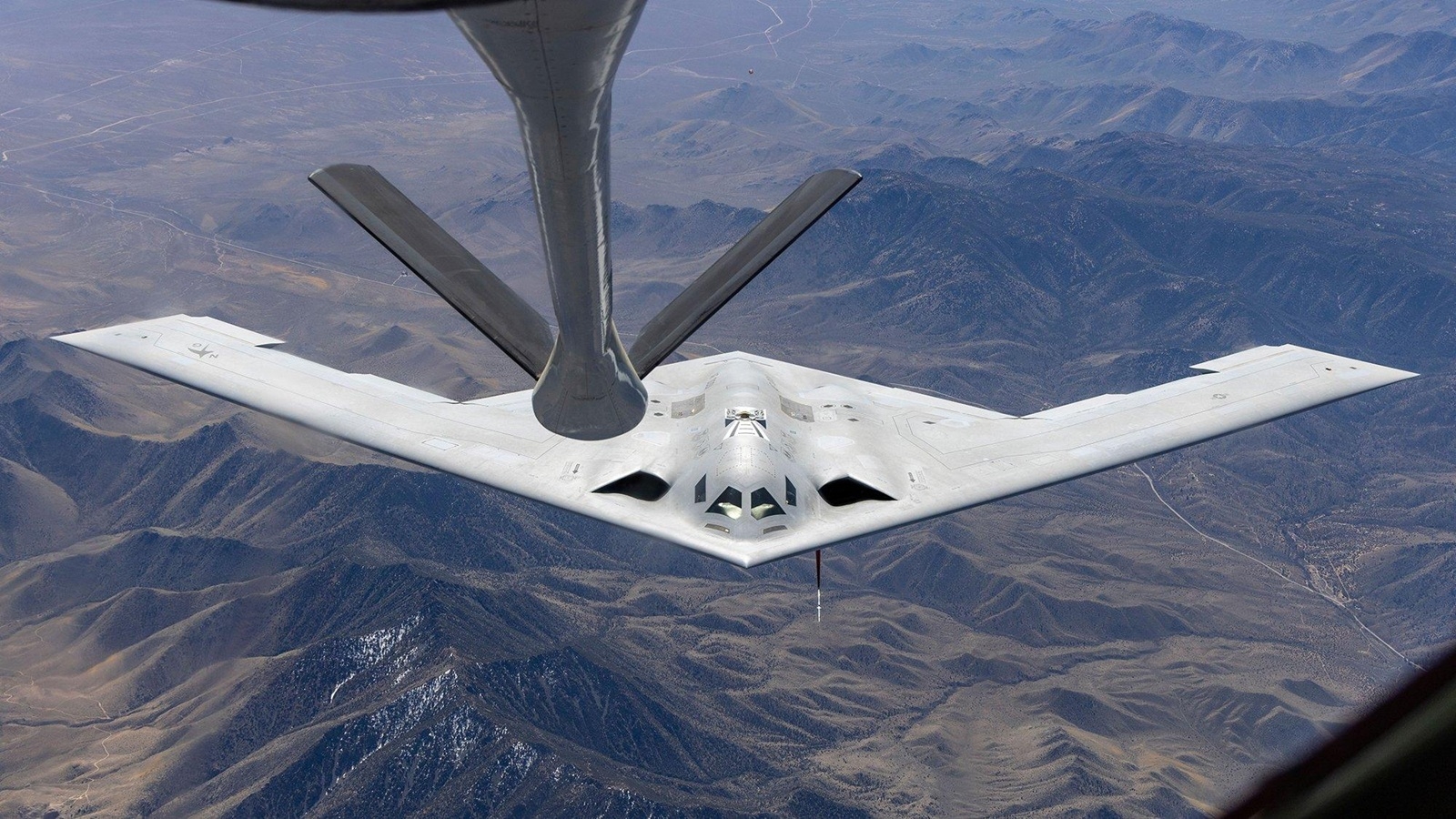

B-21 Raider stealth bomber
This type of experience cannot be bought. It is forged in the heat of action. B-2 combat missions in Kosovo, Iraq or Afghanistan have provided mountains of data on stealth material wear, penetration tactics and maintenance.
China has not fought a war since 1979. This is invaluable field experience and data that Beijing simply does not possess. This lack of operational culture creates a doctrinal gap at least as big as the technological gap, believe American military specialists.
What makes stealth technology so complex to master?
The technology furtive is a 5D puzzle where every piece must be perfect. The first challenge is to reduce the signature radaror SER (Radar Equivalent Surface Area), thanks to precise geometric shapes and special coatings such as carbonyl iron powder which transforms radar waves into heat. The B-2 Spirit would have an SER as low as 0.0001 m², i.e. the size of an insect.
But this is only the beginning of the puzzle. It is then necessary hide engine heat to escape infrared sensors, with S-shaped air inlets, buried nozzles and thermal tiles.
Finally, the aircraft must be an active player in the electromagnetic battlefield, capable of jamming or deceiving enemy radars. It’s this total integrationfrom the aircraft cell to the mission planning software, that the PLAAF (Chinese Air Force) struggles to reproduce.
Does the H-20 still represent a future threat to the United States?
Even with its delays, the H-20 stealth bomber remains on the Pentagon’s radar but the perception of the threat has changed. A high ranking officer of theUS Air Force Global Strike Command recently described China as “ regional bomber force at best ».
The concern is not so much about a hypothetical technological superiority, considered very improbable, as about the mass production capacity of China. If Beijing managed to produce dozens of H-20s, even imperfect ones, their sheer number could saturate the defensesa feared theme in the era of low-cost drones capable of destroying very high-value targets.
With an estimated range of more than 8,500 km, the device could theoretically threaten American bases in the Pacific, such as Guam or Hawaiiand potentially carry nuclear or hypersonic weapons.
The real issue for the United States, then, is not whether the H-20 will be as good as the B-21, but how many of these “good enough” aircraft China will be able to bring online in the next decade.


