Shares of Workday Inc. got hammered in late trading today after the company offered weak guidance for the current quarter.
It was the worst possible news for investors amid growing concerns over the existential threat it faces from the rise of artificial intelligence. And it happened even as the company delivered solid results for the quarter just gone.
Workday reported fourth-quarter earnings before certain costs such as stock compensation of $2.47 per share, easily beating Wall Street’s target of $2.32 per share. Revenue for the period rose 14%, to $2.53 billion, just ahead of the $2.52 billion consensus estimate. Profitability rose too, with income for the quarter coming to $145 million, rising from just $94 million a year earlier.
But those positive numbers were undone by the company’s dismal outlook. For the current quarter, Workday is looking for an adjusted operating margin of 30.5% and $2.335 billion in subscription revenue. Both figures were below the consensus, with analysts hoping for a margin of 30.9% and $2.35 billion in subscription revenue.
For fiscal 2027, Workday sees a margin of just 30%, with subscription revenue set to fall between $9.93 billion and $9.95 billion, implying slower growth of just 12% to 13%. During fiscal 2026, the company’s subscription revenue had grown at a rate of just over 14%.
Investors have grown more concerned in recent weeks that AI models could end up causing major disruption for software-as-a-service companies like Workday in the coming years, or possibly even months. As of today’s market close, Workday’s stock was down 39% in the year to date, and it declined a further 9% in extended trading.
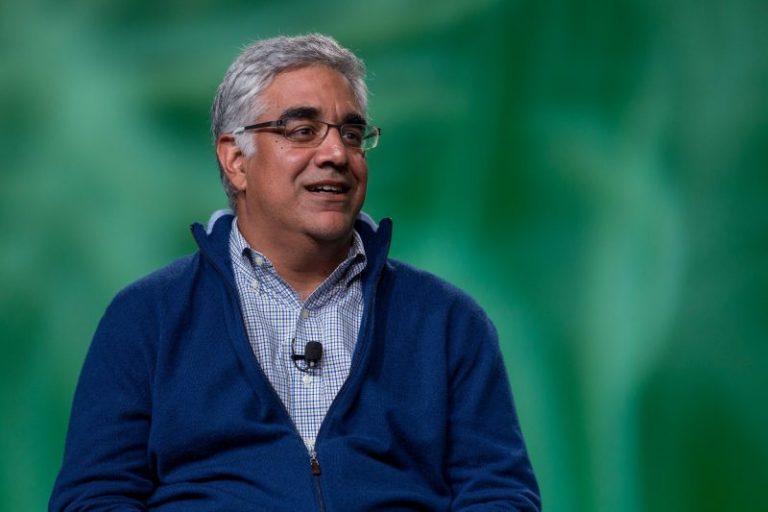
The company is experiencing disruption in its head office too. Earlier this month, Chief Executive Carl Eschenbach revealed that he’s stepping down from the role after just three years, without giving any reasons for his departure. He was promptly replaced by co-founder Aneel Bhusri (pictured), who previously served as the company’s CEO.
Eschenbach had joined Workday three years prior as co-CEO, sharing the role with Bhusri for the first year, before the co-founder stepped back to focus on product development, handing over full control to his colleague. It’s not clear if Bhusri intends to occupy the hot seat permanently, or perhaps look for another co-CEO in the future.
Bhusri addressed the AI storm clouds hanging over the company’s head on a conference call with analysts, dismissing the threat entirely. “You’ve all heard the narrative out there that HR and ERP will be replaced or relegated to the background by AI,” he said, using acronyms for human resources and enterprise resource planning. “I personally just don’t see it happening.”
The CEO explained that Workday operates at the heart of global enterprises, where trust and accuracy are vitally important. “That gives Workday a unique opportunity to bring AI directly into the HR and finance workflows our customers rely on every day and to deliver real, measurable value,” he insisted.
Workday’s plan to counter AI is to try and lead the disruption itself. It has added dozens of generative AI features to its platform over the last year, and Bhusri said today that its AI products now generate more than $400 million in annual recurring revenue.
During the quarter, Workday announced it’s going to launch a new AI agent that will be able to handle employee requests for modifying their work shifts. It also acquired a startup called Pipedream Inc., which develops tools for connecting AI agents to external software and services.
These developments are all clear signs that Workday sees product investment as the best way to reignite its growth, said Holger Mueller of Constellation Research. Further evidence to support this comes from its investment in research and development, he said, which was almost the same as what it spent on sales and marketing costs. “Workday had a good quarter overall and increased its profitability, but investors might feel its growth should be higher in the AI era,” the analyst added. “It has work to do, but Aneel Bhusri coming back should give confidence to customers and investors it can do this.”
The reason for the company’s soft guidance is that some large customers are taking longer to close new deals, said Workday Chief Commercial Officer Rob Enslin.
Workday’s finance chief Zane Rowe added that Bhusri is much more focused on initiatives that will ultimately drive long term growth for the company. The implication being that Workday’s AI bets will ultimately pay off in future. “Aneel is much more focused on that, more so than just hitting that operating margin exclusively,” Rowe told analysts.
Photo: Intel Capital/Flickr
Support our mission to keep content open and free by engaging with theCUBE community. Join theCUBE’s Alumni Trust Network, where technology leaders connect, share intelligence and create opportunities.
- 15M+ viewers of theCUBE videos, powering conversations across AI, cloud, cybersecurity and more
- 11.4k+ theCUBE alumni — Connect with more than 11,400 tech and business leaders shaping the future through a unique trusted-based network.
About News Media
Founded by tech visionaries John Furrier and Dave Vellante, News Media has built a dynamic ecosystem of industry-leading digital media brands that reach 15+ million elite tech professionals. Our new proprietary theCUBE AI Video Cloud is breaking ground in audience interaction, leveraging theCUBEai.com neural network to help technology companies make data-driven decisions and stay at the forefront of industry conversations.