Rita El Khoury / Android Authority
Apple announced its second-generation AirTag this week, with promises of improved range, a louder ringer, more security, and the same design and form factor as the original tag. The chief feature, though, is the new U1 UWB chip that is said to improve precision finding and propel the AirTag (2nd gen) far ahead of most of its competitors, many of which still don’t even have a UWB chip.
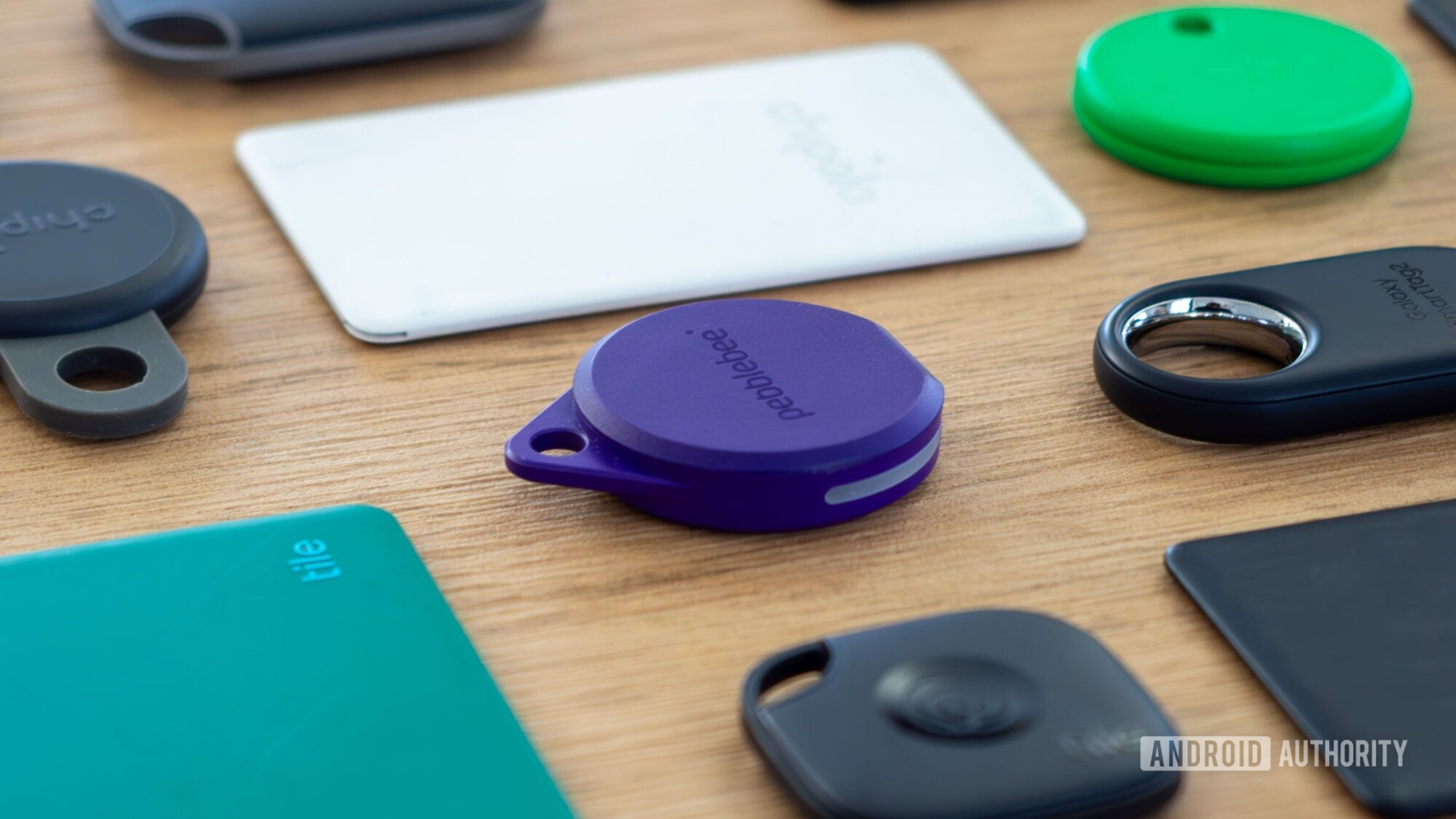
However, in true Apple fashion, there are still lots of missing and potentially old-school features in the new tag, including the lack of cross-platform compatibility (because Apple, duh). This leaves the field of Bluetooth tracker competitors very much alive and blooming, and since I’ve been testing many of these trackers for the last 18 months, I’ll let you in on a secret: There are better trackers out there that work both on Android and iOS, and you should buy them instead.
What do you think of the new Apple AirTag (2nd gen)?
0 votes
Chipolo LOOP ($39)

Rita El Khoury / Android Authority
While it is more expensive than the Apple AirTag (2nd gen), the Chipolo LOOP is one of the two trackers I would go buy right now, no questions asked. For starters, it’s compatible with both Google Find Hub and Apple Find My (you can only use one at a time and have to reset the tracker to switch networks), and provides ease of mind in case you decide to switch phones or give it to a family member who uses another mobile OS. It also comes with a built-in loop, so you don’t need to buy any extra accessories to attach it to a keyring.
More importantly, though, it charges over USB-C, and as someone who never has enough CR2032 batteries and hates rummaging for them last-minute, I love that I can just plug it into my phone charger to keep it topped off. The battery lasts around six months between charges.
The LOOP offers a slew of interesting extra features, all accessible from the Chipolo Android or iOS apps (on top of what you find in Google’s or Apple’s apps). You can ring your phone from it if you lose it, get notification alerts if you leave your phone behind, use it as a camera shutter remote, and choose different ringtones and ringing volumes. Oh, and it’s very, very, very loud.
There’s no Ultrawide Band here, but the LOOP already packs Bluetooth 6.0 with Channel Sounding, and since Android already supports Channel Sounding, I’m hoping Google will introduce it to the Find Hub API so Bluetooth 6.0 trackers like the LOOP can use it even if they don’t pack in UWB.
Pebblebee Clip 5 ($35)

Rita El Khoury / Android Authority
The Pebblebee Clip 5 is the second tracker I’d personally pick instead of an AirTag, and it has already saved my luggage and many other bags from neglect in the Athens airport. It has a very similar featureset to the LOOP: Google Find Hub and Apple Find compatibility, built-in hook, USB-C charging, very long range, a loud siren, and it can ring your phone, but there are some minor differences here and there.
On the pros list, the battery lasts 12 months instead of six, and it features a very bright LED light that can flash and help you find the tracker in the depths of your sofa cushions. Pebblebee also has a Safety Circle emergency alert feature that lets you use the tracker when you’re in danger to alert your loved ones. Plus, there’s a QR code on the back to give your details to anyone who finds the tracker if you lose it.
On the cons list, the Clip 5 only packs in Bluetooth 5.4, so there’s no futureproofing for Channel Sounding. It’s IP66 rated compared to Chipolo’s sturdier IP67, so it’s not resistant to complete immersion. It doesn’t have customizable ringtones or volumes and doesn’t offer left-behind alerts on Android (it does on iOS). It’s also quite chunky at 9.5mm thickness versus Chipolo’s 8mm.
Picking between this and the Chipolo LOOP is a matter of preference. I like the Pebblebee’s bright LED and its longer battery life, as well as its neat QR code feature, but I’d rather have Bluetooth 6.0 and the peace of mind of knowing my tracker will alert me if I walk away from it by mistake.
Chipolo CARD ($39)

Rita El Khoury / Android Authority
If you’re looking for a flatter tracker to put in your wallet, skip the thick round pucks and go for a thinner, credit-card sized tracker. There are two excellent options now, one of which lives in my wallet and is the new Chipolo CARD.
Like the LOOP, this tracker is compatible with both Google’s and Apple’s Find networks, has a very loud siren, is IP67-rated, is future-proof with Bluetooth 6.0 with Channel Sounding, and includes all the extra features such as left-behind alerts, phone ringing, customizable ringtones and volumes, and a camera remote.
The CARD’s battery lasts six months on a charge, but instead of USB-C, it just uses wireless Qi charging. I love that I can just put it on my desk charger or nightstand charger and it fills up, without having to worry about any proprietary pin chargers, battery replacements, or worse, having to throw it away when the battery is dead.
Pebblebee Card 5 ($35)

Rita El Khoury / Android Authority
Your second option for a card-sized cross-platform tracker is the Pebblebee Card 5, which currently sits in my husband’s wallet. This one uses wireless Qi charging as well to fill its battery, but the longevity is rated at an insane 18 months. Durability is also higher in this case, with an IP68 rating compared to the Chipolo CARD’s IP67, which makes it resistant to immersion for up to three meters deep for extended periods of time.
Otherwise, you’re looking at a similar list of pros and cons compared to Chipolo’s card-sized tracker. Bluetooth 5.4, phone ringing, an LED flashing light, a QR code for identification, and left-behind alerts only with Apple’s Find My. There are no customizable ringtones and volumes, no camera shutter, and this one lacks the Safety Circle Alert feature of the Clip 5.
Overall, if you’re looking for fewer charges and a thinner tracker first and foremost, this is the one you should go for. But if you prefer having left-behind alerts to notify you when you walk away from your wallet, you should go for Chipolo’s CARD.
Moto Tag ($29)

Ryan Haines / Android Authority
Unlike the four previous trackers, the Moto Tag only works with Google’s Find Hub. But it’s the only Android-compatible tracker currently available with UWB for precision finding nearby. If you often lose your items at home and don’t want to ring them and wake up the entire household, or if you’re tracking down a thief and don’t want to alert them to your nearby presence, UWB is an awesome perk to have. Having tested it, though, I didn’t find it too crucial for my personal use, but your mileage may vary.
Specs-wise, the Moto Tag has fallen behind all the other trackers on this list. It runs on a user-replaceable CR2032 battery, and you’ll have to keep a stash available because it runs through its battery in a few months — much faster than the one year Motorola claims. It has a very tame siren (75 dB compared to more than 100 dB on the other trackers), a shorter range despite its Bluetooth 5.4 support, and only offers phone ringing and camera shutter functionality as extra perks. No left-behind alerts, no customizable ringtones and volumes.
On the upside, it’s a bit cheaper than the other trackers and sports the exact same dimensions as Apple’s AirTags, so it can use the same accessories. That comes in handy because it doesn’t have an integrated keyring holder. Overall, I wouldn’t go for this tracker as a first choice, but I understand its appeal for those who really need UWB for their misplaced items.
If you’re not in a hurry, though, you might want to wait for Q2 2026 when the Moto Tag 2 is supposed to launch. The newer version brings longer battery life on the same CR2032 coin cell, an IP68 rating versus IP67, and Bluetooth 6.0 with Channel Sounding. Everything else should stay the same, including the form factor, dimensions, and price.
Honorable mentions

Rita El Khoury / Android Authority
The tracker market has many more options to choose from, so let me run down a few of these:
- Samsung Galaxy SmartTag 2 ($30, down to $22): Perfect for Samsung users, it offers all the features and more, including a button to control your smart home and location history to see where your tracker has been. However, it doesn’t use Google’s or Apple’s networks and will work best in areas with lots of Samsung users. In my experience, it’s super reliable, and there was a time when I said I’d pick it over any Google Find Hub tracker, but with Google improving its network reliability, this is no longer the case today. Also, keep in mind it uses a CR2032 battery and the older Bluetooth 5.3.
- Tile trackers: They’re the only option for those who want a tracker that works across both iPhones and Android phones without having to reset to switch. That makes them perfect if you carry two different phones or you want to share the tracker with a family member on a different mobile platform. The Tile Pro ($35, down to $27), Mate ($25 down to $20), and Slim ($30 down to $24) run on Tile’s and Life360’s networks, which are very reliable in the US and other Western countries in general, but you may find that the speed of finding lost items dwindles once you move outside those areas. Your tracker will still be found, but it may take longer for a Tile user to come near it. Tile packs a bunch of extra features in its app, but many of them, like location history and sharing with more than one user, are locked behind a Premium subscription.
- KeySmart SmartCard Gen 3 ($40): A new entrant in the cross-platform tracker game, the SmartCard (Gen3) is a thin 1.7mm credit-card-sized tracker compatible with both Apple and Google’s Find networks with Qi wireless charging, IPX8 rating, and a battery that lasts 11 months on a charge.
- MiTag Duo ($20): The cheapest dual-network Apple and Google tracker you can find packs a coin cell CR2032 battery, Bluetooth 5.2, an IP67 rating, left-behind alerts, and a built-in keyring hole.
- Rolling Square’s dual trackers: These higher-end trackers also offer both Apple and Google network compatibility. The AirCard Pro ($40) is 2.2mm thick, has a 12-month battery that can be wirelessly charged, a very loud siren, an IP67 rating, and a QR code to add a digital business card so anyone who finds it can contact you to let you know where to pick it up. The AirNotch Pro ($40) is an oblong tracker with a built-in hook, two CR2032 batteries for 20 months of battery life. It has a loud siren, an IP68 rating, and even glows in the dark!
If you’re willing to wait a bit longer, Anker has the new credit-card style Eufy SmartTrack Card E40 in the pipeline, Nimble is making cross-platform trackers with cellulose-based batteries instead of lithium-ion that can be wirelessly recharged, and Xiaomi is rumored to be working on its own trackers, too.
With all of these options available, I would find it a bit sad if you just limit yourself to the AirTag, even if you’re an iOS user. There are so many trackers to pick from, all with tons of extra functionality and convenience, so I hope this list will help you pick wisely.
Don’t want to miss the best from Android Authority?


Thank you for being part of our community. Read our Comment Policy before posting.