✨ Quick overview
This guide by a GEO expert explains how businesses can build brand authority that AI engines recognize, helping their expertise surface in AI-generated answers instead of getting overlooked or attributed to others.
Key takeaways
- Clear, consistent brand identity helps AI recognize and verify your business across platforms.
- Strong authorship and credibility signals (bios, credentials, schema) make content attributable to real experts.
- Third-party mentions and media coverage act as external validation that AI systems trust.
- Experience-driven content with real examples, data, and proof stands out from generic advice.
- A cohesive multi-platform presence reinforces authority and entity recognition.
- Ongoing AI visibility tracking ensures your brand remains accurately represented as AI search evolves.
You might already be the expert. The problem is that AI doesn’t know that.
Every day, small business owners publish guides, share insights on LinkedIn, and post advice in their communities. Their experience shapes their industries, but when AI tools summarize those same topics, someone else often gets the credit.
The reason is simple: AI looks for recognizable authority signals.
It scans for structured bios, consistent brand identity, and external validation. Without those signals, your content can remain invisible even if it fuels the answers people read.
The good news is that you can change this. When you strengthen the signals that prove who you are and what you know, AI systems are more likely to recognize your brand as a trusted source.
In this guide, we’ll walk through six practical ways to make that happen. These are the key actions that help AI engines understand your expertise, verify your credibility, and cite your business as a reliable authority.
Contents
- Build a clear and consistent brand identity
- Strengthen author and content credibility
- Earn mentions from reputable third parties
- Publish content that demonstrates real experience
- Build a multi-platform presence
- Track and improve your AI visibility
How to build brand authority AI engines recognize (and show searchers!)
Follow these steps to start getting cited in AI answers.
1. Build a clear and consistent brand identity
Before AI can recognize you as credible, it needs to recognize you at all. Your brand identity is the foundation that every other authority signal builds on.
AI systems connect the dots between your website, social profiles, and external mentions to determine whether they belong to the same entity. If those signals are inconsistent, you become harder to verify.
Generative AI models like ChatGPT and Gemini rely on entity recognition. That means they look for repeated references to the same brand name, logo, or person across different data sources. When your online presence looks fragmented, AI might treat your mentions as unrelated businesses or individuals.
How to build it
- Use your business name, logo, and tone consistently across every platform. This includes your website, Google Business Profile, LinkedIn, YouTube, and press features.
- Apply Organization schema and sameAs markup to connect your digital properties. This tells AI engines that all these pages belong to the same entity.
- Create a unified visual and verbal identity. Consistent color palettes, taglines, and author bios help both humans and machines recognize your brand instantly.
Real-world example
Better Sour, a small candy brand from Hawaii, demonstrates this perfectly. Their website, social handles, and packaging all carry the same design system. The “About” page clearly tells the founders’ story, and the brand name appears identically everywhere online.
This coherence allows search engines and AI models to identify Better Sour as one entity across multiple channels.
Mistake to avoid
Don’t treat branding as separate from SEO or content. The more unified your brand identity is, the more easily AI can verify and associate your name with authority.
Key takeaway
Make your identity easy to verify everywhere you appear online.
⬇️ What are the biggest challenges businesses are facing with their websites and SEO? (Yes, AI search is in there!) Free download >> Small Business Website Trends Report
2. Strengthen author and content credibility
AI does not just evaluate what your content says. It also considers who is saying it. Every blog post, article, or video carries more weight when it is linked to a verifiable expert. Google’s EEAT framework already rewards clear authorship, and AI models now apply similar logic when surfacing sources.
Simply put: without identifiable authors, your content becomes generic data. With structured author information, it becomes attributable expertise.
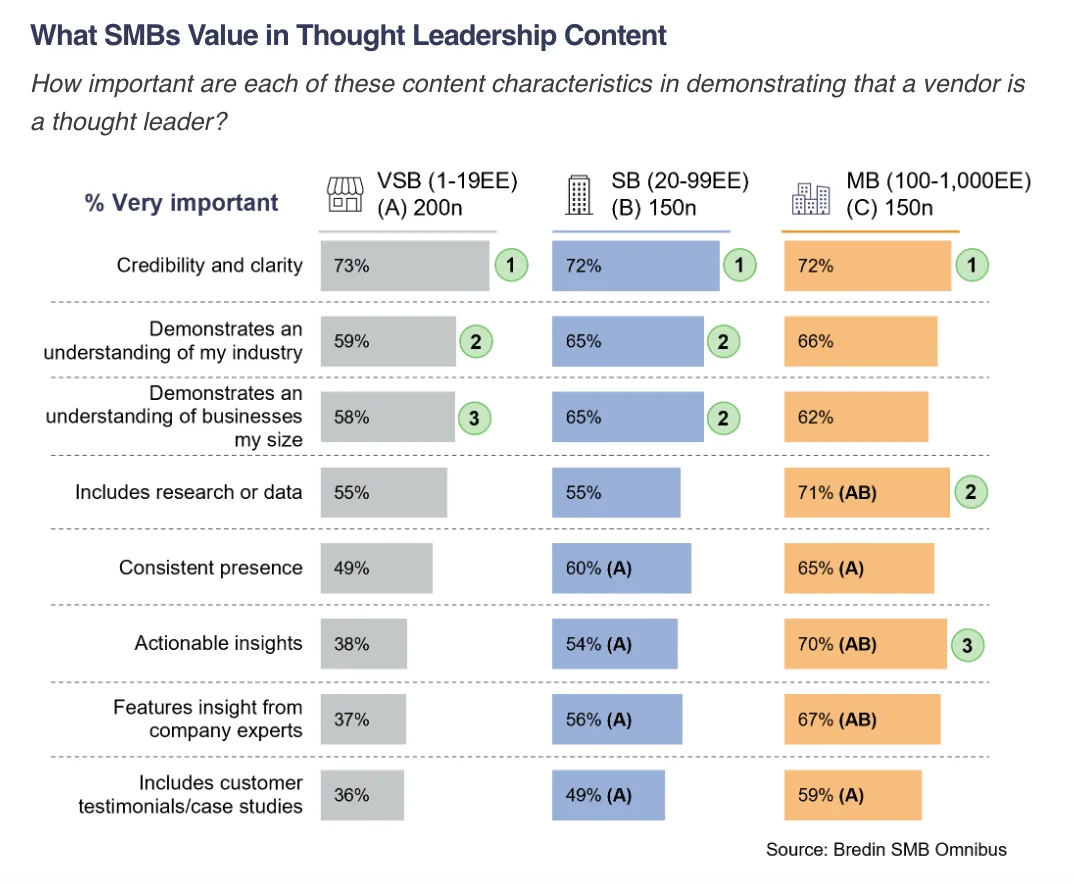
And, readers are seeking credibility in their content, too. A recent study by Bredin found that content clarity and credibility were the most valued aspects of thought leadership content.
“Author credibility is extremely important to us,” said Stephanie Heitman, Associate Director of Content for WordStream and LocaliQ. “By publishing content written by an industry expert, we feel that we can provide our audience with the most relevant, up-to-date, and insightful information to help them stay tuned into the latest digital marketing news, trends, and tips. That’s why we publish content not only written by our in-house experts but also by outside experts to add even more unique insights to our blog.”
This philosophy mirrors how AI systems evaluate trust. When AI condenses dozens of articles into a single summary, it prioritizes clear expertise indicators such as bios, credentials, and publication consistency so it knows which sources to trust.
How to optimize
- Create author bios that include relevant credentials, years of experience, and links to real profiles on LinkedIn or other verified platforms.
- Use Author schema and link it back to an organization or publication page.
- Connect each piece of content to its creator. Even if your company runs a small blog, assigning a clear voice helps AI associate expertise with people, not just brands.
- Maintain a consistent author archive on your website so AI can verify the connection between multiple articles and the same expert.
Real-world example
Northern Virginia Family Practice (NVFP), an independent healthcare clinic in Alexandria, Virginia, demonstrates this well. Each article and patient resource on their site is attributed to a specific physician, complete with name, credentials, and profile link. Their “Meet Our Team” section reinforces that connection by listing professional bios, certifications, and areas of expertise.
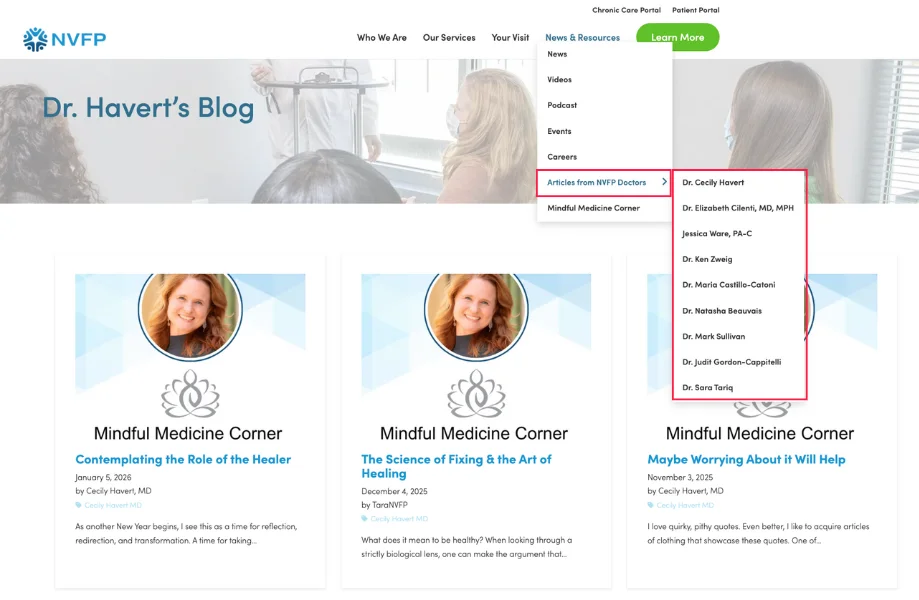
This consistent authorship across educational content builds both human trust and machine-recognizable credibility.
Mistake to avoid
Don’t publish under “Team” or “Editorial Staff” with no identifiable author. Anonymous content signals a lack of expertise to AI and weakens trust.
Action step
Audit your content. If authorship is missing, retroactively add bios and structured data to restore that credibility link.
Key takeaway
Let real people represent your content. It builds both reader trust and machine understanding.
🔎 Need help understanding the modern rules for SEO? Download our free guide >> How to Do SEO Right—Right Now!
3. Earn mentions from reputable third parties
AI engines heavily weigh external validation. Getting cited, quoted, or featured by reputable sources provides independent confirmation of your authority. This is what separates claimed expertise from recognized expertise.
Unlike traditional SEO, where backlinks were the main proof of trust, AI engines evaluate mentions across multiple media types (articles, podcasts, interviews, and even structured data from press releases). Every external reference acts as a digital endorsement.
“AI doesn’t just look for what you publish; it looks for what others confirm about you,” noted Tamara Omerovic, Content Strategist. “AI systems learn credibility the same way people do: by noticing repeated signals of trust across the web. When your expertise gets mentioned in different, relevant contexts, those signals compound.”
How to build it
- Target niche industry outlets, local news, or respected trade publications that align with your expertise.
- Pitch stories or commentary where your input adds value, rather than chasing vanity coverage.
- Use digital PR tools like Help a Reporter Out (HARO) or Featured to secure relevant mentions.
- Track citations and ensure your brand is described accurately and consistently.
Real-world example
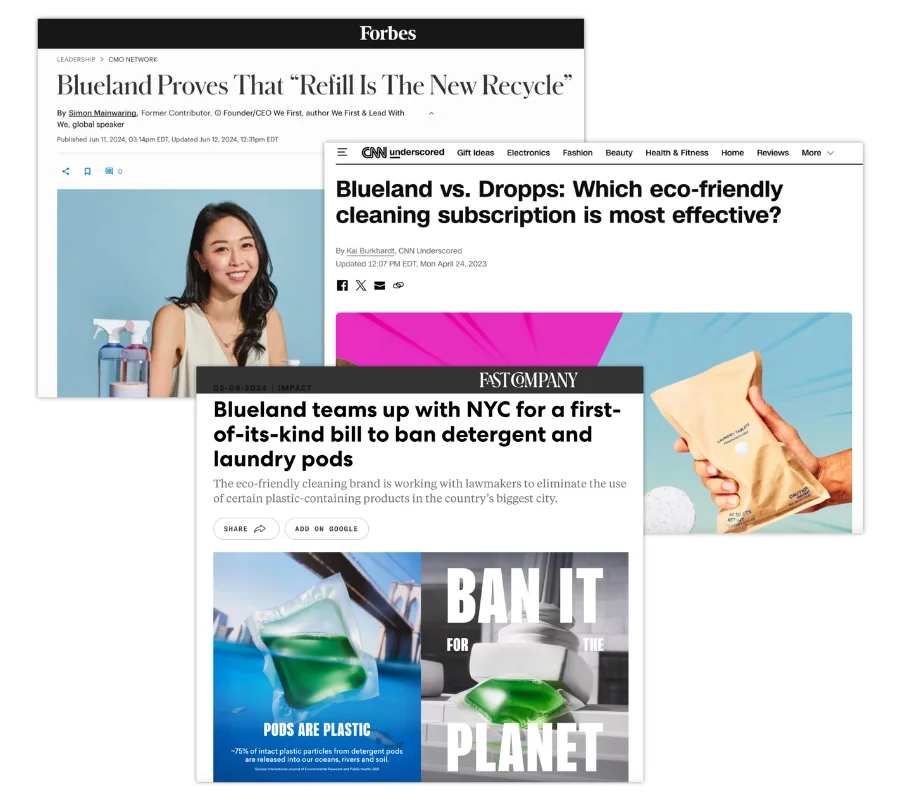
Blueland, a sustainable cleaning product company, has earned repeated coverage in outlets like Fast Company, CNN, and Forbes. These third-party mentions reinforce the company’s mission and credibility, making it a go-to reference for AI models scanning for sustainability leaders.
Mistake to avoid
Don’t rely solely on self-published content. Authority is not self-declared; it’s confirmed through others.
Action step
Maintain a media log that lists every publication, podcast, or platform where you’ve been mentioned. Use sameAs schema on your About page to connect these appearances.
Key takeaway
When others talk about you, AI starts listening too.
4. Publish content that demonstrates real experience
AI engines reward content grounded in firsthand experience. Generic explanations and derivative advice blur together, while authentic stories supported by real data rise to the surface. Experience is the credibility signal AI systems understand best.
When an article includes tangible details like outcomes, client examples, or timelines, it sends a clear message that the author has actually done the work. These concrete cues help AI models distinguish original insight from recycled information.
“AI can summarize what’s already been said, but it can’t replicate firsthand proof,” said Oskar Duberg, Freelance Content Specialist. “Original stories, data, and visuals act as the proof layer. They show you were actually there, doing the work, not just describing it.”
How to create experience-driven content
- Turn real projects into short case studies that highlight measurable results and lessons learned.
- Document your process. Show how a problem was solved, not just what the solution is.
- Add verifiable elements such as screenshots, data tables, testimonials, or photos that confirm the work happened.
- Use specific language. Replace vague statements like “businesses often see growth” with “our campaign for a local coffee shop increased repeat orders by 38% in six months.”
Real-world example
Goldbelly, an online marketplace for gourmet food, features the local chefs and restaurants it partners with. Each story includes names, locations, and behind-the-scenes details that celebrate craftsmanship and context. This approach makes the content both human and traceable, which AI systems recognize as credible and distinctive.

Mistake to avoid
Don’t rely on surface-level commentary. If your article reads like it could have been auto-generated, it will blend in with everything else AI produces.
Action step
Revisit your most visible pages and enrich them with proof points such as real metrics, customer quotes, or photos that demonstrate authentic involvement.
Key takeaway
Show, don’t summarize. Write about what you have done, not just what you know.
👀 Looking for more ways to drive people to your site? Free guide >> 25 Ways to Increase Traffic to Your Website
5. Build a multi-platform presence
AI engines analyze not just websites but the full digital footprint of a brand. A business that appears active across several platforms creates a stronger web of connections for AI to map.
Your content’s reach across LinkedIn, YouTube, Medium, podcasts, and your website helps AI confirm that you are a living, active entity with a continuous voice.
Inconsistent or inactive channels create gaps that weaken that signal.
How to expand strategically
- Repurpose core content across formats. A blog post can become a YouTube explainer, a LinkedIn carousel, or a short audio clip.
- Link back to your main domain in every platform bio and post description.
- Use the same professional imagery and tagline across profiles to maintain recognition.
- Ensure all your channels reference each other using structured data and social links.
Real-world example
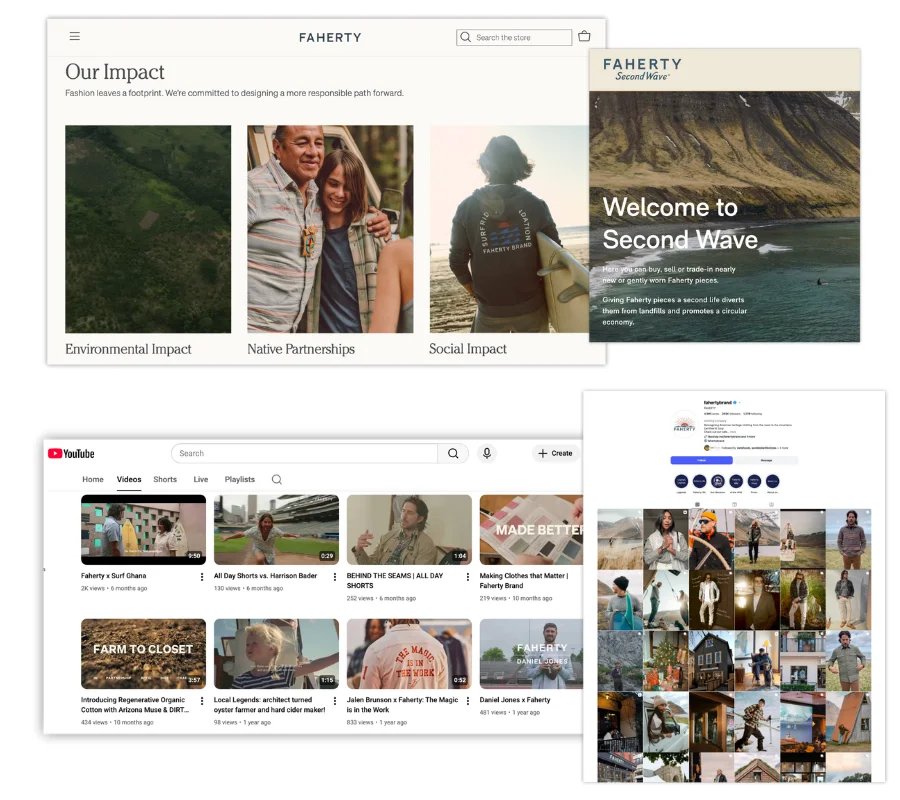
Faherty Brand, a family-run apparel company, demonstrates this effectively. Their sustainability content appears on their blog, YouTube, and Instagram, all reinforcing the same brand story. That consistency creates a cohesive presence that AI systems can easily connect.
Mistake to avoid
Don’t spread thin across too many channels without maintaining them. Inactivity on one platform can look like inconsistency to AI.
Action step
Pick three platforms where your audience actually engages and maintain active posting schedules. Consistency matters more than coverage.
Key takeaway
The more consistent your voice and visuals are across platforms, the easier it is for AI to connect the dots.
6. Track and improve your AI visibility
Authority is not static. Even established brands can lose visibility if they stop monitoring how AI tools interpret and represent them. As generative engines evolve, your goal should be to understand how you’re currently perceived—and refine from there.
Monitoring AI visibility helps identify two things:
- Whether AI systems are including your brand in responses, and
- Whether they’re portraying you accurately.
How to track AI recognition
- Create a list of key prompts relevant to your business, such as “best local marketing agencies in Chicago” or “how to choose a CRM for small businesses.”
- Test these queries monthly in tools like ChatGPT with browsing, Google AI Overviews, and Perplexity.
- Record whether your brand appears, how it’s described, and which competitors are mentioned.
- Use emerging tools like Perplexity Labs, ContentLab AI, or BrandMentions to track citations and brand mentions within AI-generated answers.
- If you’re missing or misrepresented, update your bios, structured data, or PR strategy accordingly.
“Monitoring how AI represents your brand isn’t a one-time task,” Tamara said. “I use what’s called a query fan-out—essentially mapping every related question people might ask. It helps identify where your brand is visible, where it’s missing, and where competitors are being surfaced instead.”
Real-world example
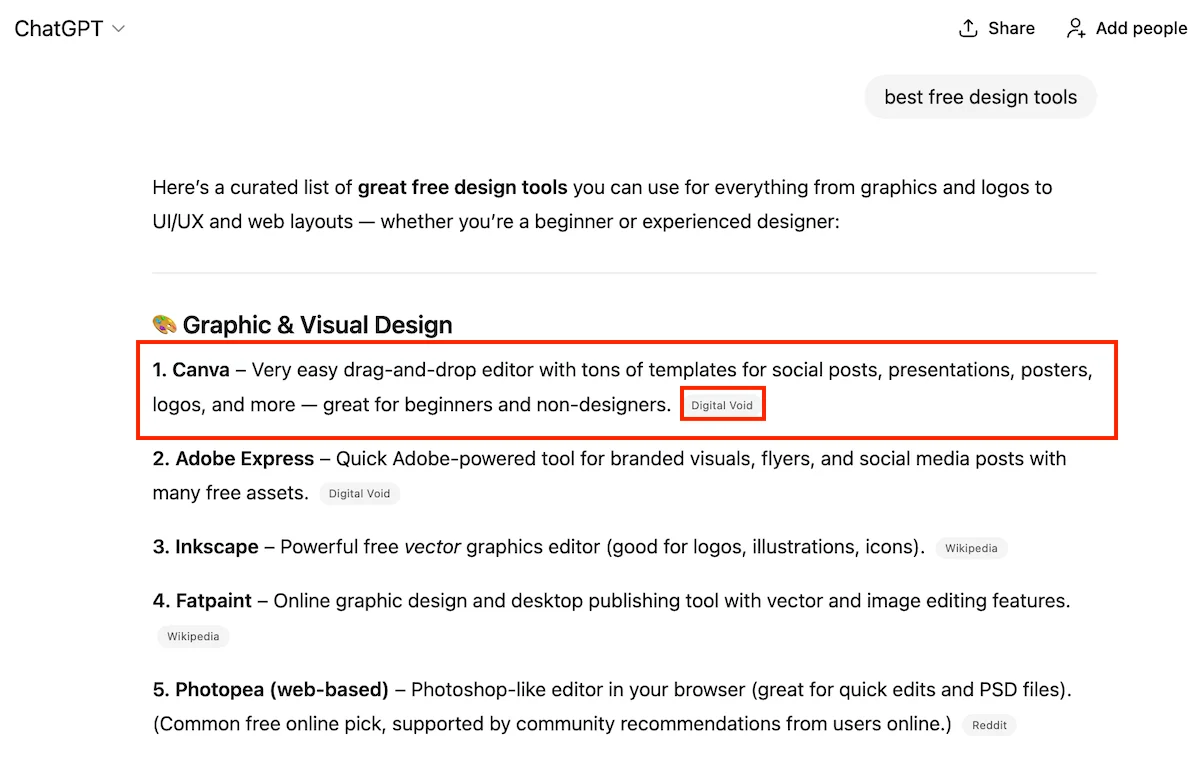
Canva continuously reinforces its authority through consistent educational content across formats. Its tutorials and design guides often appear in AI-generated summaries for topics like “best free design tools” because of its strong presence and frequent updates. Canva’s sustained visibility shows the value of active maintenance.
Mistake to avoid
Don’t assume visibility once achieved will stay constant. AI models evolve quickly, and the data they rely on shifts just as fast.
Action steps
- Run quarterly audits using your prompt list.
- Document changes in how AI references your brand.
- Adjust content and authority signals in response to findings.
Key takeaway
Authority is not about being perfect once; it’s about being consistent over time.
Build brand authority and get found by AI
Visibility is no longer about who ranks first. It’s about who is recognized.
Authority is no longer reserved just for big brands. It is now earned through clarity, consistency, and credibility.
If you want to ride this new wave to your advantage, start with the fundamentals:
- Unify your brand identity.
- Reinforce authorship and expertise.
- Seek third-party validation.
- Publish content grounded in real experience.
- Stay active across multiple platforms.
- Continuously monitor your AI visibility.
Each of these efforts builds a stronger signal that tells AI systems who you are, what you know, and why your perspective matters. When those signals align, AI tools are far more likely to reference your work, cite your brand, and amplify your visibility.