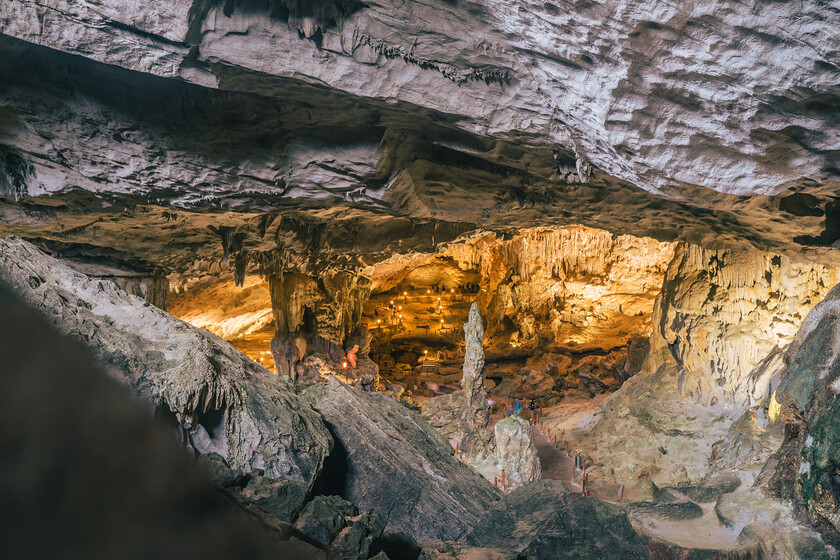
The silence that guards the 15,000 hectares of the Sierra Norte of Guadalajara is not empty, it is an inheritance. However, that calm has been disturbed by the flash of a promise as old as it is dangerous: gold. The emergence of Oroberia SLU—a subsidiary of the Australian multinational Global Mining Enterprises—has fractured the peace of the region with a request to drill its bowels that has awakened the ghosts of exploitation.
The origin of the conflict. The alarm went off in the spring of last year. Oroberia SLU is a company established only in March 2025 with a capital of only 3,000 euros, which aroused immediate suspicions about its solvency and transparency. Through three projects called “Gua”, “Dala” and “Jara”, the company intends to explore a territory that extends from La Toba to Atienza.
This new “mining wave” finds its legal protection in the EU Regulation on Fundamental Raw Materials (in force since April 2024), which seeks to cover 10% of the extraction of strategic supplies on European soil. What Brussels sells as “patriotic resilience” in Guadalajara translates into accelerated permits and a disturbing ease in classifying private projects as “strategic.” As Javier Cantero, mayor of La Toba, warns in El Mundo, “the companies are not state-owned… They will sell the raw materials to whoever pays the most.”
The drilling plan. Thanks to the Environmental Restoration Plan of the “JARA” Permit, we know with technical precision the scope of the intervention. The company planned:
- Deep drilling: Rotational drilling with core recovery between 300 and 400 meters deep.
- Phases: An initial phase of six surveys per permit, expandable to another six if the results were favorable.
- Surface impact: Occupation of about 200 square meters for each drilling platform.
The real danger, according to experts, is that if the mineral is less than 200 meters away, exploitation would inevitably be open pit. This would involve removing massive amounts of soil, raising dust loaded with microcrystals that can cause silicosis and other lung diseases, in addition to requiring enormous water resources and containment ponds for chemical treatments that could leak into the subsoil.
The setback of the Board. Oroberia’s strategy of presenting three different projects has been described as “fragmentation” to avoid controls. However, in November, the Provincial Delegation of Sustainable Development of Guadalajara issued a historic resolution:
- Mandatory unification: The company must encompass “Gua”, “Dala” and “Jara” in a single project of 14,600 hectares.
- Ordinary Evaluation: The simplified evaluation (more agile) is denied and an ordinary Environmental Impact Assessment (EIA) is required, much more rigorous and slow.
This decision is a victory for the neighbors. As Alberto Mayor, from Ecologistas en Acción, points out, this allows the “synergistic impacts” to be evaluated and forces the company to face the reality that 63% of the affected land contains habitats of community interest and protected species such as the Iberian wolf, the golden eagle and the ricotí lark (the latter in danger of extinction).
A total and transversal opposition. The social response has been overwhelming. According to Ecologistas en Acción, nearly 800 allegations have been made. The alliance is unprecedented because it includes mayors of all political colors (PP, PSOE, IU), hunters’ associations, environmental groups and even local parishes.
The fear is not only environmental, but also economic and patrimonial. The “Jara” project would directly affect areas such as Sigüenza and Atienza, compromising their candidacy for UNESCO World Heritage status for the “Sweet and Salty Landscape”. In addition, mining would give “a death blow” to already consolidated sustainable tourism projects, such as the Camino del Cid or the seal Destiny Starlight.
What will happen now? The company has two options according to local media: give up in the face of administrative obstacles and social pressure, or present a new unified environmental study that will undergo a new period of public exposure.
However, the scenario is complex. Currently, Spain is experiencing a mining rediscovery. While in Guadalajara the fight against gold is underway, in Galicia work has already begun to extract tungsten in the San Juan mine (Ourense), and in Jaén, the company Osmond Resources (linked to the same directors of Oroberia) has received permits to investigate rare earths in the “Menipe” project.
The ghost of 1973. One of the most critical points is that mining in Spain is governed by a Mining Law of 1973, drafted in the last years of Franco’s rule. This law converts the mineral resource into public domain: if the administration grants permission, the owner of the land is obliged to let the company enter or face expropriation. This legal defenselessness is the fuel that fuels the rage of the fourteen Guadalajara municipalities.
The value of what is not seen. The conflict in the Sierra Norte of Guadalajara is the representation of a clash of worlds. On the one hand, an extractivist vision that sees mining grids in the mountains and profits on the Australian stock market (where gold is trading upwards as a refuge value). On the other hand, some towns that, in the words of the mayor of Ríofrío del Llano, Maite Pérez, only ask that the depopulation laws serve to allow people to live in their land and not to make it easier for them to be kicked out.
For now, the Sierra Norte still stands, guarding a geological and biological heritage that, as its neighbors say, “is priceless because it is not a commodity.”
Imagen | Freepik
WorldOfSoftware | The problem with Greenland is not that it does not have minerals: it is that getting them out of there is an engineering nightmare