When you open a Fanta, you hardly think about World War II. However, this fruit-flavored drink was born in 1940 within Nazi Germany. It was a solution from Coca-Cola, owner of the brand, to the blockade of ingredients that the allies imposed on the country. Quite a commercial turn that would result in one of the company’s most popular drinks.
To block. In September 1939, when Germany invaded Poland and the United Kingdom and France declared war on the Third Reich, the economic consequences spread far beyond the battle fronts. American multinationals that maintained industrial ties with German territory saw communication with their subsidiaries interrupted. The British naval blockade closed the ports; Trade with the United States, which had grown throughout the previous decade, stopped.
The Coca-Cola situation. The company had been operating in Germany since 1929. Max Keith was a German manager who had assumed control of the subsidiary and built a giant infrastructure from scratch with bottling plants and distribution networks. He had even managed to produce seven of the nine secret ingredients on his own. But the concentrated syrup traveled to Germany from Atlanta, headquarters of Coca-Cola. When the embargo cut off that supply, the plants ground to a halt. The alternative was closure, but Keith did not give in.
The remains. What he did was look for substitutes in what he had on hand, waste from other food industries. As expert Mark Pendergrast said, “what was left of what was left”: whey, a byproduct of cheese making; leftover apple pulp from cider presses; fruit peels; beet sugar, because cane sugar was a luxury… the resulting liquid was a brownish yellow, much less sweet than any modern soft drink, and its flavor changed from batch to batch depending on what ingredients were available.
A name. Keith gathered his team to name the drink. He asked them to use their imagination, Fantasies. And from there the name came directly, with the advantage that it worked in almost any language without the need for translation or phonetic adaptation. It was an immediate success: in 1943 Coca-Cola sold approximately three million cases of Fanta in Germany. And although the soft drink never had a direct connection with the Nazis, Keith did manage to integrate its advertising into the regime’s events, including the 1936 Berlin Olympics. In fact, he could have registered Fanta in his own name, but he did not.
A success. Fanta was not drunk solely as a soft drink. Sugar rationing was so severe in wartime Germany that in many German homes it was used to sweeten soups and stews. Keith had obtained a partial exemption from sugar rationing in 1941, making it not only a soft drink, but also an accessible sweetener.
It was not an isolated case. Fanta was not a rarity. The World War II food industry reformulated several products forced by embargoes and rationing. Nescafé, launched in 1938, arose from the need to dispose of surplus Brazilian coffee at a time of commercial crisis: its soluble format allowed it to be distributed under difficult logistical conditions, and it became a standard supply for the American army. Margarine was a substitute for butter in times of Napoleonic shortages, and experienced a second massive expansion in Europe in the 1940s because butter was rationed.
Post-guerra. When Coca-Cola relaunched Fanta in Naples in April 1955 with an orange formula made from local citrus, the name was the only thing connecting it to post-war Germany. The Italian company SNIBEG had developed the recipe on its own and Coca-Cola bought it, giving it the name of the one that already had the intellectual property. From there it grew: it arrived in the United States in 1958 and expanded globally throughout the 1960s and 1970s.
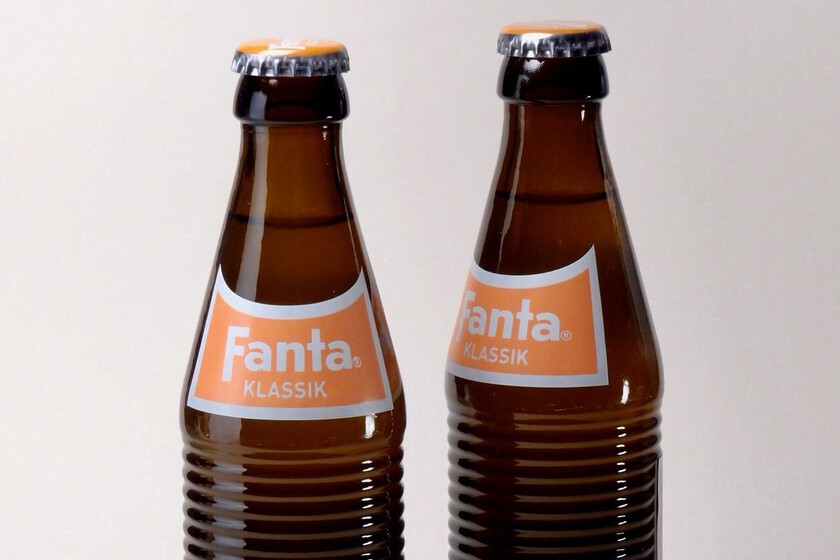
Conflictive spot. However, the drink’s German past loomed large over the brand in 2015, when Coca-Cola launched a special edition in Germany for Fanta’s 75th anniversary. It was a reissue of the original recipe, with 30% whey and apple extract, distributed in glass bottles that evoked the design of the 1940s. The campaign video was especially inadequate, as it only talked about ingenuity in times of scarcity and ignored the reason for that ingenuity: war embargoes against Nazi Germany. He concluded by inviting viewers to recover “the feeling of the good old days.” The video was removed after frontal rejection by the public and press.
It was inevitable then to remember brands like Volkswagen, whose name directly alludes to the Nazi regime’s automotive program and whose plants used forced labor during the war; or like Hugo Boss, who made military uniforms for the SS and the Wehrmacht; or like IBM’s German subsidiary, Dehomag, which provided the regime with punch card technology that allowed entire populations to be censused, classified and tracked with a speed that manual methods made impossible. Origins that are sometimes murky due to the context, but that leave a few questions in the air about the inhumane role of any industry. Which includes the sparks of life.
Header | Wikipedia