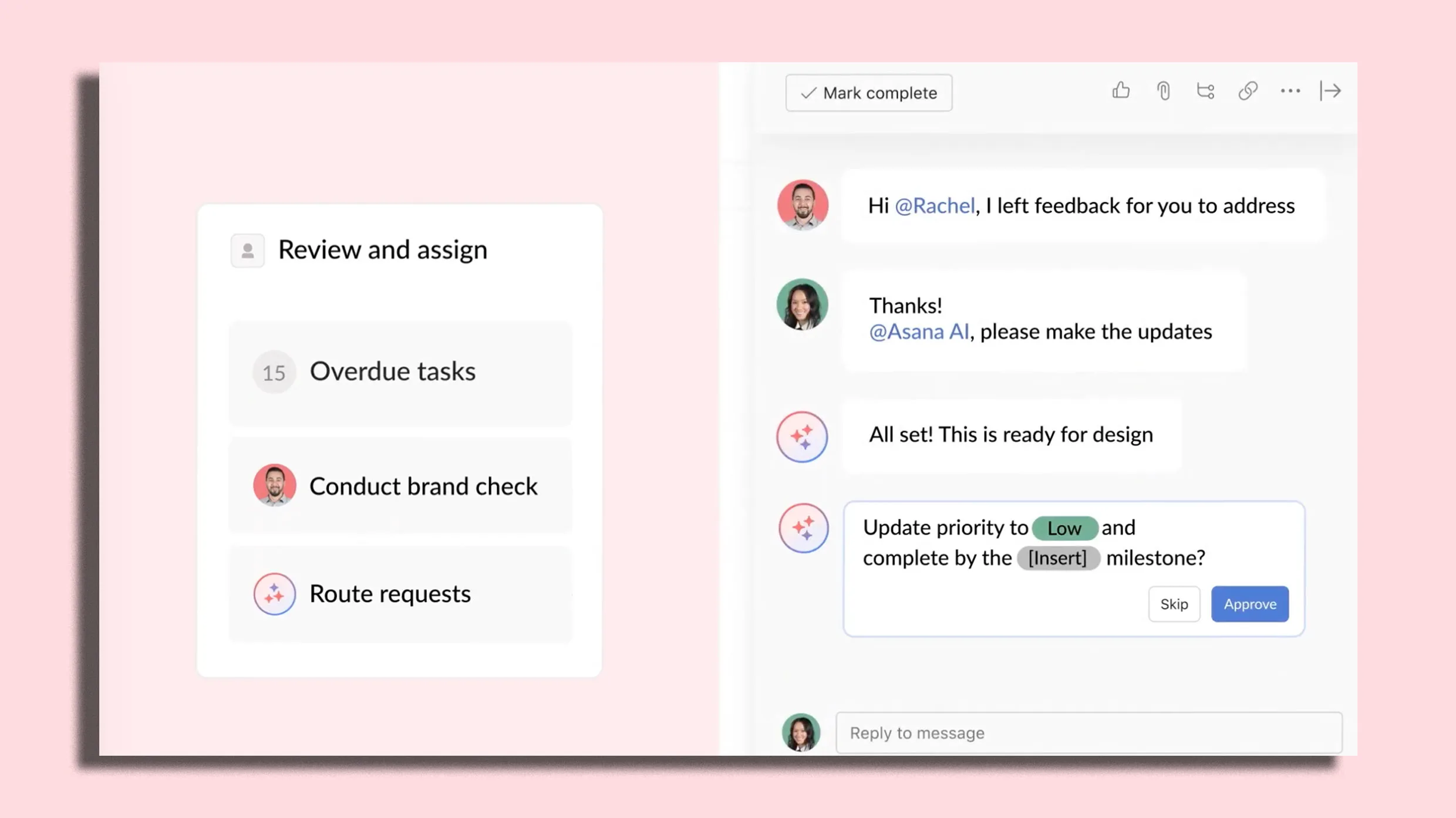
Project management software giant Asana is rolling out what it calls “AI teammates”—bots that can participate in handling and discussing work via Asana’s platform in similar ways to actual humans.
Unlike some AI assistant and copilot products that take direction only from one human user, Asana’s AI teammates are designed to work with multiple humans, similar to how an actual new hire might receive assignments, feedback, and comments from a range of coworkers.
The aim is to offer a set of AI tools that integrate not only with software companies already use, but with the Asana-based workflows they rely on to divvy up and discuss work. So while the bots won’t necessarily replace human employees or potential hires outright, interacting with them through Asana will feel fairly similar to working with a flesh-and-blood colleague.
“It is a shared experience, which means you can bring it into a project, and it’ll behave and look like a team member, and it can pick up tasks,” says Asana chief product officer Arnab Bose. “And when it picks up tasks, everybody on the team who is a human being, who’s on the project, can give that AI agent feedback.”
The feature is launching with 21 prebuilt virtual teammates that can handle tasks like planning product launches, drafting marketing campaign briefs, managing IT service queues, and coding web content. Users can also create their own AI teammates with custom prompts. The bots can be added to conversations on Asana and draw on the company’s existing Asana Work Graph, a data structure that maps relationships among projects, people, and tasks.
That context helps them understand their assignments and suggest relevant collaborators or files to reference. AI teammates can also be scheduled to perform routine tasks, such as scanning an Asana board daily or weekly to flag potential issues that could affect deadlines.
Critically, Asana’s virtual teammates can also read and write to files in cloud systems like Google Drive and Microsoft SharePoint, which means they can directly access and contribute to projects in the environments where companies already work. For instance, a marketing campaign brief creator can pull in existing notes and high-level strategy documents to guide its drafts. Additional integrations with tools like customer-relationship management (CRM) software are likely on the way, as are features to let users craft custom integrations.