If your content isn’t being cited, traffic and rankings are rarely the issue. Most businesses do the obvious things right: they publish helpful content, target real questions, and earn impressions and rankings.
By standard SEO standards, nothing looks broken. Yet, their content still does not appear in AI search.
There are many reasons why this might be happening, but the obvious one is: AI systems do not pull content because it ranks. They pull content because it is easy to reuse.
Clear structure. Low ambiguity. Obvious attribution. Most content fails on those points without realizing it.
In this article, I’ll share the six reasons your content isn’t being cited in AI search and what you need to do to increase your chances of it getting pulled in for relevant searches.
Contents
Why ranking is no longer the gatekeeper for visibility
Most businesses still treat AI engines like search engines with a different interface, but AI and traditional search work differently.
Search engines:
- Find and rank pages.
- Reward relevance and links.
AI engines:
- Pull pieces of information and build answers.
- Reward clarity, consistency, and low confusion.
This is why ranking well does not guarantee visibility in AI results.
Your content does not need to be the best. It needs to be easy to understand and safe to reuse if you want it to get picked up in AI search.
When AI systems have to guess what your content means or who it applies to, they skip it. Guessing creates risk, and risk gets filtered out.
🔎 Need help understanding the modern rules for SEO? Download our free guide >> How to Do SEO Right—Right Now!
6 reasons your content isn’t being cited by AI systems (+What to do about it)
Before reusing anything, AI systems try to resolve a small set of questions quickly:
- Who is responsible for this information?
- Can the meaning stand on its own outside the page?
- Can sections be extracted independently?
- Are claims clearly bounded and conditional?
- Is the source consistent across the web?
If any answer is unclear, the content becomes risky, and risky content does not get cited.
This is why AI visibility often feels random. Nothing is “wrong” in the traditional SEO sense. The content simply never qualifies for reuse.
1. AI can’t attribute what it can’t identify
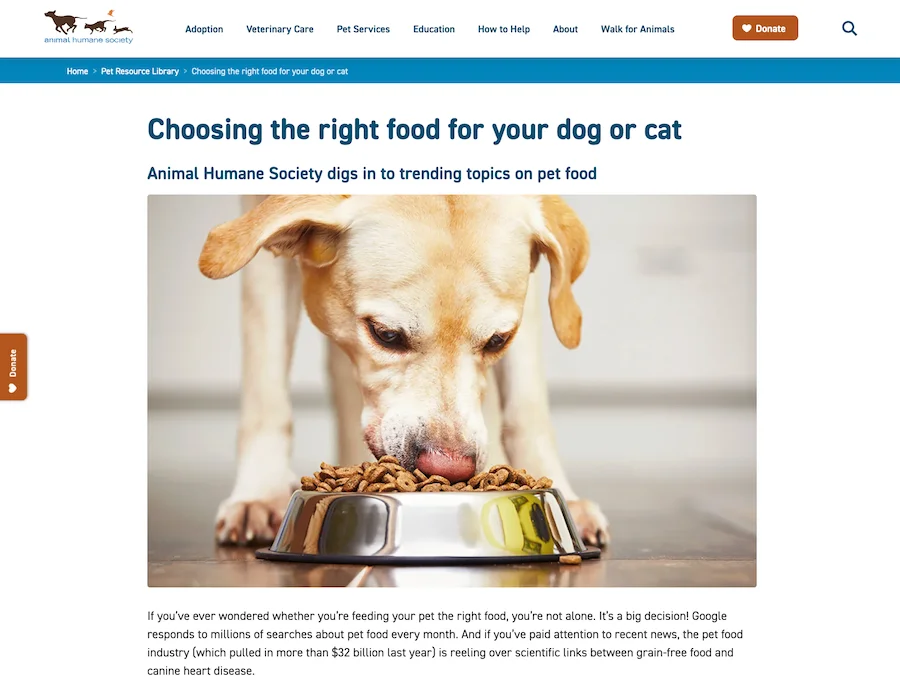
On many websites, educational content appears with:
- No author
- A generic “Team” or “Admin” byline
- Or a company name with no human attached
Source
This shows up constantly across plumbers, HVAC companies, lawn care businesses, pest control operators, and law firms.
To a human reader, this feels normal. To AI, it creates uncertainty.
The system cannot tell if the advice came from:
- A licensed professional
- A field technician
- A practicing attorney
- Or a marketer summarizing industry tips
Without a clear owner, the content becomes anonymous reference material.
Why this blocks citation
“When authorship is vague, AI treats the content as informational background, not expert guidance. It may reuse the idea, but it removes the name because responsibility is unclear,” said Stephanie Yoder, Director of Content at Rebrandly.
AI engines are risk-averse. When authorship is unclear, AI often still uses the information but removes attribution. It prefers to cite sources where responsibility is obvious and repeatable.
That is why AI summaries frequently explain:
- How to shut off a main water valve.
- When to replace an HVAC capacitor.
- How child custody hearings work.
It does this without ever mentioning the local businesses that published the most practical guides.
What actually fixes it
The fix is specificity, not branding.
A good example is Mattioni Plumbing. Here, educational content is clearly tied to licensed professionals rather than an abstract brand voice.
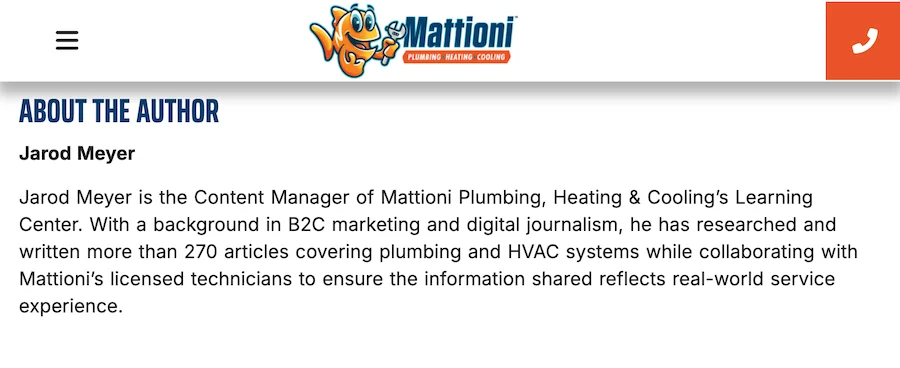
Patterns that work:
- A real name
- A real role
- A direct connection to the topic
Examples AI can safely reuse:
- “Written by John Doe, licensed master plumber with 22 years of residential repair experience.”
- “Written by Jane Doe, family law attorney practicing in Arizona since 2010.”
- “Written by John Doe, lawn care professional serving central Ohio properties.”
Use the same wording everywhere. In the article. On the bio page. On the About page.
Repetition reduces uncertainty. Reduced uncertainty enables reuse.
2. Your title fails AI’s classification shortcut
Many business blogs rely on curiosity-driven titles:
- “A Common Mistake Homeowners Make”
- “What You Don’t Know Could Cost You”
- “This Happens More Than You Think”
Humans may click, but AI cannot classify these.
AI engines use titles as fast classification shortcuts. If the topic is not obvious from the title alone, the page often never gets the push it needs.
Why this blocks citation
AI systems operate under time pressure. They favor pages that declare intent immediately.
This is why content from Bob Vila often appears in AI answers. Their titles state the problem, the object, and the action without ambiguity.
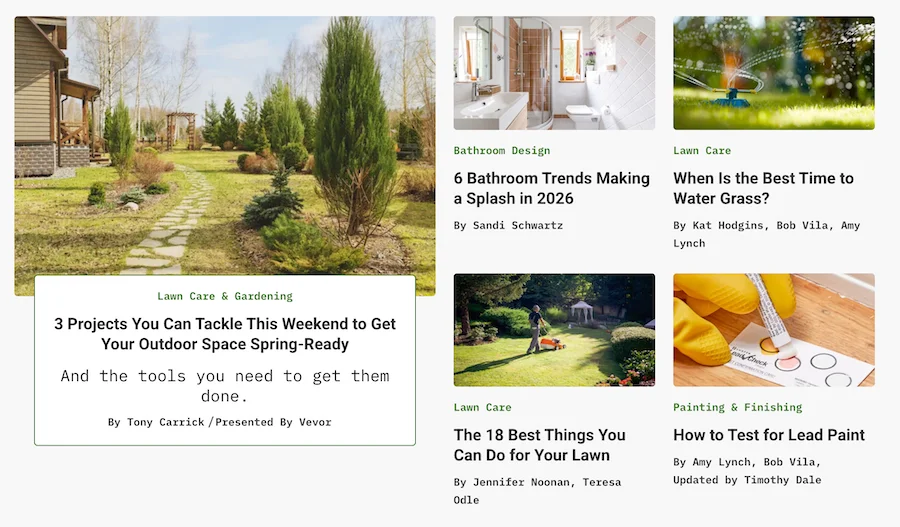
Even when local experts offer better advice, AI can classify Bob Vila pages faster and reuse them with lower risk.
What actually fixes it
For business content, clarity should always be more important than cleverness.
Better titles look like:
- “How Often Should You Water New Sod During Extreme Heat”
- “What Happens If You Miss a Child Custody Hearing in Texas”
- “When a Running Toilet Indicates a Failing Fill Valve”
- “Why Ant Infestations Increase After Heavy Rain”
These titles are not flashy, but they are extractable, and that’s the key.
🚨 Get ready-to-use AI prompts for titles, social media, content creation, and more >> 200+ Best AI Prompts Any Business Can Use
3. When AI has to “scroll to understand,” you’ve already lost
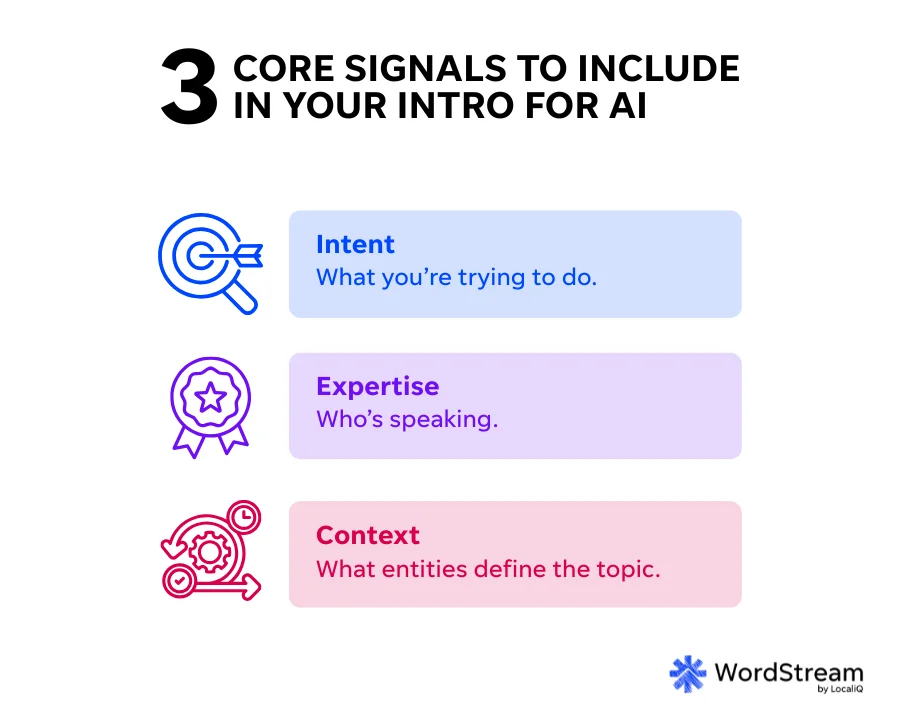
AI engines heavily weight the first screen of content. That is where they expect:
- Topic definition
- Audience context
- Intent clarity
Many blogs open with empathy, storytelling, or brand positioning instead.
Why this blocks citation
When the sole purpose of the context arrives late, AI may misclassify the page or deprioritize it entirely, even if the advice below is solid.
This shows up frequently on:
- Law firm blogs that open with emotional framing.
- Contractor blogs that start with company history.
- Service pages that lead with sales language.
AI needs definitions before persuasion.
What actually fixes it
Define the topic in the first paragraph.
State what the issue is, who the advice is for, what the reader will learn, and then expand. This helps AI and helps your audience self-qualify quickly.
4. Unbounded claims create reuse risk
Statements without limits signal risk.
Examples AI avoids:
- “Most homeowners don’t realize…”
- “This always works”
- “AI is changing everything”
These claims lack scope and conditions.
Why this blocks citation
Unbounded claims are easy to misapply. AI systems avoid that risk.
Even accurate ideas get skipped if they are too generally formulated.
What actually fixes it
Add scope in the same sentence.
Instead of:
- “HVAC systems fail more in summer.”
Use:
- “In high-humidity climates, HVAC systems fail more often in summer due to prolonged compressor strain.”

Source
Precision increases the likelihood of reuse.
5. Generic advice is invisible to AI
AI already knows generic advice. It has processed thousands of versions of it.
If your content restates common tips without real-world constraints or observed patterns, it blends into the background.
Why this blocks citation
AI cites sources that add decision-making context, not just instructions.
This is where small businesses have a real advantage.
What actually fixes it
Teach from the job, not the textbook.
Strong signals include:
- “In homes built before 1985 in our service area, galvanized pipes corrode internally long before they leak.”
- “After heavy rainfall, we see ant infestations spike within 48 hours as nests flood.”
- “During watering restrictions, new sod fails most often because homeowners follow generic daily watering advice.”
A good example of this approach is Roger Wakefield, whose content explains plumbing problems through real failure scenarios, not abstract best practices.
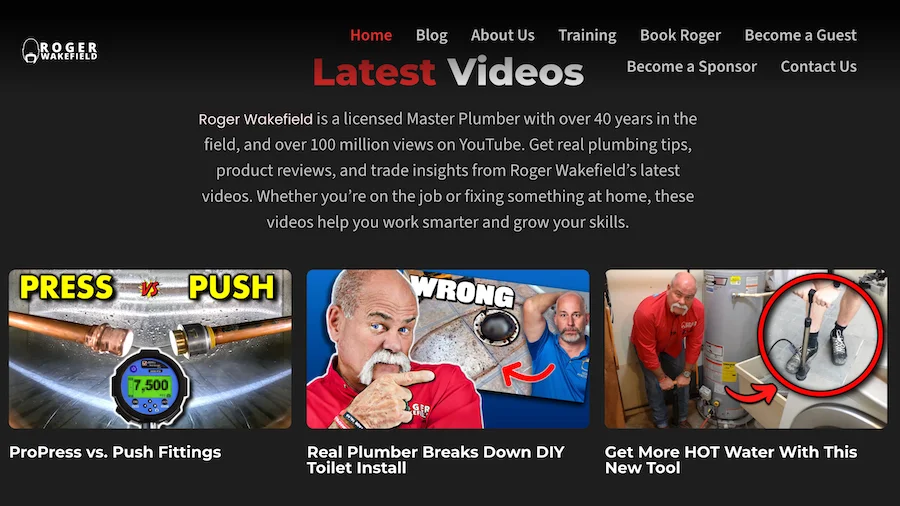
AI trusts this type of content. These are details it cannot invent.
6. If a section can’t stand alone, AI won’t touch it
AI engines extract sections, not stories.
Sections that rely on prior context, narrative buildup, and implied meaning become unsafe to reuse.
Why this blocks citation
Partial explanations increase hallucination risk. AI avoids lifting sections that cannot stand alone.
What actually fixes it
“AI doesn’t read articles the way people do. It lifts sections out of context. If a section relies on narrative buildup or implied meaning, it becomes unsafe to reuse,” Stephanie said.
Each section should fully answer one question.
A good example here is Arctic Air Conditioning. Their educational pages break problems down by symptom. A section on “AC blowing warm air” explains the likely causes, what homeowners can check safely, and when to call a technician, all within that single block. It does not assume the reader has followed a broader narrative.
What AI-citable content looks like in practice
As said above, advice without context does not travel well. AI systems need clear conditions, limits, and real-world grounding to reuse content safely.
Here are strong examples across three industries that do this well.
HVAC
A good example in this industry is Horizon Services.
Their educational content consistently ties guidance to:
- Technician-led explanations of common system failures.
- Regional weather patterns that affect heating and cooling performance.
- Specific symptoms homeowners experience before breakdowns.
For example, sections on AC short cycling or uneven cooling explain the likely causes, what conditions make the issue worse, and when professional service is required, all within a single, self-contained block.
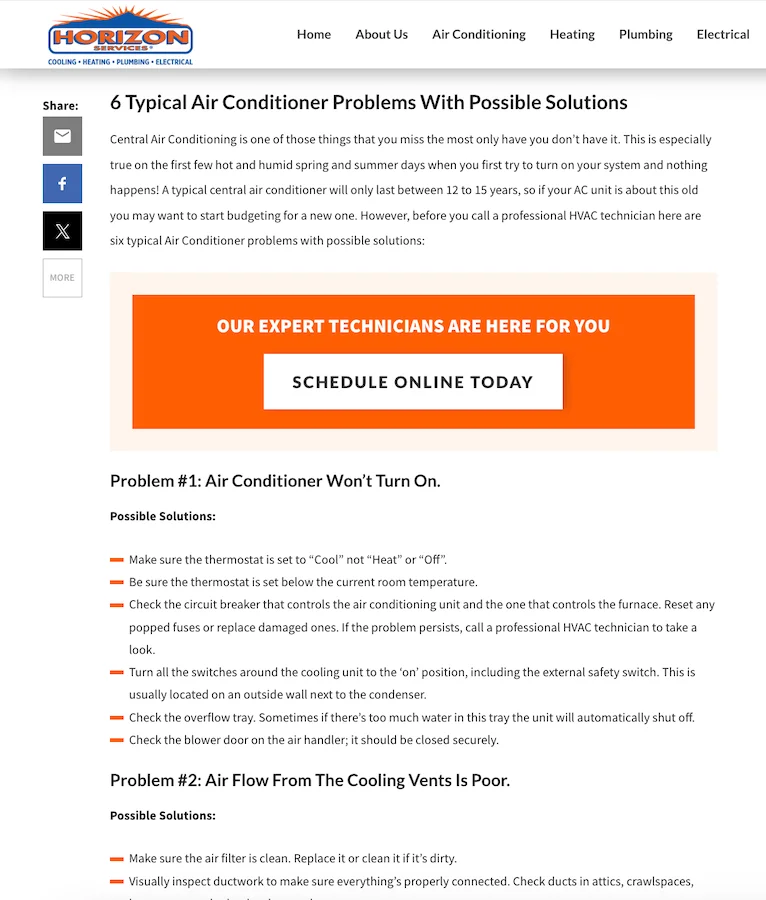
That structure gives AI systems clear cause-and-effect logic they can reuse without pulling in surrounding context.
Pest control
Pest control sites often repeat generic prevention tips, but not Dodson Pest Control. Their content explains:
- Seasonal pest behavior
- Regional triggers
- Timing windows
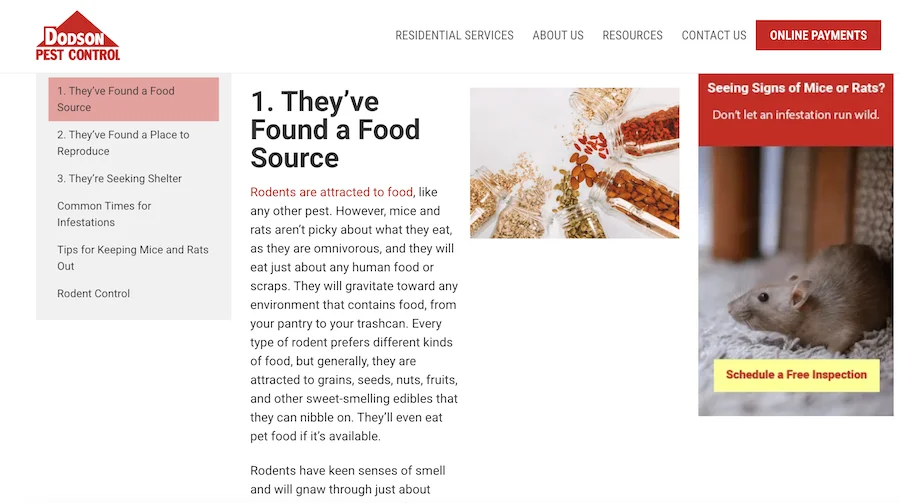
Specificity reduces ambiguity.
Lawn care
Most lawn care blogs recycle national calendars and generic tips. That advice breaks down fast because turf health is highly local.
That’s not the case with Ryan Lawn & Tree. Their educational content avoids one-size-fits-all guidance and instead anchors advice in real constraints homeowners face.
Their lawn care content consistently explains:
- How soil composition changes drainage, nutrient retention, and root depth.
- How local watering rules and seasonal restrictions alter irrigation schedules.
- How heat, drought, and foot traffic stress turf at different times of year.
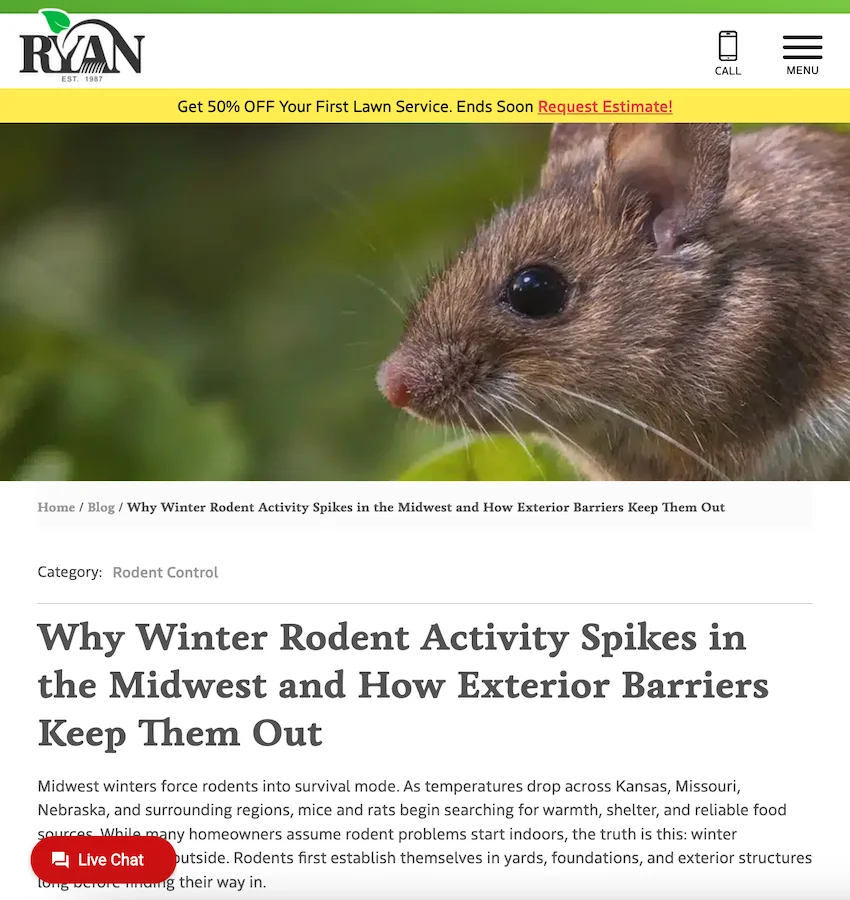
Instead of saying “water your lawn more in summer,” sections explain when extra watering helps, when it causes damage, and why certain lawns respond differently under the same conditions.
That level of context turns generic tips into decision-ready guidance. It also gives AI systems clear boundaries they can reuse without flattening the advice or misapplying it.
🚀 Free guide >> 10 Tangible & Free Ways to Get on the First Page of Google
A practical audit to get cited by AI engines
This audit is not like a typical SEO audit. It is more focused on removing ambiguity so AI systems can reuse your content without guessing.
Step 1: Start with pages that already have demand
Do not audit your entire blog. Start where AI already shows interest.
In Google Search Console:
- Open Performance → Search results
- Sort pages by Impressions
- Focus on informational content such as guides, explainers, and FAQs
These pages already surface in search. If your blog isn’t being cited, this is where AI is most likely skipping you.
Audit 5–10 pages. That is enough to identify recurring patterns.
Step 2: Run the first-screen test
AI engines heavily weigh what appears before scrolling.
Open a page and do not scroll. Look only at what is visible on the first screen.
Ask:
- Who is speaking
- Why they are qualified to speak on this topic
- What the page is about
- Who the advice is for
If any answer is unclear at this stage, the page already carries reuse risk. AI systems often deprioritize it before reading further.
This is one of the most common failure points for business blogs.
Step 3: Check authorship consistency
Now scroll and locate the author.
Open:
- The article
- The author bio
- The About page
- Another article by the same author
Compare how the author and business are described.
If the same person appears as:
- “Founder” on one page
- “Marketing Lead” on another
- “Team” somewhere else
AI does not see nuance. It sees multiple entities.
Standardize one role description per author and reuse it everywhere. Replace language. Do not rewrite it creatively.
Consistency lowers risk.
Step 4: Run the section isolation test
AI systems extract sections, not full articles.
Pick one H2 section. Copy it into a blank document.
Ask:
- Does this section define the issue
- Does it explain the advice fully
- Does it make sense without the rest of the article
If the answer is no, AI will not reuse it.
Rewrite sections so each one:
- Introduces the problem
- Explains the cause
- Provides guidance or implications
Each section should function as a complete answer on its own.
Step 5: Tighten claim precision
Scan the page for broad statements.
Look for phrases like:
- “Most businesses”
- “Usually”
- “This always works”
Then ask:
- For whom is this true
- Under what conditions
- In what context
If the answer is missing, the claim is risky.
Fix this by adding scope in the same sentence. Precision makes content safer to reuse.
Step 6: Run a schema reality check
Schema does not override visible content. AI compares the two.
Check whether:
- The schema author appears visibly on the page.
- The schema type matches the actual intent of the content.
- The organization description matches your About page language.
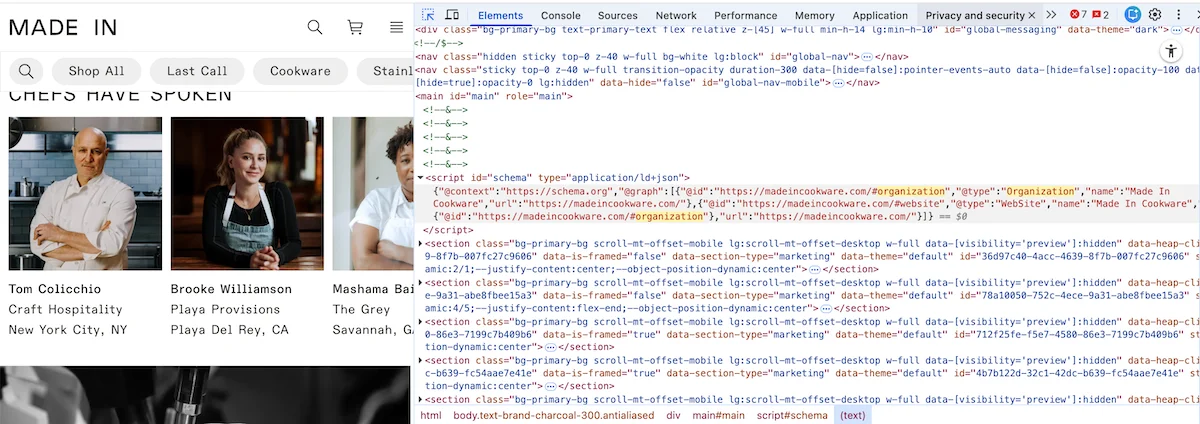
If schema claims something the page does not clearly show, trust drops.
Remove schema that does not reflect reality. Fewer, accurate signals beat many conflicting ones.
⬇️ Download our Small Business Website Trends Report to find out how businesses are planning and thinking about SEO and their web presence.
How to tell if AI actually understands your content now
Measuring AI visibility is closer to quality assurance than analytics. You are checking whether systems understand you correctly, not whether they send traffic.
Impression trends
In Search Console, watch impressions over time.
Rising impressions without a corresponding click increase often indicate greater AI surfacing. Your content is being used, even if users do not visit.
AI summary accuracy
Regularly check:
- Google AI Overviews
- ChatGPT
- Perplexity
Ask questions that your content answers.
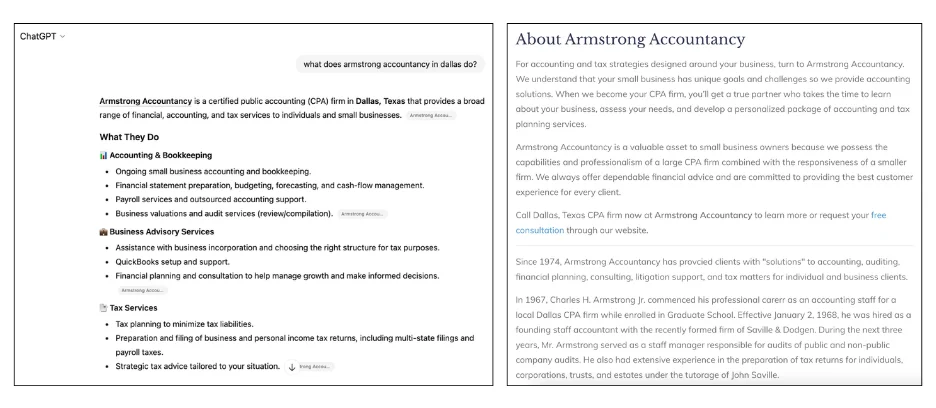
Early-stage failure looks generic and flattened. As clarity improves, summaries tighten and reflect your framing more closely.
Brand and author mentions
Run the same prompts monthly.
Track:
- Whether your brand appears.
- Whether the author is named.
- How often competitors show up instead.
You are looking for movement, not perfection.
Paraphrasing consistency
As trust increases, AI systems paraphrase your ideas in similar ways across tools.
Inconsistent phrasing signals uncertainty. Predictable paraphrasing signals confidence.
Make your content appealing to AI search engines
AI search did not remove the need for good marketing. It raised the cost of ambiguity.
If your blog isn’t being cited, it is not because your expertise lacks value. It is because your content does not yet communicate responsibility, scope, and structure clearly enough to be reused without risk.
Small businesses have an advantage here. You work close to the problem. You see patterns others miss. Document that experience clearly, and AI systems will treat your content as reliable input.